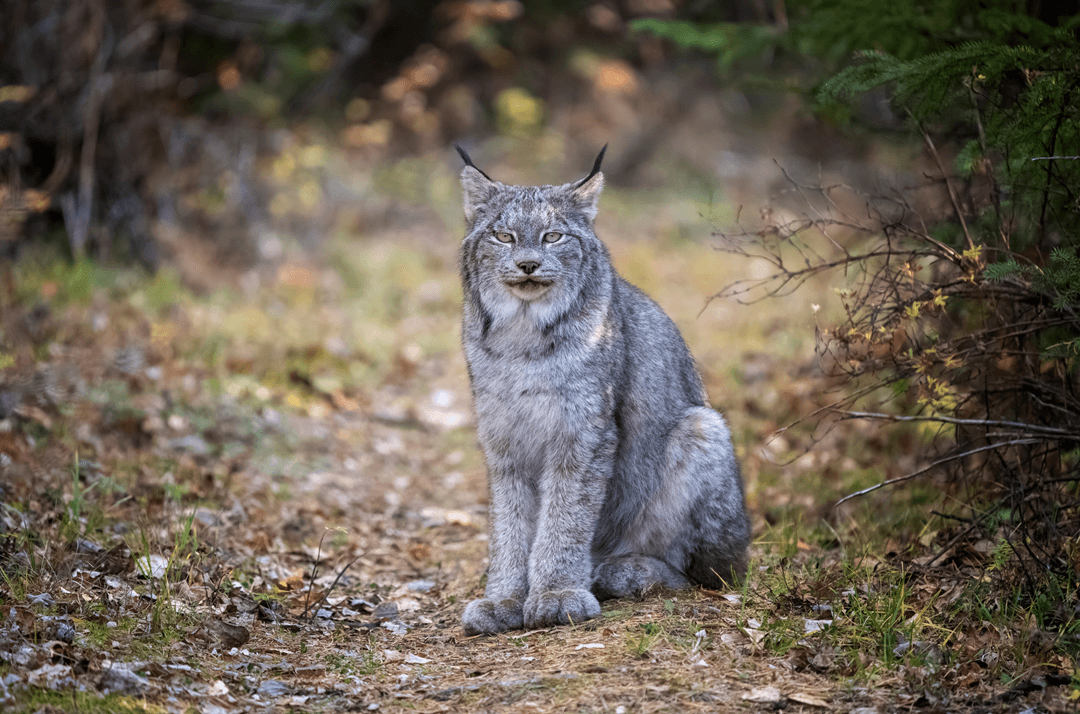
The Canada lynx is a medium-sized wild cat with long hind legs. They inhabit Canada and the United States, primarily in forested areas.
Conservation Status: Least Concern
Scientific Name: Lynx Canadensis
Lineage: The Canada lynx belongs to the Lynx lineage, along with the bobcat, Eurasian lynx and Iberian lynx.
Meaning of the name: From Latin “lynx”, from the Greek word Lyngx, and possibly from a word dating back to the Indo-European language that meant “light, brightness” in regards to the cat’s shinning eyes and ability to see in the dark.
Annual Canada Lynx 2026 Update
The Canada lynx remains one of the most specialized wild cats in North America, closely tied to boreal forests and snowshoe hare populations. This relationship continues to be a major focus of research, especially as environmental conditions shift across northern ecosystems.
Recent studies show that changes in winter conditions, including shorter seasons and less consistent snow cover, may affect the lynx’s hunting advantage. Because the species is adapted to deep snow, these changes could influence where lynx can successfully compete with other predators such as bobcats.
In the United States, the Canada lynx is still considered threatened in parts of its range. Conservation efforts continue to focus on protecting forest habitat, maintaining landscape connectivity, and monitoring long-term population trends.
External Sources:
U.S. Fish & Wildlife Service
Government of Canada Assessment
Interesting Canada lynx facts
- Has very thick fur
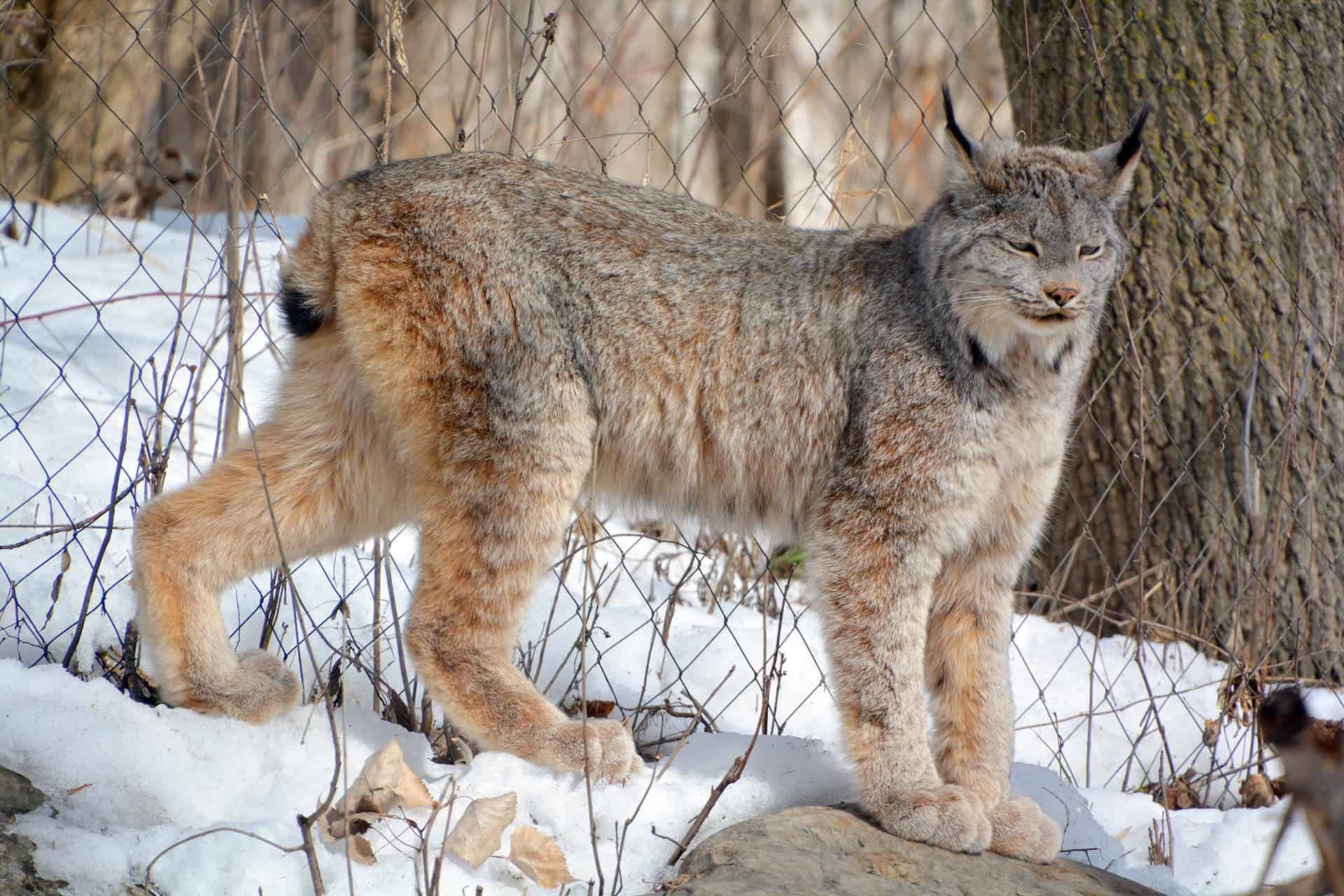
- Has triangular ears with black tufts at the tips
- Back legs are longer than the front legs, which makes the lynx look like it is always bent forward
- It’s similar in size to the bobcat, but its legs make it look longer.
- Its gigantic paws are like snowshoes
- Member of the lynx lineage
- A good swimmer and climber
| Species | Shoulder Height | Length | Weight | Quick Comparison |
|---|---|---|---|---|
| Canada lynx | About 20–24 in. (51–61 cm) | About 26–42 in. (67–107 cm) | About 18–38 lbs. (8–17.3 kg) | Long-legged northern specialist with very large paws |
| Bobcat | About 18–25 in. (46–64 cm) | About 26–41 in. (65–105 cm) | About 9–33 lbs. (4–15 kg) | Usually similar in length, but generally less snow-adapted than the Canada lynx |
| Eurasian lynx | About 24–26 in. (60–65 cm) | About 28–51 in. (70–130 cm) | About 40–79 lbs. (18–36 kg) | Largest of the four living lynx species |
| Iberian lynx | About 18–28 in. (45–70 cm) | About 31–51 in. (80–130 cm) | About 22–33 lbs. (10–15 kg) | More compact and generally lighter than the Eurasian lynx |
More about the Canada lynx
The Canada lynx is a medium-sized wild cat adapted for life in cold northern forests. It is recognized by its thick fur, long legs, black ear tufts, and large paws that allow it to move across deep snow.
Unlike many predators, the Canada lynx depends heavily on one primary prey species: the snowshoe hare. This close relationship shapes its behavior, movement, and population cycles, making it one of the clearest predator-prey systems in North America.
Although it may be present in suitable habitat, the Canada lynx is rarely seen. It moves quietly, uses dense forest cover, and often travels long distances within its range.
History
The Canada lynx developed as part of a group of cats adapted to colder climates. Its ancestors spread across northern regions during periods when climate and habitat allowed forest ecosystems to expand.
As glaciers advanced and retreated over time, forests shifted across the landscape. These changes influenced where lynx could survive and how populations moved across North America.
Over time, the species became closely associated with boreal forests, where its physical traits and hunting style provided a clear advantage.
Classification and lineage
The Canada lynx belongs to the genus Lynx, which includes four species: the Canada lynx, Eurasian lynx, Iberian lynx, and bobcat.
These cats share key features such as short tails, long legs, and ear tufts, but differ in size, habitat, and behavior. The Canada lynx is the species most strongly adapted to deep snow and cold forest environments.
Within the cat family, it is part of the Felinae, or small cat group, which includes most of the world’s wild cats outside of the big cat lineage.
Location, habitat and range
The Canada lynx is found across Canada and Alaska, with smaller populations extending into the northern United States.
It lives primarily in boreal forests, where dense vegetation provides cover and supports snowshoe hare populations. These forests create the conditions needed for lynx survival, especially in winter.
At the southern edge of its range, habitat becomes more fragmented, and competition with other predators may increase.
Physical characteristics
The Canada lynx is built for cold environments and deep snow.
- Thick insulating fur
- Large paws that act like snowshoes
- Long legs for moving through snow
- Black ear tufts
- Short tail with a black tip
Its coat is typically grayish-brown, helping it blend into forest surroundings.
Hunting and diet
The Canada lynx relies heavily on the snowshoe hare as its primary prey. In many areas, hares make up most of its diet.
Lynx hunt by stalking and ambushing rather than chasing prey over long distances. Their ability to move quietly and efficiently through snow gives them a strong advantage.
When hare populations decline, lynx may hunt other animals, but these do not fully replace their main food source.
Behavior
Canada lynx are solitary animals and are most active during low-light periods such as dawn and dusk.
They maintain large territories and tend to avoid direct contact with other individuals. Communication is limited and often involves scent marking or vocalizations during the breeding season.
Their movement patterns often change depending on prey availability.
Life cycle and reproduction
Breeding occurs in late winter, and kittens are born in the spring.
The number of kittens depends on food availability. When snowshoe hares are abundant, more kittens are likely to survive. When prey is scarce, reproduction rates may decline.
Young lynx stay with their mother during early development, learning how to move and hunt within their environment.
Canada lynx in culture
The Canada lynx appears in Indigenous traditions across northern North America, often associated with quiet movement and forest environments.
Today, it is also used as a symbol of healthy boreal ecosystems and the importance of protecting large, connected habitats.
Conservation
The Canada lynx is not globally endangered, but some populations are considered threatened.
- Habitat fragmentation
- Changes in snow conditions
- Fluctuations in prey populations
Conservation efforts focus on protecting forest landscapes and maintaining habitat connectivity across its range.
Why We Love the Canada Lynx
The Canada lynx owns its environment. It moves across the snow with purpose and focus, never wasting energy, never unsure of where it is or what it’s doing.
There’s a sense that this cat doesn’t fool around. It’s sharp, aware, and completely dialed into its territory—the kind of animal that knows every movement, every sound, and every other creature that shares its space.
He’s a bad boy wild cat—sharp, aware, and operating entirely on his own terms.
It doesn’t feel like a cat that gets surprised very often. Everything about it suggests control and awareness, built from living in a place where hesitation matters.
And while it looks like a big ball of fur you might want to get close to, that impression doesn’t last long. Up close, it’s exactly what it should be—a focused, capable predator moving through its world on its own terms.