
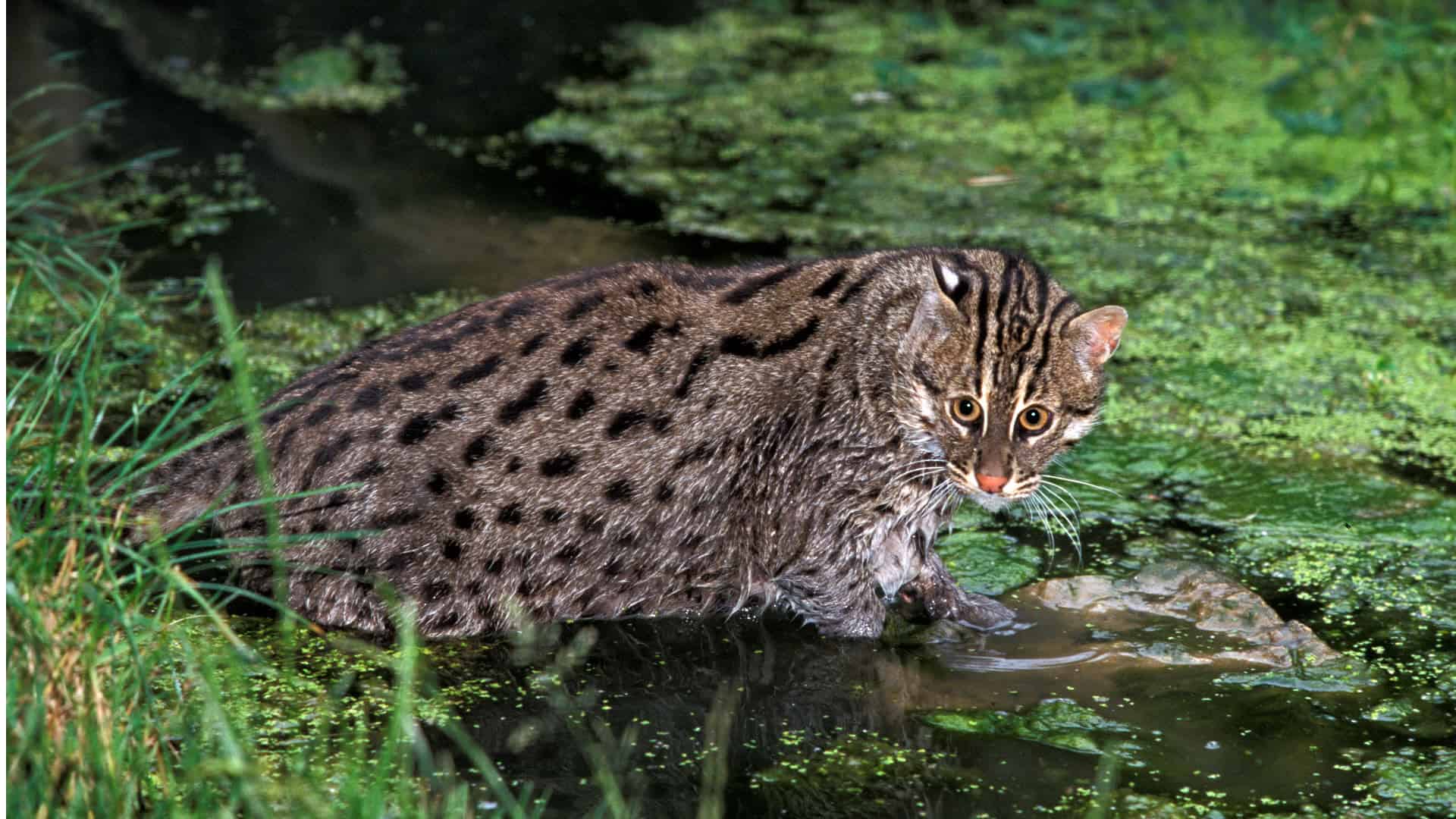
The IUCN Red List is the world’s most widely used system for tracking the conservation status of species. It provides a standardized way to understand how close a species is to extinction.
These categories—such as Endangered or Vulnerable—are based on scientific assessments of population size, trends, and threats. But while the labels are standardized, what they mean in real-world terms is not always obvious.
This guide includes the scientific definition, and then explains each category in plain language and what it typically means for the animals themselves.
How the IUCN Red List Began
The IUCN Red List was developed by the International Union for Conservation of Nature (IUCN), an organization founded in 1948 to bring together scientists, governments, and conservation groups.
In the 1950s and 1960s, concern was growing about the loss of wildlife around the world, but there was no consistent way to measure how serious the problem was or which species were most at risk.
The Red List was created as a standardized system to assess extinction risk using scientific data such as population size, trends, and habitat conditions. Over time, it evolved into a global reference used by researchers, governments, and conservation organizations.
Today, it is one of the most widely recognized tools for understanding the status of species and tracking changes in biodiversity over time.
Conservation categories
The IUCN Red List is the most widely used system for measuring the conservation status of species around the world. It groups species into categories based on their risk of extinction:
- Extinct (EX)
- Extinct in the Wild (EW)
- Critically Endangered (CR)
- Endangered (EN)
- Vulnerable (VU)
- Near Threatened (NT)
- Least Concern (LC)
- Data Deficient (DD)
- Not Evaluated (NE)
Below is a definition of each category, along with what each one means in both scientific terms and real-world impact.
Critically Endangered
Scientific definition: A species is classified as Critically Endangered when it meets specific IUCN criteria indicating an extremely high risk of extinction in the wild. This may include a rapid population decline (typically 80–90% over three generations), a very small population size (fewer than 250 mature individuals), or a severely restricted geographic range.
What this means: Critically Endangered is the most urgent conservation status before extinction in the wild. For some species, populations have dropped to just a few hundred—or even fewer. At that level, survival is no longer just about habitat or prey. It becomes a question of whether the remaining animals can continue as a viable population at all.
With so few individuals, genetic diversity declines. This can lead to inbreeding, reduced fertility, and increased vulnerability to disease. Even if the animals are protected, the population may struggle to recover on its own.
At this stage, recovery often depends on long-term human intervention—protected areas, breeding programs, and intensive monitoring. Without that support, many of these species would not persist in the wild.
Endangered
Scientific definition: A species is classified as Endangered when it meets IUCN criteria indicating a very high risk of extinction in the wild. This may include a population decline of 50–70%, fewer than 2,500 mature individuals, or a restricted and declining geographic range.
What this means: Endangered species still have viable populations, but their numbers are declining and their long-term survival is not guaranteed. In many cases, these animals are losing habitat, prey, or safe territory faster than they can adapt.
At this stage, populations may still be large enough to function, but pressures are building. Some groups become isolated, making it harder for individuals to find mates and maintain genetic diversity over time.
Conservation efforts can still be effective, but they require sustained protection of habitat, stable prey populations, and reduced conflict with people. Without those conditions, Endangered species can move quickly into more severe categories.
Vulnerable
Scientific definition: A species is classified as Vulnerable when it meets IUCN criteria indicating a high risk of extinction in the wild. This may include a population decline of 30–50%, fewer than 10,000 mature individuals, or ongoing habitat loss and fragmentation.
What this means: Vulnerable species are not yet at immediate risk of extinction, but the conditions that support them are changing. Habitat loss, declining prey, and human expansion are beginning to reduce their numbers or limit where they can live.
Populations at this level are often still large enough to function, but they may be shrinking, becoming more fragmented, or losing access to key resources.
This is often the stage where conservation efforts can have the greatest effect. If pressures are reduced and habitats are protected, populations can stabilize. If not, these species can move into more severe risk categories over time.
Near Threatened
Scientific definition: A species is classified as Near Threatened when it does not currently meet the criteria for Vulnerable, but is close to qualifying or is likely to qualify in the near future.
What this means: Near Threatened species are not currently considered at high risk, but they are close to meeting the criteria for a more serious classification. In many cases, populations are stable in some areas but declining in others.
At this stage, the warning signs are often subtle. A species may still be widespread, but pressures such as habitat loss, reduced prey, or human expansion are starting to have an effect.
This is often a transition point. If conditions continue to decline, these species can move into higher risk categories over time.
Least Concern
Scientific definition: A species is classified as Least Concern when it does not meet the criteria for any of the threatened categories and is considered to have a relatively large and stable population.
What this means: Least Concern means a species is not currently at risk of extinction, usually because it has a wide range or a relatively large population. However, this does not mean the species is free from threats or stable everywhere.
Many Least Concern species are declining in parts of their range due to habitat loss, reduced prey, or increasing human activity.
This category reflects where a species stands today, not where it is heading. Changes in habitat, food availability, or human pressure can shift populations over time.
Extinct in the Wild
Scientific definition: A species is classified as Extinct in the Wild when it is known only to survive in captivity, cultivation, or outside its natural range, with no confirmed individuals remaining in its natural habitat.
What this means: Extinct in the Wild means the species can no longer survive on its own in nature. The conditions that once supported it—habitat, prey, and ecosystem balance—are no longer there, or no longer sufficient.
The species may still exist in zoos or controlled breeding programs, but it is no longer part of a functioning ecosystem. It is no longer interacting with its environment in the way it evolved to.
At this point, survival depends entirely on human care. Without continuous management and intervention, the species would not continue to exist at all.
Extinct
Scientific definition: A species is classified as Extinct when there is no reasonable doubt that the last individual has died, following exhaustive surveys in known and expected habitats.
What this means: Extinct means the species is gone. There are no individuals left anywhere—no wild populations, no captive animals, nothing remaining.
When a species disappears, its role in the ecosystem does not simply get replaced. Predators, prey, vegetation, and natural balances can all be affected. In some cases, these changes are immediate. In others, they build over time as the system becomes less stable.
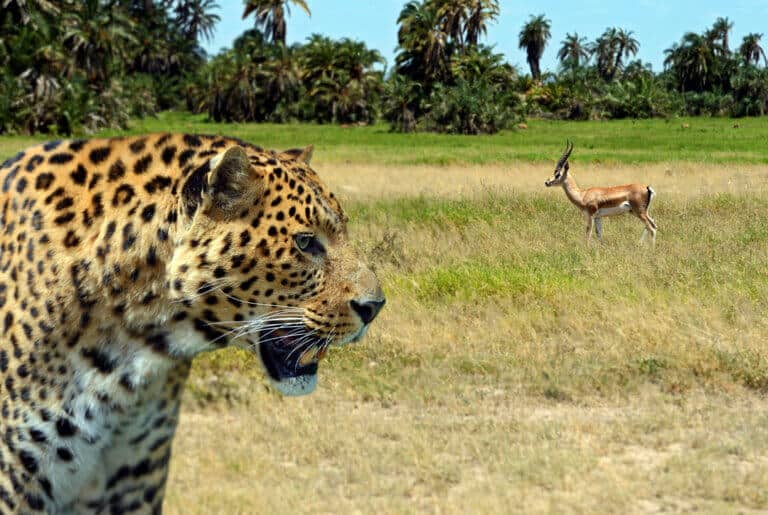
For apex predators like wild cats, the impact can be significant. They help regulate prey populations and maintain balance across entire ecosystems. Without them, those systems can begin to break down in ways that are not always obvious at first—but become harder to reverse over time.
Once a species is extinct, it does not return. The system moves forward without it, often in a diminished state.
Data Deficient
Scientific Definition: A wild cat is classified as Data Deficient when there is not enough reliable information to assess its risk of extinction. This does not mean the species is not at risk—it means scientists do not yet have enough data on its population size, distribution, or threats to make a determination.
What it means: A Data Deficient classification highlights uncertainty. The species could be stable, or it could be declining without being detected. For wild cats, this often applies to species that are difficult to study due to remote habitats, low population density, or limited research. It signals a need for more field studies and monitoring, rather than indicating safety.
Not Evaluated
Scientific Definition: A wild cat is classified as Not Evaluated when it has not yet been assessed by the IUCN Red List. This means no formal evaluation of its conservation status has been completed.
What it means: Not Evaluated simply indicates that the species has not been reviewed yet—it does not reflect its level of risk. While most wild cat species have been assessed, this category exists to show that the evaluation process is ongoing and not all species are included at all times. It’s a reminder that conservation assessments depend on available research and periodic review.
The long-term impact of extinction
Extinction is a natural part of life on Earth. Over millions of years, species have appeared, adapted, and disappeared as environments changed. Not every species persists, and that in itself is not unusual.
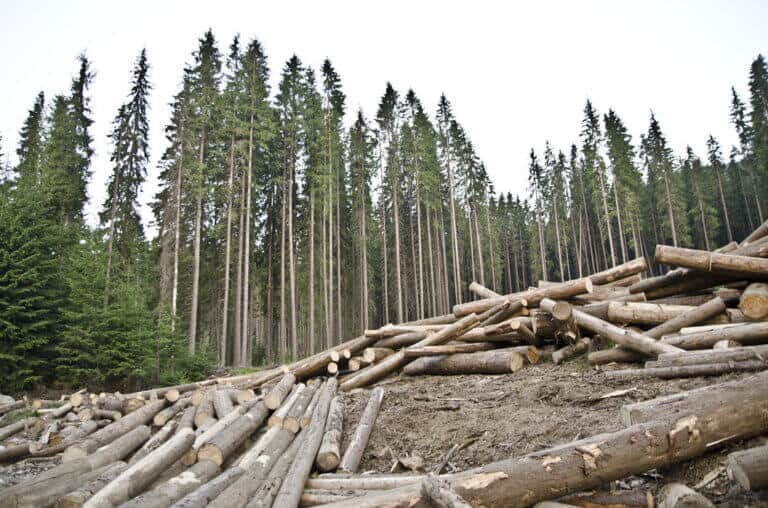
Many modern extinctions are not the result of environmental change, but of shifts driven by human activity—habitat loss, prey decline, pollution, and expansion into wild areas.
When a species disappears, especially one that plays a key role in its ecosystem, the effects can extend beyond that single loss. This is sometimes described as a trophic cascade.
A trophic cascade happens when changes at one level of the food system affect multiple other levels. For example, if a predator declines, prey populations may increase. That can lead to overgrazing, changes in vegetation, and further impacts on other species that depend on that environment.
These changes are not always immediate or obvious. They can build slowly over time, altering how the system functions and reducing its overall stability.
Over time, the loss of multiple species can have a cumulative effect, making ecosystems less resilient and more difficult to restore.
0 Comments