Culture refers to the shared ideas, beliefs, and ways of life of a group of people. It includes things like stories, religion, art, symbols, and traditions that are passed down over time. Culture helps people make sense of the world around them and gives meaning to the things they see and experience.
Overview
Wild cats have appeared in human culture for thousands of years.
They show up in:
- stories and myths
- religion and symbolism
- art and architecture
- books, films, and modern media
Across cultures, wild cats have never been just animals. They represent qualities people recognize and value — strength, independence, stealth, and control.
Rather than simply observing them, people have looked to wild cats as symbols of power, shaping how they tell stories, build identities, and express ideas about the natural world.
______________________________
“Cats have held a unique place in human culture, symbolizing both power and mystery across civilizations.” – Source: The Metropolitan Museum of Art
______________________________
Why Wild Cats Became Cultural Symbols
In many parts of the world, wild cats were the most powerful predators people encountered. That shaped how they were understood.
Wild cats sit at the top of the food chain. In many places, they were the strongest predators people encountered.
Because of this, people often saw wild cats as:
- symbols of strength
- leaders or rulers
- protectors
- or even godlike beings
At the same time, people were also afraid of them. Wild cats could be dangerous, especially in areas where humans and animals lived close together.
This combination—respect and fear—helped turn wild cats into powerful cultural symbols.
Different Regions, Different Wild Cats
No single wild cat dominates culture worldwide. Instead, different regions focused on the species that lived nearby.
Lions (Africa, Europe, Middle East)
Lions became important symbols in many cultures where they were once common.
They are often associated with:
- strength
- leadership
- royalty
Lions appear in:
- coats of arms and national symbols
- statues and monuments
- religious and historical stories
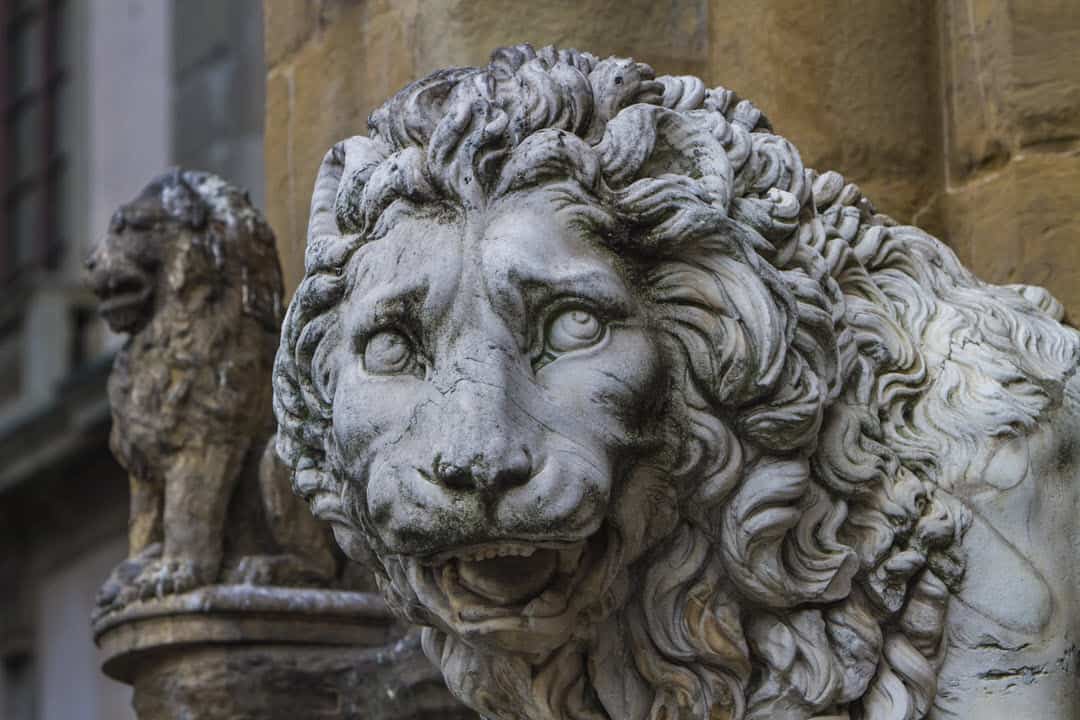
Image: The Medici lions in Rome. Marbled sculptures dating back to 2nd century AD.
Tigers (Asia)
In many parts of Asia, the tiger holds a similar role.
Tigers are often seen as:
- powerful and fearless
- protectors
- guardians against danger
They appear in:
- mythology and folklore
- traditional art
- religious symbolism
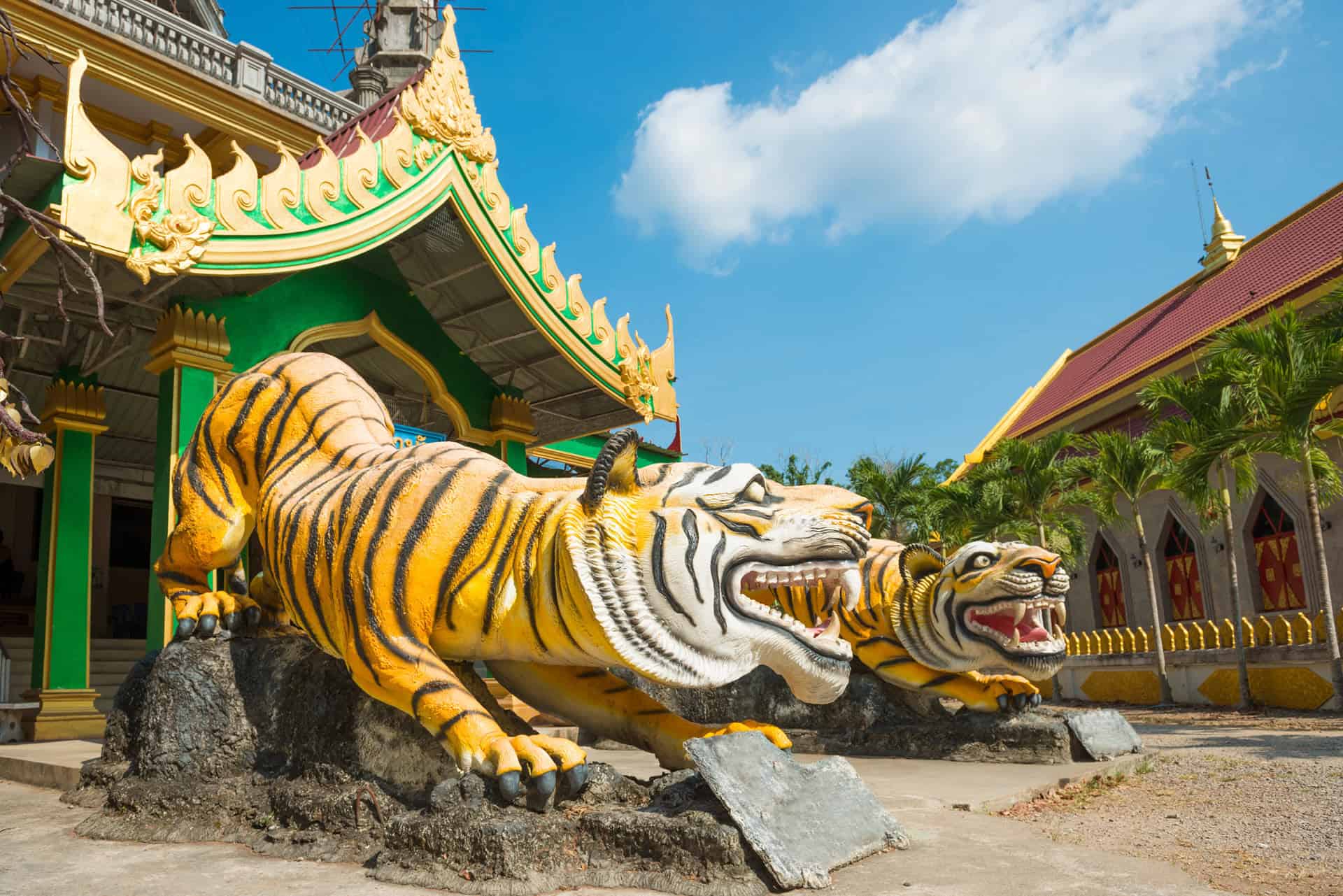
Image: Tigers at the entrance to a Buddhist pagoda.
Jaguars (Central and South America)
In Central and South America, the jaguar was one of the most important animals in ancient cultures.
Jaguars were associated with:
- power
- the spirit world
- night and transformation
They appear in:
- carvings and sculptures
- ceremonial clothing
- symbols of leadership
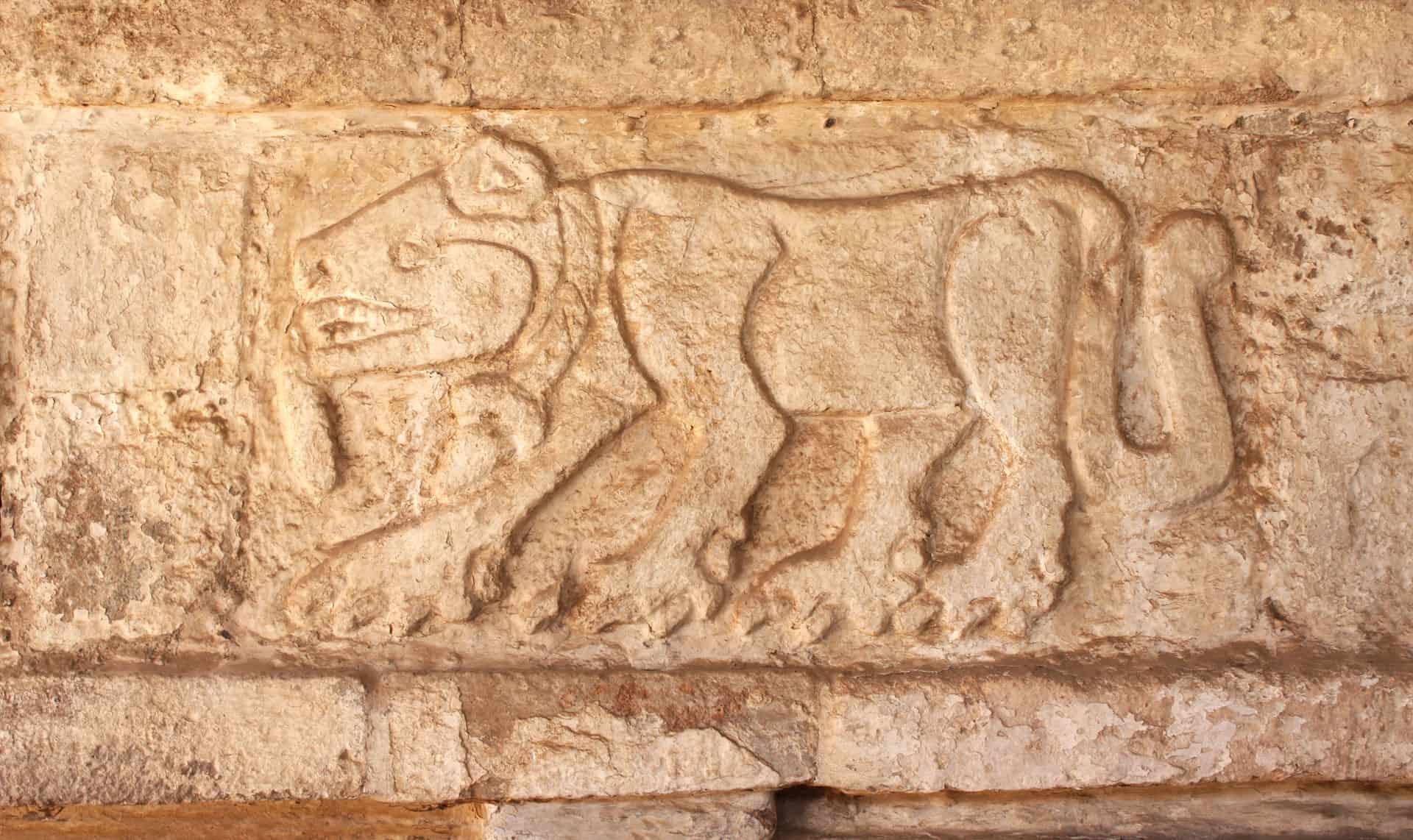
Image: Jaguar wall carving.
Other wild cats
While lions, tigers, and jaguars became dominant symbols, other wild cats also appeared in cultural stories and beliefs.
- Leopards often represent stealth and agility
- Lynx are sometimes linked to mystery or sharp vision
- Smaller wild cats appear more in stories than in large symbolic roles
Wild Cats in Early Art and History
Wild cats have been part of human art for tens of thousands of years.
Some of the earliest known images of wild cats were found in cave paintings.
One example is the paintings of lions in Chauvet Cave, which are over 30,000 years old.
Wild cats also appear in:
- ancient sculptures
- carvings in stone and metal
- early written stories and records
These images show that people have been thinking about wild cats for a very long time.
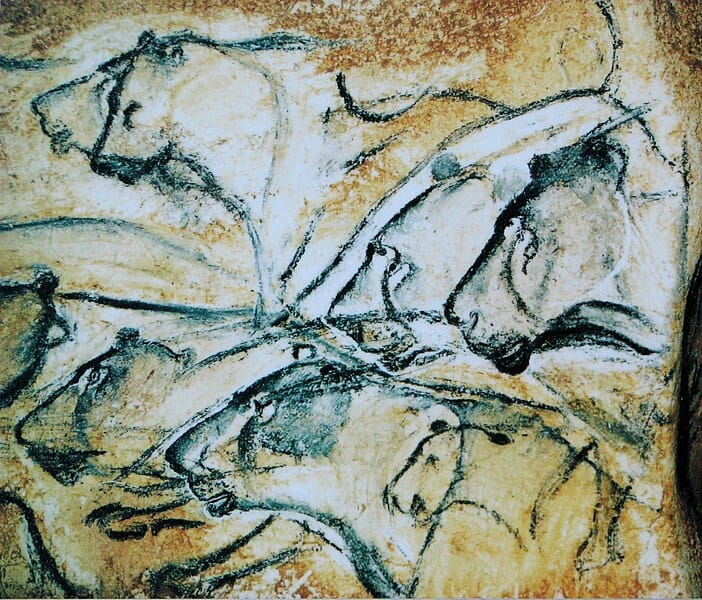
Image: The Chauvet cave lions.
Wild Cats in Religion and Mythology
In some cultures, wild cats were seen as more than animals.
They were sometimes connected to:
- gods and goddesses
- spiritual power
- protection or danger
For example:
- The Hindu goddess Durga is often shown riding a tiger
- Lions appear in many religious stories as symbols of strength or guardianship
These ideas helped shape how people understood wild cats and their place in the world.
Wild Cats in Modern Culture
Wild cats are still important symbols today.
They appear in:
- books and movies
- cartoons and stories
- sports teams and mascots
- company logos
Some well-known examples include:
- characters like Shere Khan and Tigger
- mascots like Tony the Tiger
- symbols used in films, brands, and teams
Even today, wild cats are used to represent:
- power
- speed
- confidence
While lions, tigers, and jaguars became the most widely recognized cultural symbols, they are not the only wild cats that appear in human stories and traditions. Across different regions, people also gave meaning to other species based on what they observed in nature. Some were seen as stealthy and mysterious, others as watchful or independent. The specific animal may change, but the pattern stays the same—wild cats became symbols because of how they lived, how they hunted, and how people experienced them in the real world.