Big cats are among the most recognizable animals on Earth, but many species are facing serious threats in the wild. From habitat loss to illegal wildlife trade, conservation efforts today focus on protecting both the animals and the ecosystems they depend on.
What Are Big Cats?
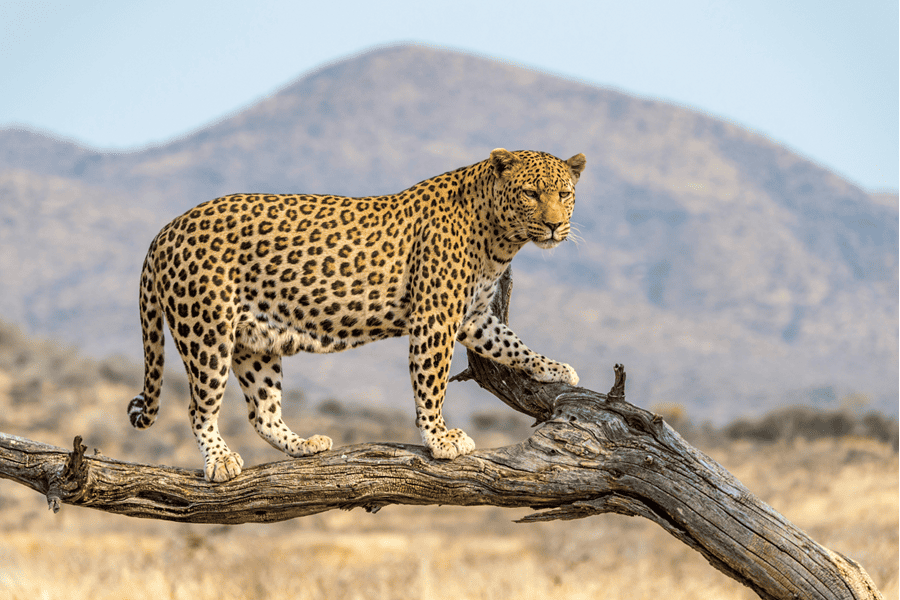
The term “big cats” is commonly used to describe the largest members of the cat family. It typically includes the four roaring cats (lion, tiger, leopard, and jaguar), along with other large species such as the snow leopard, cheetah, and cougar.
Why Big Cats Are Important
Life on Earth is organized into ecosystems—communities of plants, animals, and other organisms interacting with each other and their environment.
An ecosystem includes:
- animals (like big cats and their prey)
- plants and vegetation
- water, soil, and climate
These parts are connected. What affects one part of an ecosystem can affect everything else.
In a healthy ecosystem, species exist in a natural balance.
- Plants grow and provide food
- Herbivores (plant-eaters) feed on vegetation
- Predators help control herbivore populations
This balance allows ecosystems, and the planet, to remain stable over time.
When one part of the system changes—especially at the top of the food chain—the effects can spread throughout the entire ecosystem.
What Big Cats Do
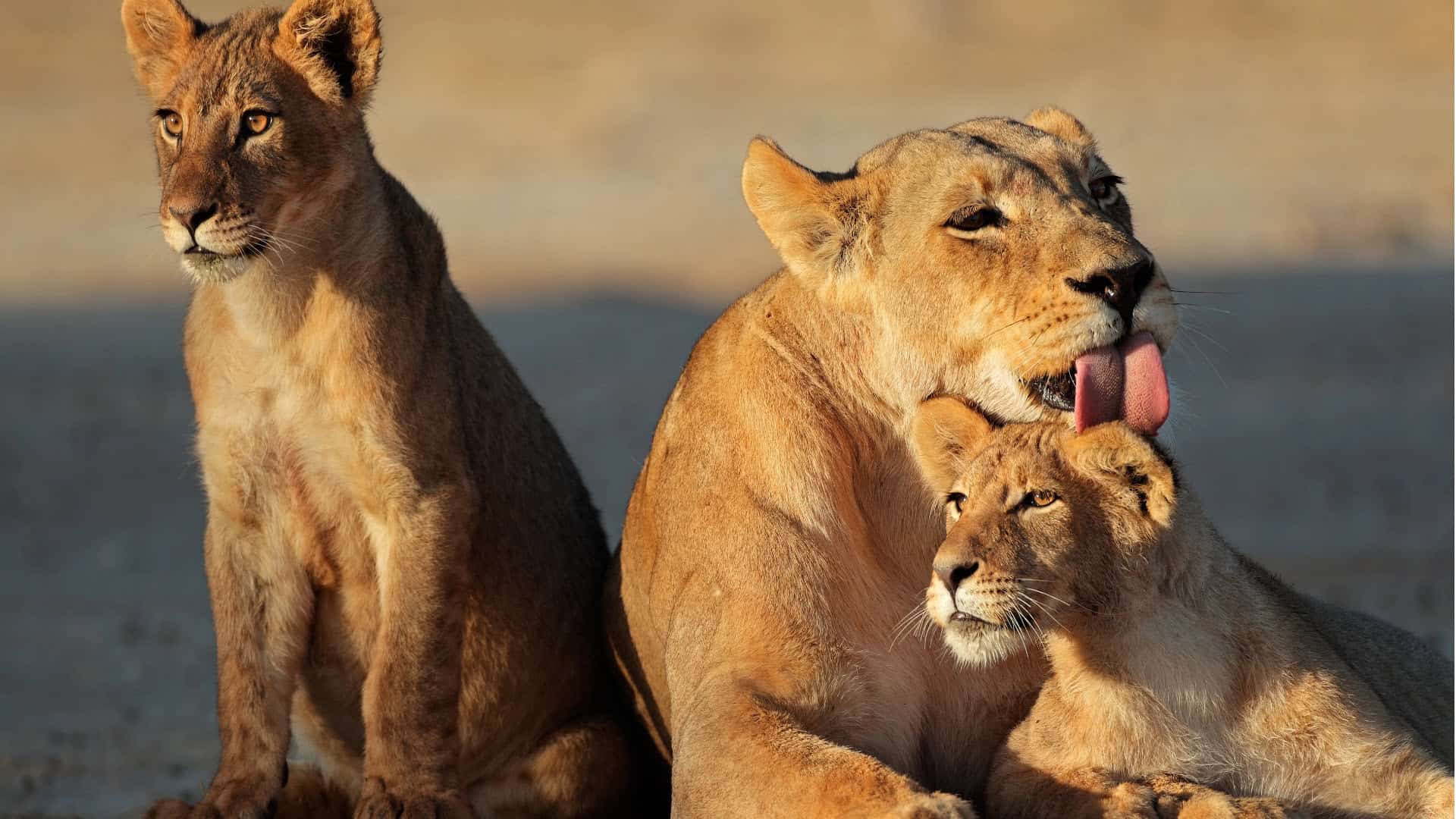
Big cats sit at the top of many ecosystems as apex predators, meaning they are not hunted by other animals. Instead, they are the hunters. Because of their position, they the overall health of their environment.
1. They regulate prey populations
As apex predators, big cats hunt animals like deer, antelope, and wild boar. This keeps those populations from growing too large.
Without predators:
- prey populations can increase quickly
- vegetation gets overgrazed
- forests and grasslands begin to degrade
Over time, this can lead to soil erosion, loss of plant species, and fewer resources for other animals.
2. They influence other animal behavior
Big cats don’t just reduce numbers—they change how prey animals move and feed.
Prey species tend to avoid areas where predators are active. This prevents overuse of certain habitats and allows vegetation to recover.
When predators disappear:
- prey animals stay in one place longer
- sensitive areas (like riverbanks) get overused
- habitats become damaged
3. They support broader ecosystems
Because they sit at the top of the food chain, big cats indirectly support many other species.
Healthy predator populations can lead to:
- more balanced herbivore populations
- healthier plant communities
- better conditions for birds, insects, and smaller animals
What Happens When Big Cats Disappear
When big cats disappear from an area, the effects can spread through the entire ecosystem.
This process—sometimes called a trophic cascade—can result in:
- overgrazed landscapes
- declining biodiversity
- long-term habitat damage
In some regions, the loss of large predators has changed entire ecosystems over time.
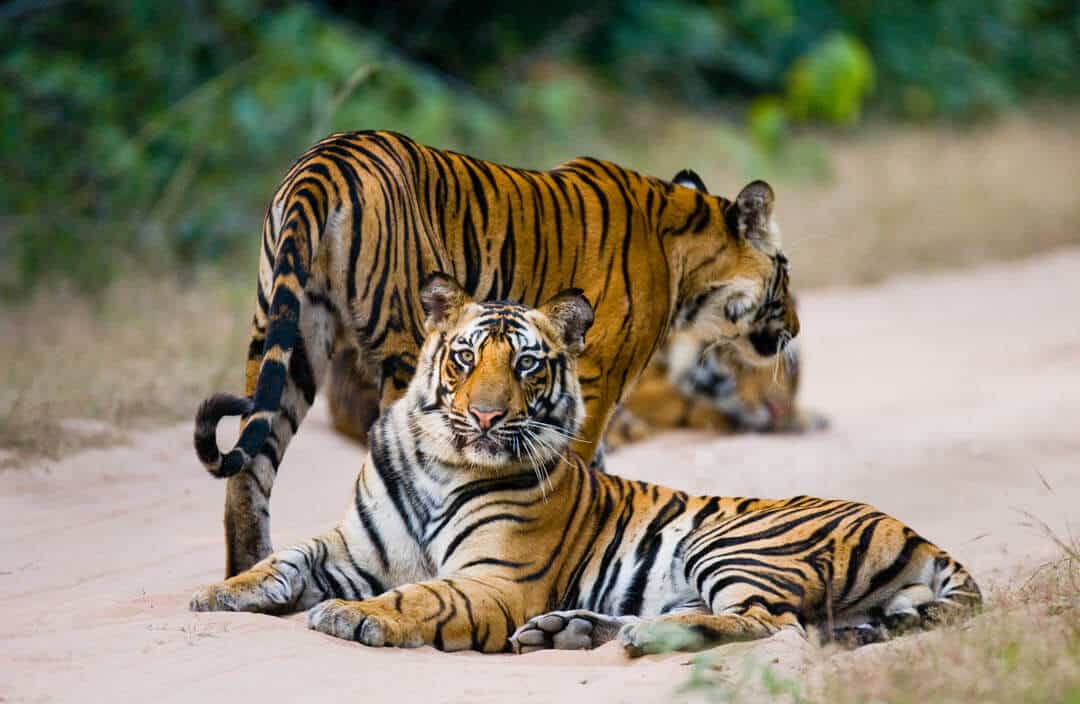
Image: tigers in the wild.
Major Threats to Big Cats
1. Habitat loss and fragmentation
Big cats require large territories to survive. As forests, grasslands, and other habitats are cleared for agriculture, logging, and development, these areas become smaller and more divided.
For wide-ranging species like tigers, lions, and leopards, this creates several problems:
- territories shrink below what individuals need to hunt and reproduce
- populations become isolated, reducing genetic diversity
- cats are pushed closer to human settlements
Over time, fragmented habitats can no longer support stable big cat populations.
2. Poaching and illegal wildlife trade
Big cats are targeted for their skins, bones, and other body parts, which are sold through illegal wildlife trade networks.
This is especially critical for species like tigers and leopards:
- tiger bones are used in traditional medicine markets
- leopard skins and parts are traded across Africa and Asia
- even small population losses can have a major impact
Because many big cat populations are already low, poaching can quickly push them toward local extinction.
3. Human–wildlife conflict
As big cats lose habitat, they are more likely to come into contact with people.
This often leads to conflict:
- lions and leopards may prey on livestock
- tigers may enter villages when natural prey is scarce
- farmers and herders may kill big cats in retaliation
In some regions, this is one of the leading causes of big cat mortality. Even a few incidents can lead to widespread fear and reduced tolerance for conservation efforts.
4. Declining prey populations
Big cats depend on healthy populations of prey animals such as deer, antelope, and wild pigs.
When these species are overhunted or displaced:
- big cats struggle to find enough food
- they expand their range in search of prey
- they are more likely to target livestock
This creates a chain reaction, increasing both starvation risk and human conflict.
Conservation Strategies and Challenges
Protecting big cats is not a single solution—it is a combination of strategies shaped by local conditions, economics, and human behavior. What works in one region may not work in another.
Conservation is not just about animals. It involves:
- the laws and enforcement capacity of different countries
- the attitudes of people living alongside big cats
- economic pressures, including illegal wildlife trade
- land use decisions driven by agriculture and development
Because of this, every conservation approach has tradeoffs. Some efforts succeed in one place and struggle in another.
1. Protected Areas
National parks and reserves are one of the most important tools for big cat conservation. They provide space where animals can live, hunt, and reproduce with reduced human pressure.
In some regions, this has worked well. For example, tiger populations in parts of India have increased within well-managed reserves.
But protected areas have limits:
- many are too small for wide-ranging species
- animals do not recognize park boundaries
- poaching and human activity can still occur inside parks
Protected areas are a foundation—but they are not enough on their own.
2. Wildlife Corridors and Connected landscapes
Wildlife corridors connect fragmented habitats, allowing big cats to move between populations.
This is critical for species like leopards and lions, which need large territories. In parts of Africa, conservation efforts have focused on linking protected areas so animals can move more freely.
However, creating a corridor is only part of the challenge:
- land must remain undeveloped over time
- local communities must support or tolerate its use
- infrastructure projects (roads, fences) can disrupt movement
In practice, conservation is not just about building corridors—it is about keeping them open and usable year after year.
3. Anti-Poaching and Enforcement
Anti-poaching efforts include ranger patrols, surveillance systems, and intelligence networks.
In well-funded areas, these programs can significantly reduce illegal hunting. For example, increased enforcement has helped stabilize some populations of large cats in protected regions.
But enforcement is uneven:
- some areas lack funding and trained personnel
- illegal trade networks operate across borders
- demand for wildlife products continues to drive poaching
This means enforcement alone cannot solve the problem—it has to be part of a broader system.
4. Community-Based Conservation
Many big cat habitats overlap with human communities. In these areas, conservation depends on how people experience living with these animals.
In some regions:
- livestock losses from lions or leopards create economic hardship
- communities may respond by killing predators
Programs that offer compensation, education, or alternative income (like eco-tourism) can reduce conflict.
But these programs are not simple:
- compensation may not fully cover losses
- trust takes time to build
- conservation goals may not match local priorities
Long-term success depends on whether conservation works for the people who live there—not just for the animals.
5. Monitoring, Research, and Data
Conservation efforts rely on data from camera traps, tracking, and field studies.
This helps researchers understand:
- where big cats are found
- how populations are changing
- which threats are most immediate
However, there are limits:
- some species are difficult to study
- data can be incomplete or outdated
- population estimates often vary
Even with modern tools, conservation decisions are sometimes made with uncertainty.
Why Conservation is Complex
These conservation strategies are connected.
For example:
- habitat loss can reduce prey
- reduced prey can increase conflict
- conflict can lead to retaliatory killing
Each step affects the next.
There is no single solution that works everywhere. Conservation is an ongoing process that requires adapting to local conditions, balancing competing needs, and maintaining effort over time.
Big Cat Conservation Status
The table below summarizes the current conservation status of major big cat species and subspecies, along with population estimates and sources. These figures are based on the most recent available data but may vary by region and survey method.
*Indicates the full species when there are subspecies.
Critically Endangered
| Species Group | Common Name | Scientific Name | Population | Source | Notes |
| Leopard | Amur Leopard | Panthera pardus orientalis | ~100–120 | IUCN / IUCN CatSG | Primarily found in Russia and northeast China. |
| Leopard | Arabian Leopard | Panthera pardus nimr | ~100–120 | IUCN / IUCN CatSG | Fragmented populations across the Arabian Peninsula. |
| Leopard | Indochinese Leopard | Panthera pardus delacouri | ~100–800 | IUCN / IUCN CatSG | Rapid declines across Southeast Asia. |
| Tiger | Malayan Tiger | Panthera tigris jacksoni | ~80–150 | IUCN / IUCN CatSG | Severe population decline in Malaysia. |
| Tiger | South China Tiger | Panthera tigris amoyensis | Possibly extinct in the wild | IUCN / IUCN CatSG | No confirmed wild population remains. |
| Tiger | Sumatran Tiger | Panthera tigris sumatrae | ~400–600 | IUCN / IUCN CatSG | Restricted to Sumatra. |
| Cheetah | Asiatic Cheetah | Acinonyx jubatus venaticus | ~12 | IUCN / IUCN CatSG | Only found in Iran. |
| Cheetah | Northwest African Cheetah | Acinonyx jubatus hecki | ~200–250 | IUCN / IUCN CatSG | Scattered populations in Sahara and Sahel. |
Endangered
| Species Group | Common Name | Scientific Name | Population | Source | Notes |
| Tiger | Tiger | Panthera tigris | ~3,700–5,600 | IUCN | Global population across all subspecies. |
| Lion | Asiatic Lion | Panthera leo persica | ~650–700 | IUCN / IUCN CatSG | Single population in India. |
| Leopard | Javan Leopard | Panthera pardus melas | ~180–680 | IUCN / IUCN CatSG | Limited to Java. |
| Leopard | Persian Leopard | Panthera pardus tulliana | ~750–1,044 | IUCN / IUCN CatSG | Main population in Iran. |
| Tiger | Amur Tiger | Panthera tigris altaica | ~450–500 | IUCN | Russia and China. |
| Tiger | Bengal Tiger | Panthera tigris tigris | ~2,600–3,300 | IUCN | Largest remaining tiger population. |
| Tiger | Indochinese Tiger | Panthera tigris corbetti | ~350 | IUCN | Declining population in Southeast Asia. |
| Cheetah | Northeast African Cheetah | Acinonyx jubatus soemmeringii | Unknown | IUCN | Poorly quantified population. |
Vulnerable
| Species Group | Common Name | Scientific Name | Population | Source | Notes |
| Cheetah | Cheetah | Acinonyx jubatus | ~6,500–7,100 | IUCN | Global population fragmented across Africa with a small population in Iran. |
| Lion | African Lion | Panthera leo | ~20,000–25,000 | IUCN | Population declining across most of its range. |
| Leopard | Leopard | Panthera pardus | Unknown | IUCN | Widespread but declining across Africa and Asia. |
| Leopard | African Leopard | Panthera pardus pardus | Unknown | IUCN | Largest remaining leopard population but declining. |
| Leopard | Sri Lankan Leopard | Panthera pardus kotiya | ~800–1,000 | IUCN | Endemic to Sri Lanka. |
| Cheetah | Southeast African Cheetah | Acinonyx jubatus jubatus | ~3,500–4,000 | IUCN | The largest remaining cheetah population. |
| Snow Leopard | Snow Leopard | Panthera uncia | ~4,000–6,500 | IUCN / IUCN CatSG | Widely distributed across Central Asia in remote mountain regions. |
Near Threatend
| Species Group | Common Name | Scientific Name | Population | Source | Notes |
| Jaguar | Jaguar | Panthera onca | ~15,000 | IUCN | Population declining; strongest populations remain in the Amazon basin. |
| Leopard | Indian Leopard | Panthera pardus fusca | ~12,000–14,000 | IUCN | Largest leopard population outside Africa; impacted by habitat loss and human conflict. |
Least Concern
| Species Group | Common Name | Scientific Name | Population | Source | Notes |
| Cougar | Cougar | Puma concolor | ~50,000+ | IUCN | Extremely wide range across the Americas. |
Annual Big Cat Conservation Update (2026)
Recent data shows a mixed picture for big cat conservation. Some populations are stabilizing or increasing under strong protection, while others continue to face pressure from habitat loss, illegal trade, and human conflict.
- Tiger populations show uneven recovery: Global tiger numbers are estimated at approximately 3,700–5,500 individuals, with significant gains in countries like India and Nepal, where conservation programs have led to population increases. However, tigers remain absent or critically low in parts of Southeast Asia.
Source: IUCN Red List |
Global Tiger Forum Estimate - Illegal wildlife trade remains a major threat: Recent reports indicate that tiger trafficking continues at high levels, with organized networks driving demand for skins, bones, and whole animals. This remains one of the most immediate threats to wild populations.
Source: CBS News (TRAFFIC report) - Regional successes highlight what works: In parts of India and Thailand, tiger populations have increased due to sustained anti-poaching enforcement, habitat protection, and improved monitoring using camera traps and scientific surveys.
Source: Nature (India tiger recovery) |
Thailand tiger recovery - Human–wildlife conflict is increasing in some areas: As big cats expand into human-dominated landscapes or lose prey, conflicts are rising. In parts of Russia and India, tigers are increasingly moving into agricultural areas, leading to livestock losses and retaliatory killings.
Source: India tiger range expansion - Conservation is expanding beyond protected areas: New efforts are focusing on tracking big cats outside traditional reserves, reflecting the reality that many populations now live in fragmented or human-influenced landscapes.
Source: 2026 Tiger Estimation Program
Why this matters: These updates show that big cat conservation is not moving in a single direction. Some populations are recovering under strong protection, while others continue to decline. Outcomes depend on long-term habitat stability, enforcement, and how well conservation efforts align with local conditions.