
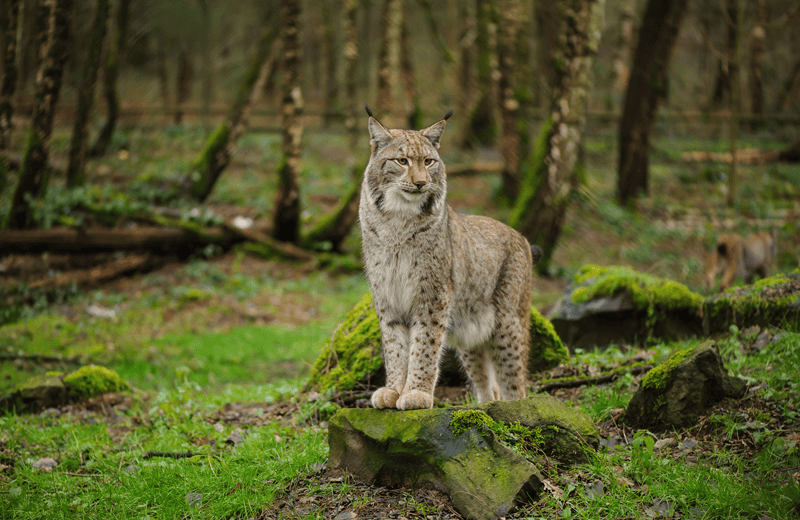
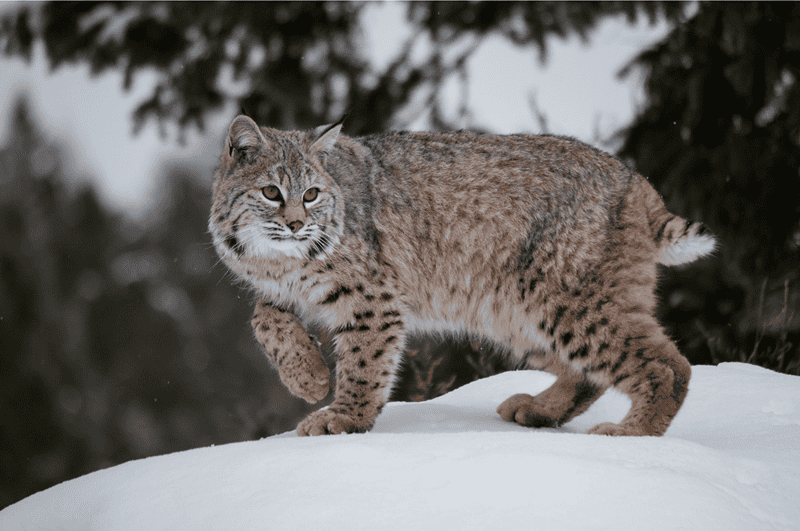
.Have you ever seen a bobcat? They are medium-sized wild cats found throughout North America, from the southern parts of Canada to Mexico’s northern regions. It is the smallest of all the four lynx species,
Scientific Name: Lynx rufus
Conservation Status: Least Concern; the population is stable
Recognized subspecies:
- L. r. rufus
- L. r. fasciatus
Lineage: The bobcat belongs to the Lynx lineage, along with the Canada lynx, Eurasian lynx and Iberian lynx.
Meaning of name: The name “bobcat” comes from the cat’s bobbed (short) tail.
Population: The bobcat population is currently estimated at between 700,000 to 1.5 million.
Interesting bobcat facts
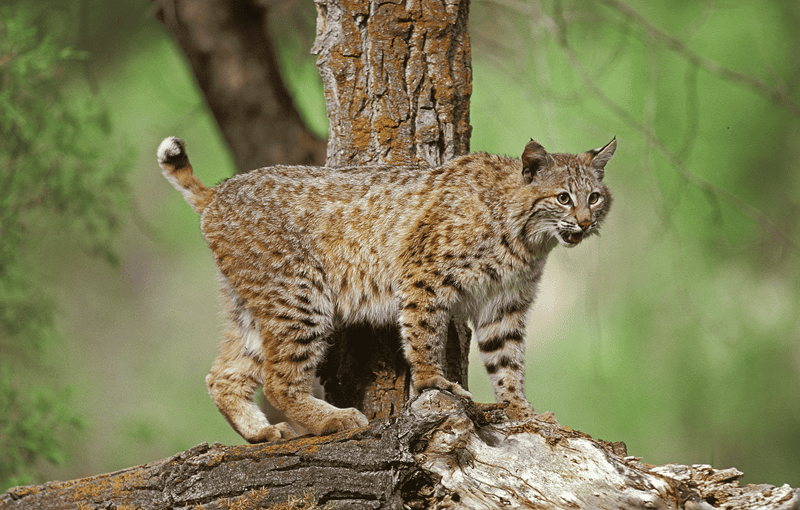
- Bobcats have a very short tail
- It is the most common wild cat in North America
- The bobcat is also known as the “red lynx.”
- It is the smallest of the four living lynx species.
- The bobcat is believed to have evolved from the Eurasian lynx when it crossed into North America 2.6 million years ago.
- A bobcat’s running stride averages 4 to 8 feet in length.
- Bobcats have good hearing, vision, and smell.
- The cat’s scientific name was first proposed in 1777.
- They spend most of their time on the ground, but they are also really good climbers.
- A mostly silent cat that can make loud calls when mating.
More about the bobcat
The bobcat is found in southern Canada, throughout most of the United States, and even in the state of Oaxaca in Mexico.
Origin and history
It is believed the bobcat evolved from the Eurasian lynx, which migrated to North America from Asia using the Bering Land Bridge around 2.5 million years ago. Bobcats initially settled in the south. Once the glaciers disappeared, they moved north.
Physical appearance
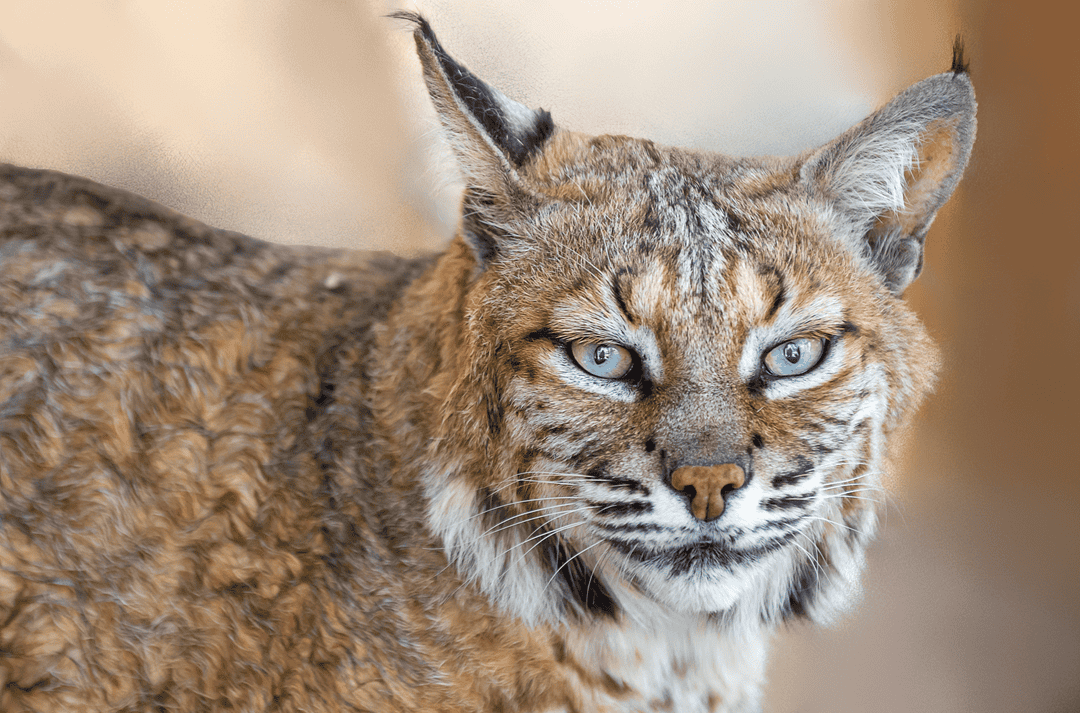
The bobcat has black stripes on its legs, a short black-tipped tail, and black-tufted ears. It has yellow eyes with off-white lips and chin. The bobcat’s face has a wide appearance because of the tufts of hair beneath its ears. The cat’s coat can range from gray to yellow-brown or red-brown. Bobcats are similar in appearance to other members of the lynx genus but smaller.
| Bobcat | FROM | TO |
| Weight | 14 lbs. | 49 lbs. |
| Length | 18 in. | 50 in. |
| Tail | 3.5 in. | 8 in. |
Bobcats are bigger in northern regions and places where there are open habitats. Overall, female bobcats are smaller than males.
Location and habitat
Bobcats like forests but can also be found in shrubland, deserts, swamps, and agricultural areas. Sometimes, their range overlaps with another bobcat’s. Most of their activities are confined to their territory, which has a main den and many shelters.
Bobcat behavior
The bobcat is a primarily solitary wild cat. Sometimes, its range overlaps with another bobcat. The bobcat marks its territory with urine, feces, and claw marks. They are mostly active early to late morning and at dusk. They may also come out at night.
Hunting and prey
The bobcat preys on rabbits and hares, beaver, porcupine, marmot, rodents, and deer. It stalks its prey and pounces for the kill. The cat is most active at twilight. It can climb trees and swim if necessary. They can go without food for long periods.
Reproduction and lifespan
Females are pregnant for 60 or 70 days. A male travels with a female from winter to early spring and will mate with her multiple times while they are together. Kittens are born in covered spaces and have quite a bit of fur and spots. They open their eyes around the ninth or tenth day after birth. Bobcats live in the wild and average of 7 years if there is no hunting in the area, but generally only 3 years where they are hunted. In captivity they can live as long as 18 years.
Bobcat Conservation issues
Bobcats have been aggressively hunted for their fur and sport. Other threats include disease, accidents, starvation, and automobiles.
After decades of overhunting, bobcats disappeared from New Jersey by the 1970s; they were reintroduced to the area during the late 1970s and early 1980s. Bobcats were also reintroduced to Iowa in 1985 and Cumberland Island , Georgia.
Bobcats are protected in the countries where they live.
Bobcat research quotes
2007 Fall and Winter Food Habits of Bobcats (Lynx rufus) in Iowa | Brockmeyer, Clark et al. “The bobcat (Lynx rufus) is a widely distributed native felid of North America but nearly disappeared from Iowa due to habitat loss and unregulated harvest that occurred during the century after European settlement. Bobcats are repopulating the state and are now relatively common in southern Iowa.”
2018 Diet and Abundance of Bobcat (Lynx rufus) in the Potosino-Zacatecano Plateau, Mexico | Sanchez-Gonzalez, Hernandez et al. “The Potosino-Zacatecano Plateau (PZP) is characterized by a system of hills surrounded by ridges where the bobcat is the only wild felid…The diet included 14 taxa, with the rabbit Sylvilagus audubonii (the desert cottontail) as the species most frequently consumed.”