Small wild cats are often overlooked in conservation, but many species face the same pressures as larger cats—sometimes with fewer protections and less attention. While big cats like lions and tigers tend to dominate conservation efforts, smaller species such as the rusty-spotted cat, flat-headed cat, and Andean mountain cat are often at equal or greater risk.
In many cases, small wild cats live in fragmented or specialized habitats. When those habitats are reduced or altered, populations can decline quickly. Because these species are less studied, changes in population size are not always detected right away.
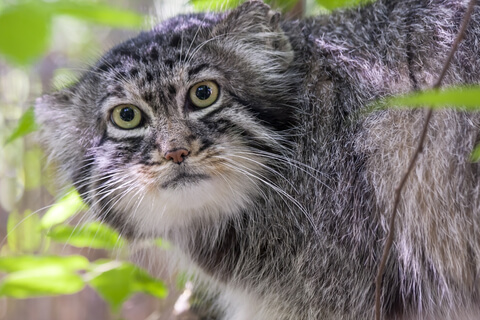
Why small wild cats are at risk
The threats facing small wild cats are similar to those affecting larger species, but their impact is often more immediate—and less visible.
- Habitat loss (especially forests)
Many small wild cats depend on dense forests, wetlands, or thick ground cover. Unlike larger cats that may use open savannas or protected reserves, species like the marbled cat or clouded leopard rely heavily on tree cover and layered vegetation.
Deforestation and land clearing don’t just reduce space—they remove the structure these cats depend on for hunting, movement, and shelter. - Less protection from conservation systems
Large cats are often the focus of conservation planning—protected areas are designed around them, and populations can be monitored more easily.
Small wild cats, by contrast, are harder to detect and track. It’s much easier to count a pride of lions than confirm the presence of a single forest-dwelling cat. As a result, they are often underrepresented in conservation decisions. - Large ranges, but low visibility
Some small wild cats have home ranges that overlap with or approach those of larger predators, especially in low-density habitats like forests.
The difference is they occur at much lower densities and are rarely seen, which can make populations appear stable even when they are declining. - High dependence on small prey
Unlike big cats that can survive for days after a large kill, small wild cats must hunt frequently—often daily.
They rely on steady populations of rodents, birds, reptiles, and insects. When land use changes reduce these prey species, small cats can be affected very quickly. - Fragmentation and isolation
When forests or natural habitats are broken into smaller patches, small wild cats may become isolated in areas that are too small to support healthy populations.
Limited movement between these patches reduces genetic diversity and increases long-term risk. - Human conflict at a smaller scale
Small wild cats are sometimes killed near farms or villages, especially if they prey on chickens or small livestock.
Because they are smaller and less protected than big cats, these incidents are less likely to be reported or addressed. - Limited research and awareness
Many small wild cat species remain poorly studied. Some are rarely photographed in the wild, and basic data on population size, range, and behavior is still incomplete.
This lack of information makes it harder to identify declines early or build effective conservation strategies.
Small wild cats are not necessarily safer because they are smaller. In many cases, they are more vulnerable—because they disappear quietly.
Conservation challenges
Small wild cat conservation is often more difficult because of limited data, low visibility, and fewer dedicated resources.
- Population estimates are often uncertain
Many small wild cats are rarely seen in the wild. They live in dense forests, are active at night, and avoid human presence.
As a result, population estimates are often based on limited camera trap data or indirect signs, which can make it hard to know whether numbers are stable or declining. - Some species are listed as Data Deficient
Several small wild cat species are classified as “Data Deficient” by the International Union for Conservation of Nature.
This means there is not enough reliable information to assess their risk of extinction. In practice, it can delay conservation action because the level of threat is unclear. - Funding and research tend to focus on larger species
Well-known animals like lions, tigers, and leopards receive more attention, funding, and long-term study.
Small wild cats are less visible and less understood, so fewer resources are dedicated to tracking their populations or protecting their habitats. - Difficult to monitor and manage
Because small wild cats are elusive and often occur at low densities, they are harder to monitor over large areas.
This makes it challenging to measure whether conservation efforts are working or to respond quickly to declines.
This means conservation efforts are sometimes reactive rather than proactive. By the time clear evidence of decline appears, populations may already be reduced or fragmented, making recovery more difficult.
Conservation efforts
Small wild cat conservation is still developing compared to large-cat programs, but there are real efforts on the ground that show how these species are being studied and protected. In most cases, small wild cats are not the primary focus of conservation systems. Instead, they benefit from broader habitat protection, targeted research projects, and community-based programs. While these efforts are often regional and limited in scale, they provide important insight into what is working—and where gaps still exist.
Camera trap research and species detection
Because small wild cats are elusive, nocturnal, and often live in dense habitats, camera traps have become one of the most important tools for studying them. These systems allow researchers to confirm presence, estimate populations, and better understand behavior without direct observation. In many cases, camera traps have provided the first reliable records of species in certain regions.
• Marbled cats have been confirmed in parts of Southeast Asia through camera trap studies, where they are rarely seen directly but regularly recorded in forest habitats
• Andean cat populations have been studied using camera traps across Argentina, Bolivia, and Chile, helping identify key habitat areas
• Small cats such as jungle cats and leopard cats are frequently recorded during tiger monitoring programs in India, even though they are not the primary target species
Targeted conservation programs
A small number of organizations have begun focusing specifically on lesser-known wild cat species. These programs typically combine field research, conservation planning, and local partnerships. While still limited compared to large-cat efforts, they represent some of the most direct conservation work being done for small wild cats.
• Panthera runs a Small Cats Program focused on research and conservation strategies for lesser-known species
• Small Wild Cat Conservation Foundation supports field projects in Africa and Asia, including species like the African golden cat and flat-headed cat
• The Andean Cat Alliance (Alianza Gato Andino) works specifically to protect Andean cat populations through research and regional cooperation
Community-based conservation efforts
In many regions, conservation depends on reducing conflict between people and wildlife. For small wild cats, this often means addressing issues like poultry predation or trapping. Community-based programs focus on practical solutions that allow people and small cats to coexist, often with immediate results.
• In parts of South America, programs supporting Andean cat conservation work with local communities to reduce hunting and protect habitat
• The Small Wild Cat Conservation Foundation has supported projects that build predator-proof enclosures to protect poultry, reducing retaliatory killing of small cats
• Community outreach programs in Southeast Asia aim to reduce trapping and improve awareness of lesser-known forest species
Protected areas and indirect habitat protection
Although protected areas are rarely designed specifically for small wild cats, they still play an important role by preserving habitat. Many small cat species live within national parks and reserves, benefiting from broader conservation efforts aimed at ecosystems or larger animals.
• Small wild cats are found within major protected areas such as tiger reserves in India and forest reserves in Southeast Asia, where habitat protection benefits multiple species
• The Aravalli Range has documented small wild cats through monitoring programs tied to broader conservation efforts
• In South America, Andean cat habitats overlap with protected high-altitude ecosystems, even though reserves are not specifically designed for them
Habitat connectivity and landscape conservation
Maintaining connected habitats is important for many wildlife species, including small wild cats. While corridors are not usually created specifically for them, broader landscape-level conservation efforts can help maintain movement between fragmented areas and support long-term population stability.
• Wildlife corridors in India and Southeast Asia support movement of multiple species, including small wild cats detected through camera traps
• Landscape-level conservation efforts in the Andes aim to maintain connectivity between fragmented habitats used by Andean cats
• Broader forest conservation initiatives help preserve the dense habitats required by arboreal species like the marbled cat
This combination of research, indirect protection, and localized programs reflects the current state of small wild cat conservation—practical, evolving, and still expanding as more data becomes available.
Mid-sized vs. small wild cats
Most people think of wild cats in two groups: big cats like lions and tigers, and everything else as “small.” In practice, that second group includes a wide range of species—from very small cats like the rusty-spotted cat to mid-sized cats like the bobcat, serval, and lynx. These mid-sized species are still much smaller than big cats (often by 100 pounds or more), which is why they are usually grouped together on lists of small wild cats.
Even within this group, however, there are meaningful differences.
Mid-sized wild cats are generally more visible and better studied than the smallest species. Cats like bobcats and lynx are regularly observed, tracked, and in some cases actively managed. By contrast, many smaller wild cats are rarely seen and are known mostly from camera traps or indirect evidence.
That said, habitat use is not always a clear dividing line. While some mid-sized cats are more adaptable and can live in a range of environments—including areas affected by human activity—others are highly specialized. Species such as the fishing cat and clouded leopard depend on very specific habitats like wetlands or dense forests and may be just as sensitive to environmental change as smaller cats.
There are also differences in how these cats interact with prey and people. Mid-sized cats can take larger prey and are more likely to come into conflict with humans over livestock, while smaller cats rely heavily on small prey and are more affected by subtle changes in ecosystem balance. At the same time, smaller species are more likely to be overlooked, both in research and conservation planning.
Overall, the distinction between small and mid-sized wild cats is not strict, but it helps explain why conservation challenges can vary. Some species are adaptable and visible, while others are highly specialized and rarely seen—and those differences can shape how easily they are protected.
IUCN Red List Categories
The conservation status of wild cats is commonly assessed using the International Union for Conservation of Nature Red List. This system evaluates species based on population trends, habitat conditions, and known threats, and assigns them to categories that reflect their risk of extinction.
For small wild cats, four main categories are most commonly used:
- Least Concern (LC)
Species that are relatively widespread and stable. While they are not currently at high risk, they still depend on healthy habitats and can decline if conditions change. - Near Threatened (NT)
Species that are not yet endangered but are close to qualifying for a higher risk category. These species may be experiencing habitat loss, population decline, or other pressures that could worsen over time. - Vulnerable (VU)
Species facing a high risk of decline in the wild. This may be due to shrinking habitat, reduced prey, or increasing human impact. Without conservation efforts, these species could become endangered. - Endangered (EN)
Species at a very high risk of extinction in the near future. Populations are often small, fragmented, or rapidly declining, and immediate conservation action is usually needed.
The Red List provides a standardized way to understand how different species are doing, but not all small wild cats are well studied. Some are listed as Data Deficient, meaning there is not enough information to fully assess their status.
Conservation Status – Medium | Small Wild Cats
The tables below show how small and medium-sized wild cats are distributed across conservation status categories. While some species remain stable, many are at risk due to habitat loss, fragmentation, and limited research.
Critically Endangered (2)
| Size | Species Group | Common Name | Scientific Name | Status | Population | Source | Notes |
| Small | Leopard Cat | Iriomote Cat | Prionailurus bengalensis iriomotensis | Critically Endangered | ~100 | IUCN / IUCN CatSG | Endemic to Iriomote Island, Japan. |
| Medium | Eurasian Lynx | Balkan Lynx | Lynx lynx balcanicus | Critically Endangered | ~30–50 | IUCN / IUCN CatSG | Highly fragmented population in the Balkans. |
Endangered (2)
| Size | Species Group | Common Name | Scientific Name | Status | Population | Source | Notes |
| Small | Andean Mountain Cat | Andean Mountain Cat | Leopardus jacobita | Endangered | ~2,200 mature individuals | IUCN / IUCN CatSG | Rare high-altitude species found in the Andes. |
| Small | Flat-headed Cat | Flat-headed Cat | Prionailurus planiceps | Endangered | <2,500 mature individuals | IUCN / IUCN CatSG | Wetland specialist threatened by habitat loss. |
Vulnerable (11)
| Size | Species Group | Common Name | Scientific Name | Status | Population | Source | Notes |
| Small | Bornean Bay Cat | Bornean Bay Cat | Catopuma badia | Vulnerable | <2,500 mature individuals | IUCN / IUCN CatSG | Rare and poorly studied species found only on Borneo. |
| Medium | Clouded Leopard | Clouded Leopard | Neofelis nebulosa | Vulnerable | <10,000 mature individuals | IUCN / IUCN CatSG | Lives in dense forests; population difficult to estimate. |
| Medium | Iberian Lynx | Iberian Lynx | Lynx pardinus | Vulnerable | ~1,500–2,000 | IUCN / IUCN CatSG | Strong recovery due to conservation programs. |
| Medium | Sunda Clouded Leopard | Sunda Clouded Leopard | Neofelis diardi | Vulnerable | <10,000 mature individuals | IUCN / IUCN CatSG | Found on Borneo and Sumatra; fragmented habitat. |
| Medium | African Golden Cat | African Golden Cat | Caracal aurata | Vulnerable | Unknown | IUCN / IUCN CatSG | Elusive forest species rarely observed. |
| Small | Black-footed Cat | Black-footed Cat | Felis nigripes | Vulnerable | <10,000 mature individuals | IUCN / IUCN CatSG | One of the smallest wild cats. |
| Small | Chinese Mountain Cat | Chinese Mountain Cat | Felis bieti | Vulnerable | Unknown | IUCN / IUCN CatSG | Endemic to western China; population poorly known. |
| Medium | Fishing Cat | Fishing Cat | Prionailurus viverrinus | Vulnerable | <10,000 mature individuals | IUCN / IUCN CatSG | Declining due to wetland loss. |
| Small | Northern Tiger Cat | Northern Tiger Cat | Leopardus tigrinus | Vulnerable | <10,000 mature individuals | IUCN / IUCN CatSG | Taxonomy revisions affect estimates. |
| Small | Southern Tiger Cat | Southern Tiger Cat | Leopardus guttulus | Vulnerable | Unknown | IUCN | Recently recognized species with limited data. |
| Medium | Asiatic Golden Cat | Asiatic Golden Cat | Catopuma temminckii | Vulnerable | Unknown | IUCN / IUCN CatSG | Widespread but declining across Asia. |
Near Threatened (4)
| Size | Species Group | Common Name | Scientific Name | Status | Population | Source | Notes |
| Small | Pampas Cat | Pampas Cat | Leopardus colocola | Near Threatened | Unknown | IUCN | Taxonomy under revision; population estimates remain uncertain. |
| Small | Marbled Cat | Marbled Cat | Pardofelis marmorata | Near Threatened | Unknown | IUCN / IUCN CatSG | Elusive forest species with limited field data. |
| Small | Margay | Margay | Leopardus wiedii | Near Threatened | Unknown | IUCN / IUCN CatSG | Arboreal species declining due to deforestation. |
| Small | Rusty-spotted Cat | Rusty-spotted Cat | Prionailurus rubiginosus | Near Threatened | Unknown | IUCN / IUCN CatSG | One of the smallest wild cats; population not well quantified. |
Least Concern (17)
| Size | Species Group | Common Name | Scientific Name | Status | Population | Source | Notes |
| Small | Kodkod | Kodkod | Leopardus guigna | Least Concern | <20,000 | IUCN / IUCN CatSG | Population declining due to habitat loss in Chile and Argentina. |
| Medium | Bobcat | Bobcat | Lynx rufus | Least Concern | ~2 million+ | IUCN | Stable and widespread across North America. |
| Medium | Canada Lynx | Canada Lynx | Lynx canadensis | Least Concern | ~50,000 | IUCN | Population fluctuates with prey cycles. |
| Medium | Caracal | Caracal | Caracal caracal | Least Concern | Widespread | IUCN | Wide distribution across Africa, the Middle East, and Asia. |
| Medium | Eurasian Lynx | Eurasian Lynx | Lynx lynx | Least Concern | ~50,000 | IUCN | Recovering in parts of Europe. |
| Small | Geoffroy’s Cat | Geoffroy’s Cat | Leopardus geoffroyi | Least Concern | ~40,000–80,000 | IUCN | Relatively stable but affected by habitat conversion. |
| Medium | Jungle Cat | Jungle Cat | Felis chaus | Least Concern | Widespread | IUCN | Broad range across Asia and the Middle East. |
| Small | Leopard Cat | Leopard Cat | Prionailurus bengalensis | Least Concern | Widespread | IUCN | Highly adaptable species across Asia. |
| Small | Leopard Cat | Sunda / Javan Leopard Cat | Prionailurus bengalensis javanensis | Least Concern | Unknown | IUCN / IUCN CatSG | Subspecies found in Southeast Asia. |
| Medium | Ocelot | Ocelot | Leopardus pardalis | Least Concern | ~40,000–50,000 | IUCN | Stable overall but declining in parts of its range. |
| Small | Pallas’s Cat | Pallas’s Cat | Otocolobus manul | Least Concern | <20,000 | IUCN / IUCN CatSG | Patchy distribution; sensitive to habitat change. |
| Small | Sand Cat | Sand Cat | Felis margarita | Least Concern | Unknown | IUCN | Adapted to desert environments. |
| Medium | Serval | Serval | Leptailurus serval | Least Concern | Widespread | IUCN | Common in parts of Africa. |
| Small | Wildcat | European Wildcat | Felis silvestris | Least Concern | Unknown | IUCN / IUCN CatSG | Fragmented populations across Europe. |
| Small | Wildcat | Scottish Wildcat | Felis silvestris silvestris | Least Concern* | ~100–300 (regional) | IUCN / regional data | Critically endangered in Scotland; not separately assessed by IUCN. |
| Small | Wildcat | Afro-Asiatic Wildcat | Felis lybica | Least Concern | Widespread | IUCN | Hybridization with domestic cats is a concern. |
| Medium | Jaguarundi | Jaguarundi | Herpailurus yagouaroundi | Least Concern | Unknown | IUCN | Widespread across Central and South America. |
Annual Small Wild Cat Conservation Update (2026)
Conservation efforts for small and medium-sized wild cats continued to evolve in 2025 and early 2026, with new research, habitat protection efforts, and increased attention to lesser-known species. While progress has been made in some areas, many small wild cats remain difficult to study, and population trends are still uncertain.
- Increased camera trap research
Camera traps remain one of the most important tools for studying small wild cats. Because many species are rarely seen, these systems allow researchers to confirm presence, track movement, and better understand habitat use. In some cases, species like the Andean mountain cat are so elusive that researchers may capture only a few images per year, making each record valuable.
Source: https://wildnet.org/news/the-secret-to-finding-andean-cats/ - Growing focus on lesser-known species
Conservation organizations are placing more emphasis on small wild cats that have historically received limited attention. Programs like Panthera’s Small Cats Program are working to better understand these species and develop targeted conservation strategies based on their specific ecological needs.
Source: https://panthera.org/cat/small-cats - Habitat loss remains the primary threat
Across regions such as Southeast Asia and South America, deforestation and land conversion continue to reduce the habitats small wild cats depend on. Many species require dense forest, wetlands, or specialized environments, making them especially vulnerable to habitat fragmentation.
Source: https://panthera.org/blog-post/pantheras-small-cats-program - Community-based conservation shows results
Local conservation programs are helping reduce conflict between people and small wild cats. Efforts such as predator-proof enclosures and community partnerships are being used to reduce retaliatory killing and protect habitat at a local level.
Source: https://smallcats.org/
Why small wild cats are Important
Small wild cats play an important role in maintaining ecological balance. As predators of small animals, they help regulate populations of rodents and other species. Their presence is often a sign of a functioning ecosystem.
Because many of these species are less visible, their decline can go unnoticed. Protecting small wild cats is not just about preserving individual species—it is about maintaining the systems they are part of.