Big cats did not appear all at once. They evolved over millions of years as environments changed and new hunting strategies developed. Today’s lions, tigers, leopards, and other large wild cats are the result of a long evolutionary process shaped by climate, geography, and survival.
Understanding where big cats came from helps explain why they look and behave the way they do today—from the ability to roar to the way they hunt and move through different habitats.
Early Ancestors of Big Cats
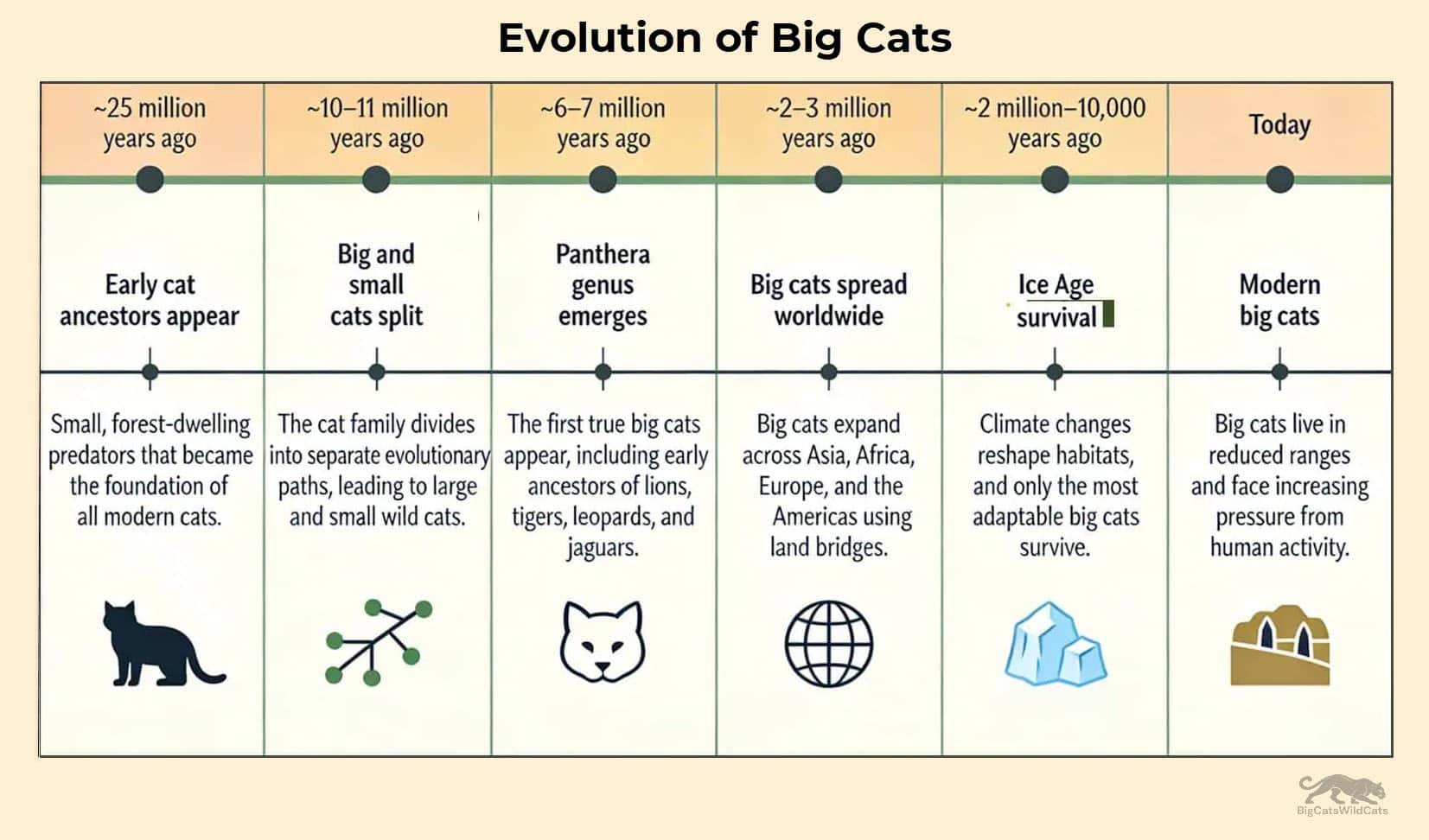
All cats belong to the family Felidae, which first appeared around 25 million years ago. Early cat-like animals were small and adapted for hunting in forests. Over time, different groups of cats evolved to fill different roles in their environments.
Some became fast runners suited to open grasslands, while others developed strong climbing abilities for life in trees. These early adaptations laid the foundation for the wide range of wild cats we see today.
The Rise of the Panthera Genus
The largest and most well-known big cats belong to the Panthera genus, which includes lions, tigers, leopards, and jaguars. These cats share a key feature: a specialized vocal structure that allows them to roar.
This ability is linked to changes in the hyoid bone and surrounding tissues in the throat. Roaring is not just a sound—it plays an important role in communication, helping these cats establish territory and locate one another over long distances.
Not all large cats can roar. Species like the snow leopard and cheetah are closely related to big cats in some ways, but they fall outside this group and have different vocal and physical adaptations.
______________________________
“The genus Panthera likely originated in Asia during the late Miocene, approximately 10–11 million years ago.” – Source: National Center for Biotechnology Information (genetic and fossil-based research on big cat evolution)
______________________________
Big Cats Spread Across the World
Big cats first evolved in Asia and later spread to other parts of the world. Over time, they expanded into Europe, Africa, and the Americas, adapting to a wide range of habitats along the way.
Land bridges played an important role in this movement. For example, the Bering Land Bridge allowed animals to move between Asia and North America, while the Isthmus of Panama connected North and South America.
As big cats spread, they adapted to different environments—from dense forests and mountains to open savannas. These changes led to the diversity of species we see today.
Ice Age and Environmental Change
During the Ice Age, changing climates and shifting landscapes affected where animals could live. Some large predators adapted to colder environments, while others disappeared as conditions changed.
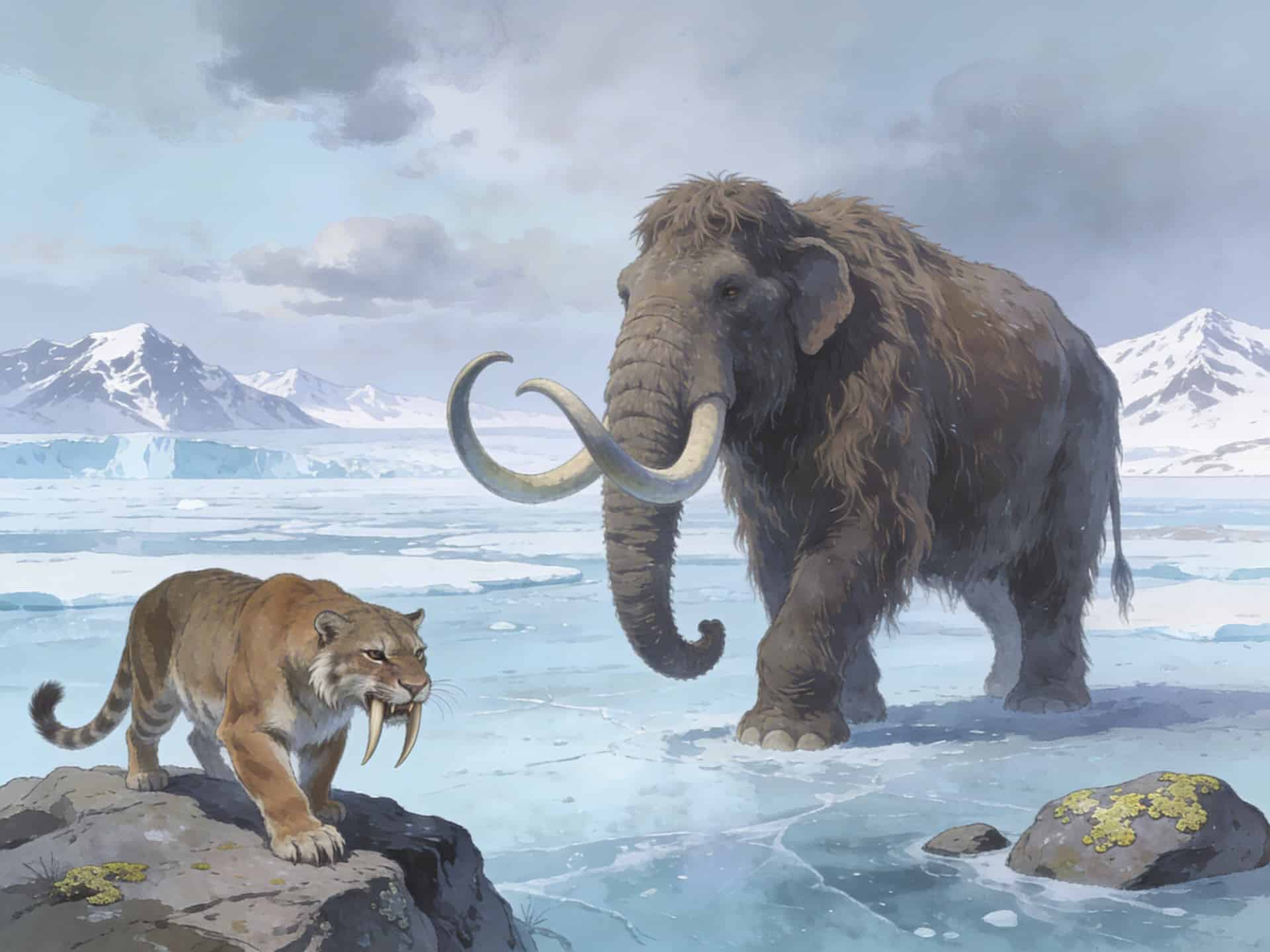
Prehistoric big cats, such as saber-toothed cats, once lived alongside early humans. While these animals are not direct ancestors of modern big cats, they show how diverse and widespread large feline predators once were.
Over time, many large species became extinct, leaving the modern big cats as the remaining representatives of this group.
Big Cats Today
Today’s big cats live in a wide range of environments, from African grasslands to Asian forests and high mountain regions. Each species reflects the environment it evolved in.
Lions are adapted for life in open savannas and social living, while tigers are built for strength and solitary hunting in dense vegetation. Leopards are highly adaptable, able to survive in many different habitats, and jaguars are closely tied to water-rich environments.
Although these cats are powerful predators, their ranges are much smaller than they once were. Habitat loss and human activity have changed where and how they live.
The Importance of Big Cats in History
Looking at the history of big cats helps explain the connections between different species and the roles they play in their ecosystems. It also shows how changes in the environment can shape the future of wildlife.