Most of the world’s wild cats are not lions or tigers—they are small, elusive hunters that live quietly across nearly every continent. They make up 80% of all wild cat species, and can be found in Africa, Asia, North America, South America, Central America, and Europe in a variety of habitats, from deserts to grasslands to hills and mountains.
Like big cats, small wild cats face many conservation threats, including habitat loss, illegal wildlife trade, poaching, prey depletion, and human conflict. This small wild cat list contains the common name and scientific name of all the small and medium-sized wild cats.
Small wild cats at a glance
| Number of Species | Approximately 33–35 species |
|---|---|
| Share of All Wild Cats | About 80% of all wild cat species |
| Global Distribution | Found on every continent except Antarctica |
Scientific classification
Like big cats, small wild cats are members of the Felidae family. Big cats (tiger, snow leopard, jaguar, lion and leopard) belong to the Pantherinae subfamily (Panthera lineage). Medium-sized clouded leopards and Sunda clouded leopards belong to the Pantherinae subfamily as well, but they do not roar.
The remaining small cats belong to the caracal lineage, ocelot lineage, Bay cat lineage, lynx lineage, puma lineage and leopard cat lineage.
Small wild cats have their own unqiue characteristics and abilities. “They are not smaller versions of their larger cousins.” Source: Journal of Feline Medicine and Surgery
Read more about small wild cat scientific classification.
Key differences
- Size: Big cats can weigh hundreds of pounds, while small wild cats typically weigh between 3 and 60 pounds.
- Roaring Ability: Big cats in the Panthera genus can roar; small wild cats cannot.
- Hunting Style: Big cats use strength to hunt large prey, while small wild cats rely on stealth and agility to catch smaller animals.
- Prey: Big cats hunt large mammals; small wild cats hunt rodents, birds, reptiles, and insects.
- Behavior: Small wild cats are generally more solitary and elusive, often avoiding human contact.
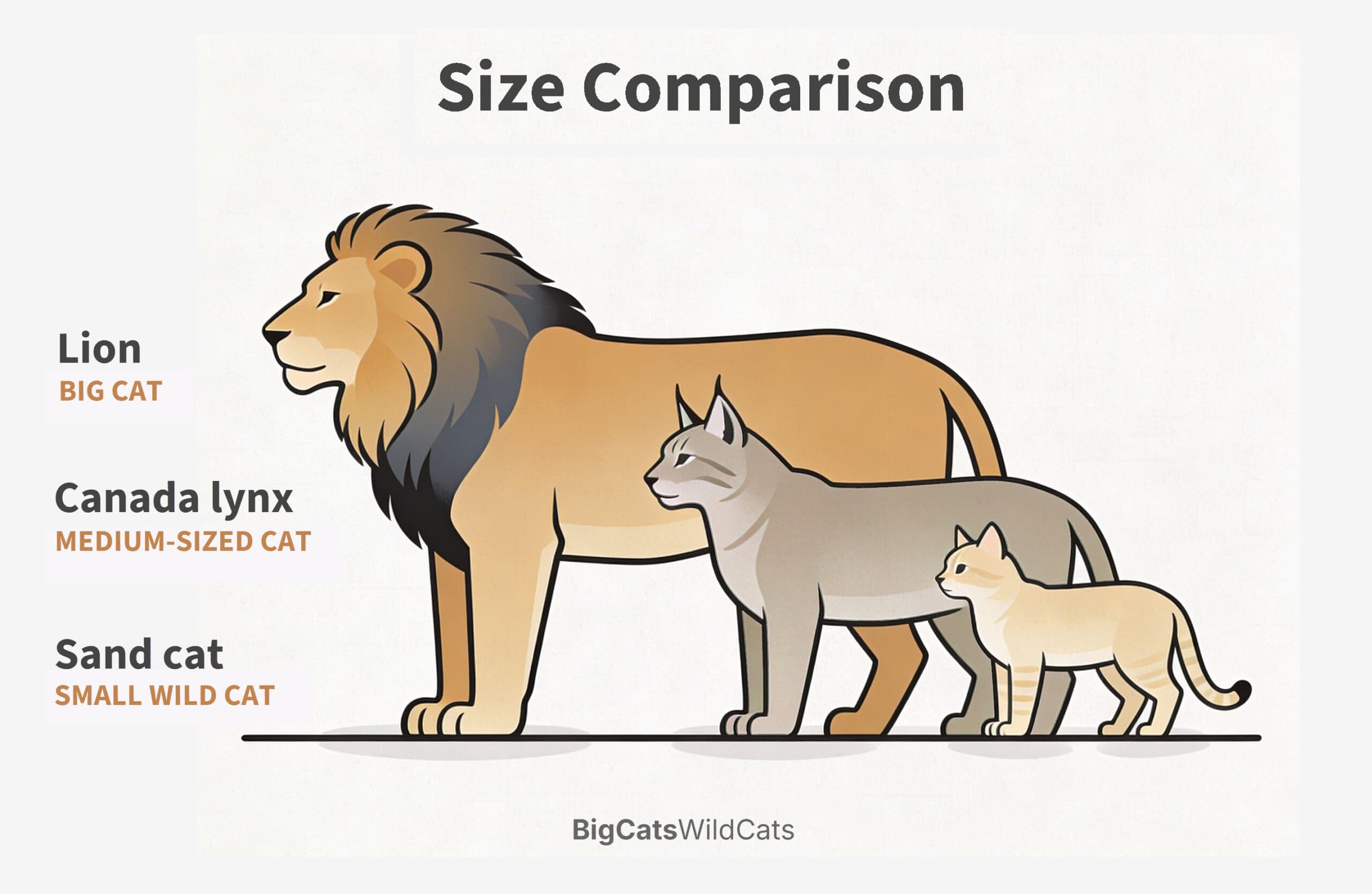
Small Wild Cat List
Our list of small wild cats includes all the small to medium-sized wild cats that are not generally considered big cats. These species make up the majority of the wild cat family and can be found in a wide range of habitats around the world, from forests and grasslands to deserts and mountains.
The medium-sized wild cats
A medium-sized wild cat is larger than most small wild cats but smaller than the big cats. These cats typically weigh between 15 and 60 pounds and include species like the Eurasian lynx and clouded leopard. While they are powerful hunters, they do not reach the size, strength, or roaring ability of big cats like lions or tigers.
This group includes 14 wild cats – the African golden cat, Asiatic golden cat, bobcat, Canada lynx, caracal, clouded leopard, Sunda clouded leopard, Eurasian lynx, fishing cat, Iberian lynx, jaguarundi, jungle cat, ocelot, and serval.
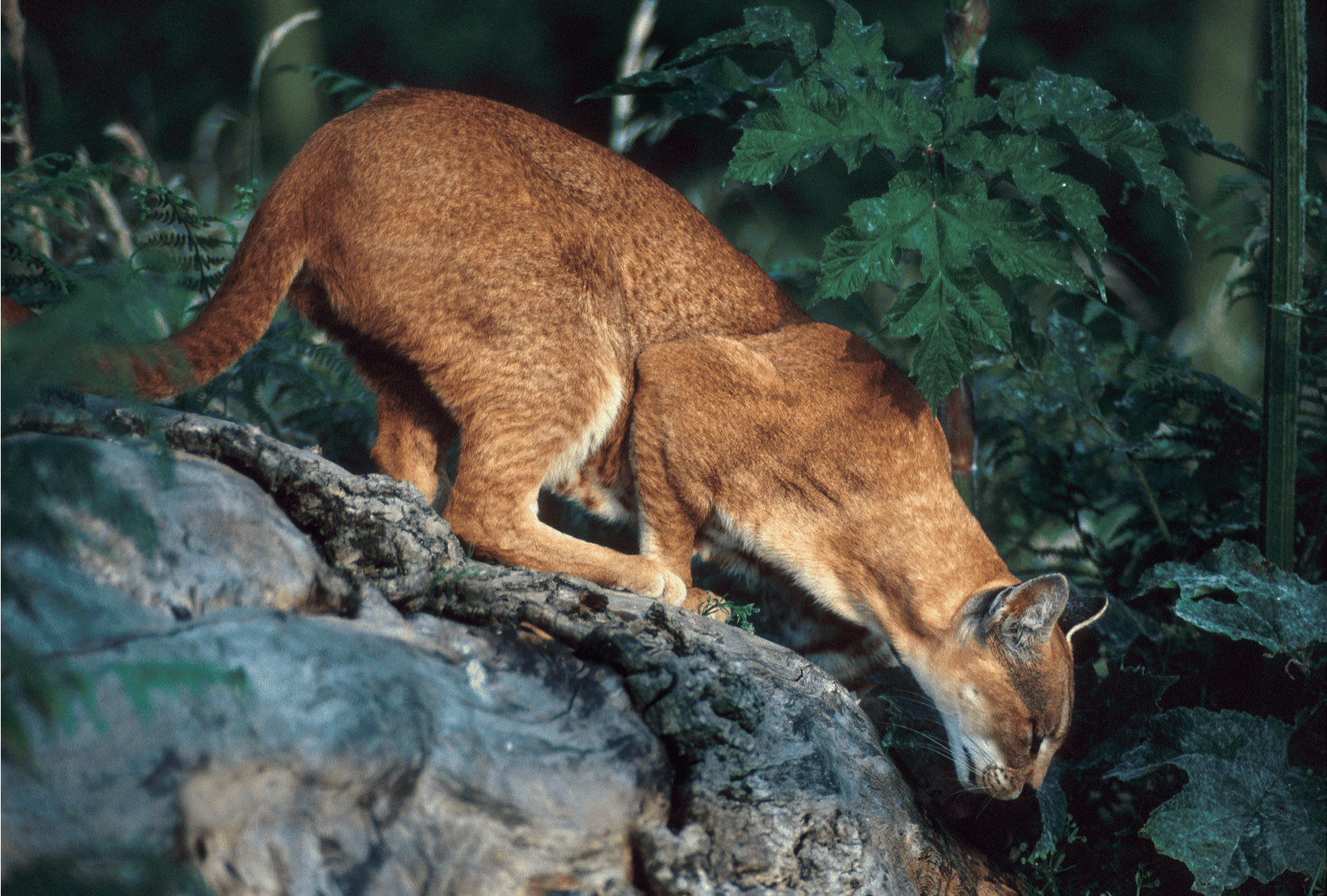
A medium-sized wild cat found in African forests related to the caracal and serval. Very little research has been conducted on the African golden cat. The cat’s primary prey are rodents and squirrels.
Caracal subspecies:
- Caracal aurata aurata (Congo River)
- Caracal aurata celidogaster (Cross River)
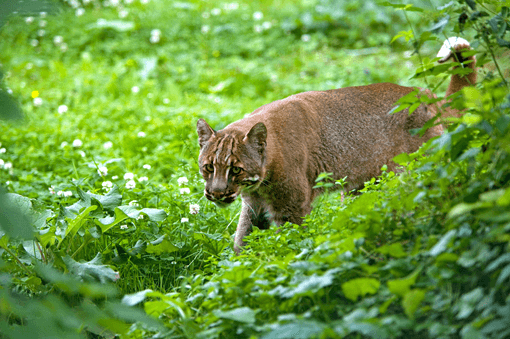
tA medium-sized wild cat from China, Nepal, Sumatra, Malaysia, Thailand, parts of India and southeast Asia.
Subspecies:
- Catopuma temminckii temminckii (Sumatra and Malay Peninsula)
- Catopuma Temminckii moormensis (from Nepal to Southeast Asia)
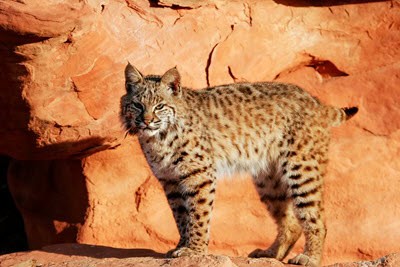
A medium-sized wild cat that can be found from Canada to Mexico. They live in diverse habitats, including forests, swamps and deserts.
Bobcat Subspecies:
- Lynx rufus rufus
- Lynx rufus fasciatus
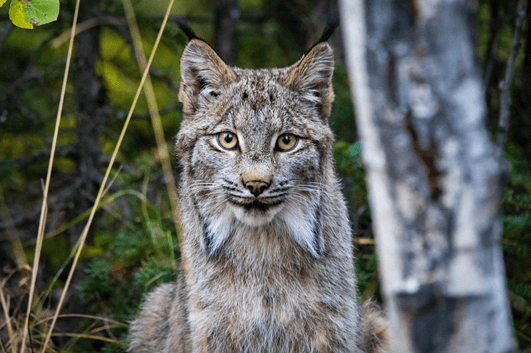
Canada Lynx
Lynx canadensis
Conservation Status: Least Concern.
A medium-sized wild cat found in Canada, the northern United States, Nova Scotia and New Brunswick, primarily in forests and wooded areas.
No subspecies.
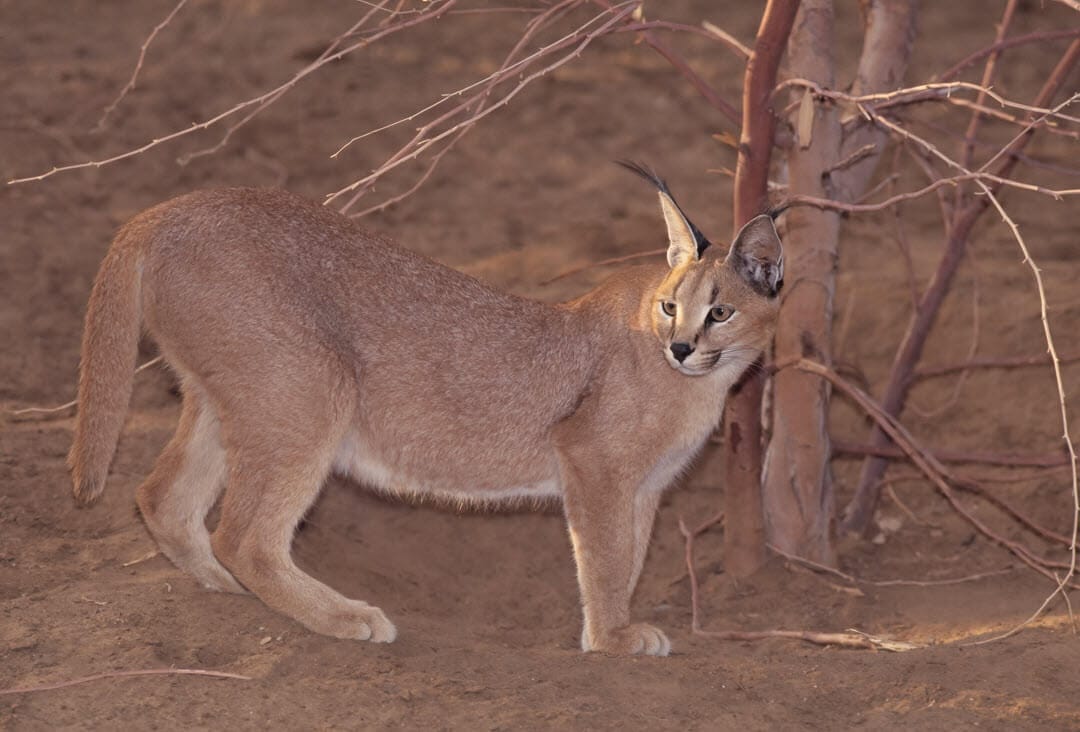
Caracal
Caracal caracal
Conservation Status: Least Concern.
A medium-sized wild cat found in Africa, Central Asia, the Middle East, Pakistan and India. Lives mostly in dry regions.
Subspecies:
- Southern caracal (Caracal caracal caracal)
- Northern caracal (Caracal caracal nubicus)
- Asiatic caracal (Caracal caracal schmitzi)
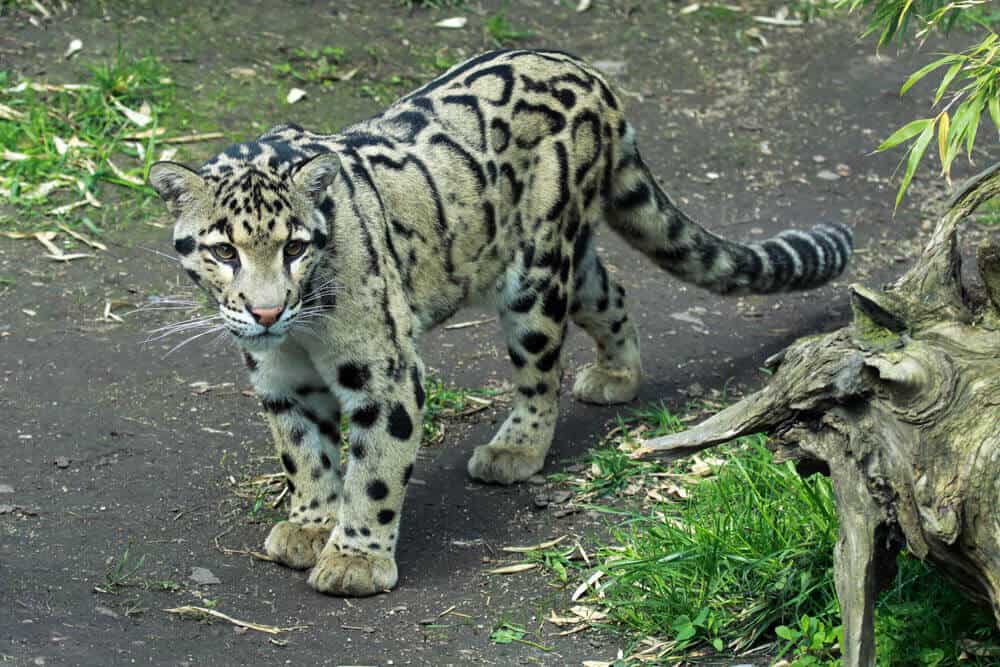
Clouded Leopard
Neofelis nebulosa
Conservation Status: Vulnerable.
A medium-sized wild cat that inhabits various regions in Asia. Also known as the mainland clouded leopard.
No subspecies.
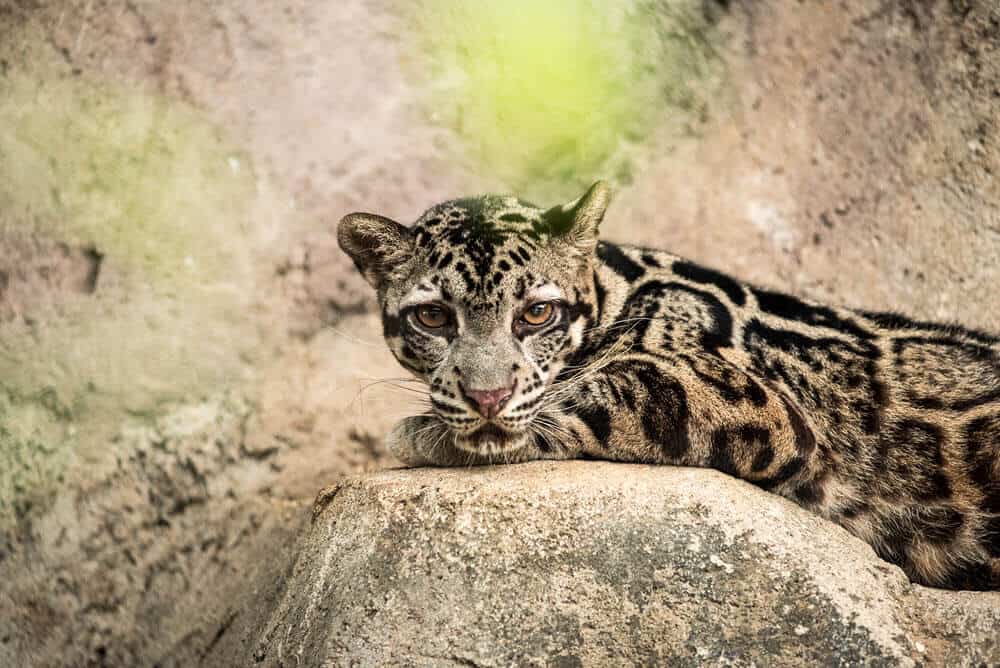
Sunda Clouded Leopard
Neofelis diardi
Conservation Status: Vulnerable.
A medium-sized wild cat found in Sumatra and Borneo. A separate species from the clouded leopard.
Sunda clouded leopard subspecies:
- Neofelis diardi diardi (Sumatran clouded leopard)
- Neofelis diardi borneensis (Bornean clouded leopard)
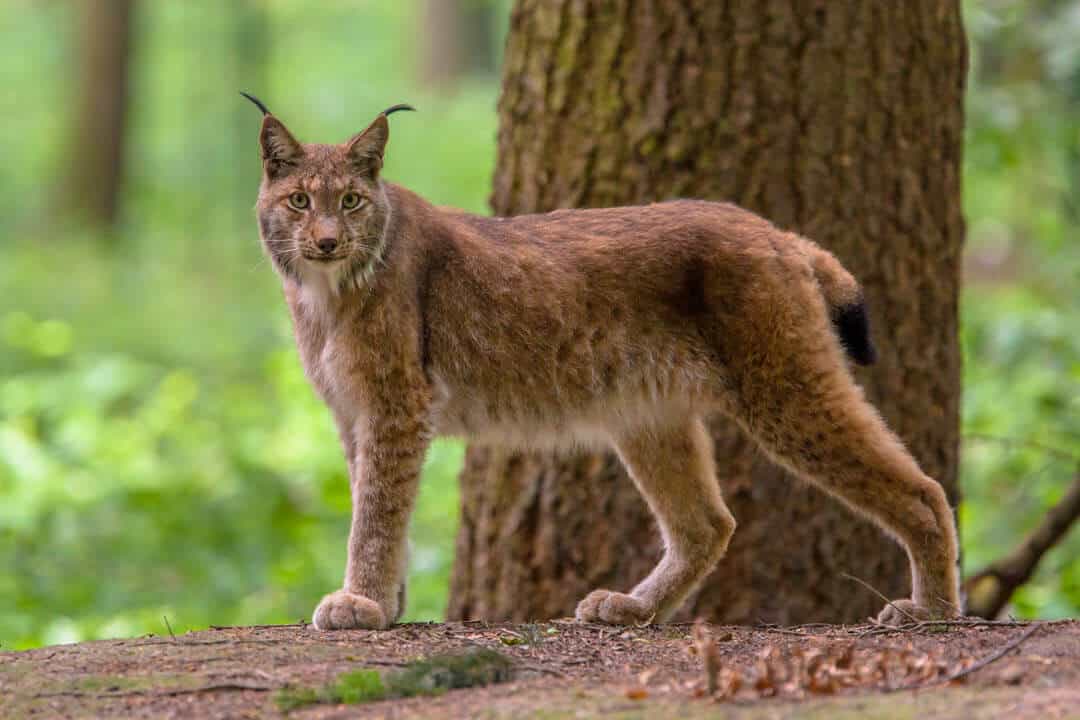
Eurasian Lynx
Lynx lynx
Conservation Status: Least Concern.
A medium-sized wild cat that can be found in Europe and Asia (Russia, central Asia and Tibet). The largest of the four lynx wild cats.
Proposed subspecies:
- L. l. lynx (Northern lynx)
- L. I. Turkestan
- L. l Caucasian lynx
- L. l Siberian lynx
- L. l. balcanicus (Balkan lynx)
- L. l carpathicus (Carpathian lynx)
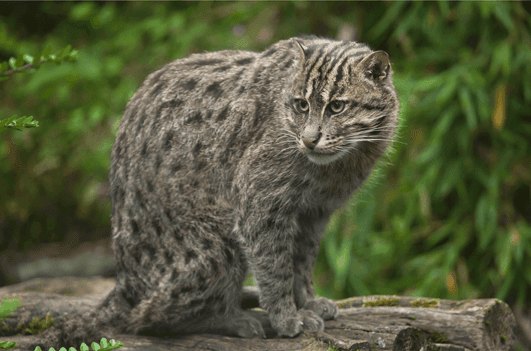
Fishing Cat
Prionailurus viverrinus
Conservation Status: Vulnerable.
A medium-sized wild cat found in southern Asia, including Java, Sumatra, Peninsular Malaysia, India and Sri Lanka.
No subspecies.
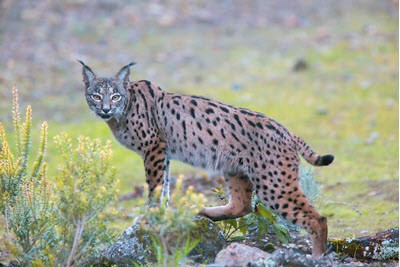
Iberian Lynx
Lynx pardinus
Conservation Status: Critically Endangered.
A medium-sized wild cat that inhabits the Iberian peninsula. One of four lynx species.
No subspecies.
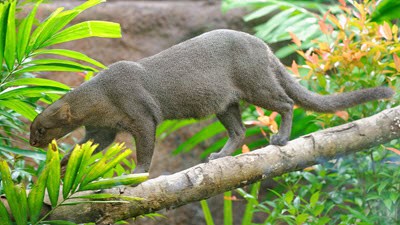
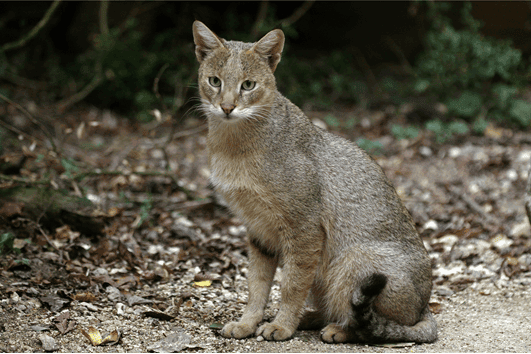
Jaguarundi
Herpailurus yagouaroundi
Conservation Status: Least Concern.
A medium-sized wild cat that can be found throughout Mexico, Central and South America. A lowland cat with a broad range.
No subspecies.
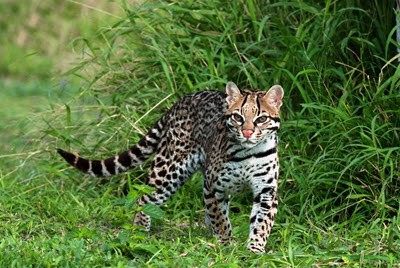
Ocelot
Leopardus pardalis
Conservation Status: Least Concern.
A medium-sized wild cat that inhabits North, Central and South America, Trinidad and Margarita. Found in areas with dense cover.
Ocelot subspecies:
- Leopardus pardalis mitis
- Leopardus pardalis pardalis
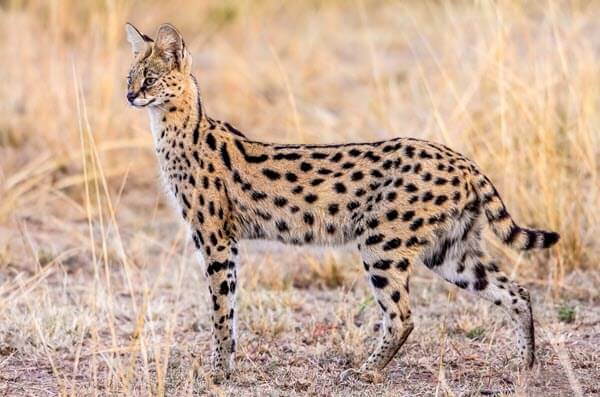
Serval
Leptailurus serval
Conservation Status: Least Concern.
A medium-sized wild cat that inhabits Africa. Usually found in savannahs.
Serval subspecies as of 2017:
- Leptailurus serval serval (southern Africa)
- Leptailurus serval constantina (West and Central Africa)
- Leptailurus serval lipostictus (East Africa)
The smallest wild cats
The smallest wild cats are the smallest members of the wild cat family and are similar in size to domestic cats or smaller. Many weigh between 3 and 10 pounds, with species like the black-footed cat and rusty-spotted cat among the smallest. Despite their size, they are skilled hunters that prey on insects, rodents, birds, and other small animals.
The remaining small wild cats include the African wildcat, Asiatic wildcat, Andean mountain cat, bay cat, black-footed cat, Chinese mountain cat, European wildcat, Scottish wildcat, flat-headed cat, Geoffroy’s cat, kodkod, mainland leopard cat, Iriomote cat, Sunda leopard cat, marbled cat, margay, northern tiger cat (oncilla), southern tiger cat, Pallas’s cat, Pampas cat, rusty-spotted cat, and sand cat. In total, there are around 20 to 22 of these smaller species, depending on classification, and they represent the most compact and widely distributed members of the wild cat family.
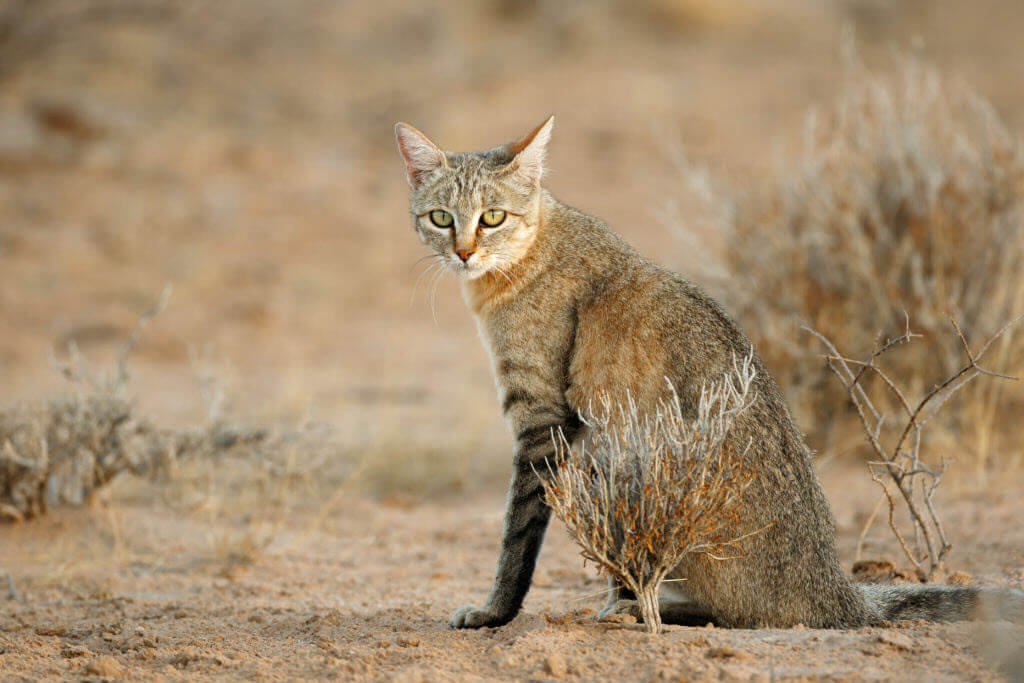
A small wild cat that inhabits Africa, India, Asia and the Western and Central parts of China. Can be found in many different environments, from deserts to grasslands.
African wildcat subspecies:
- Felis lybica lybica
- Felis lybica cafra
- Felis lybica ornata
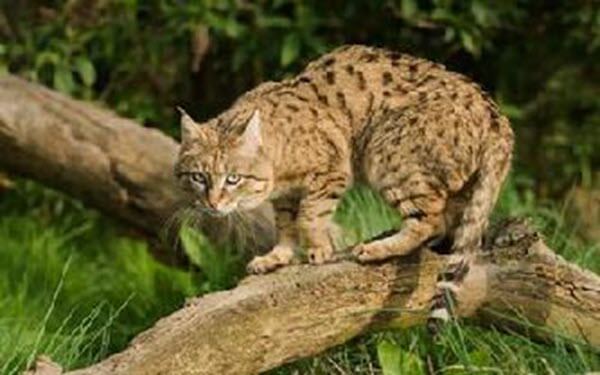
A small wild cat and subspecies of the African wildcat. Also known as the Asian steppe wildcat and Indian desert cat.
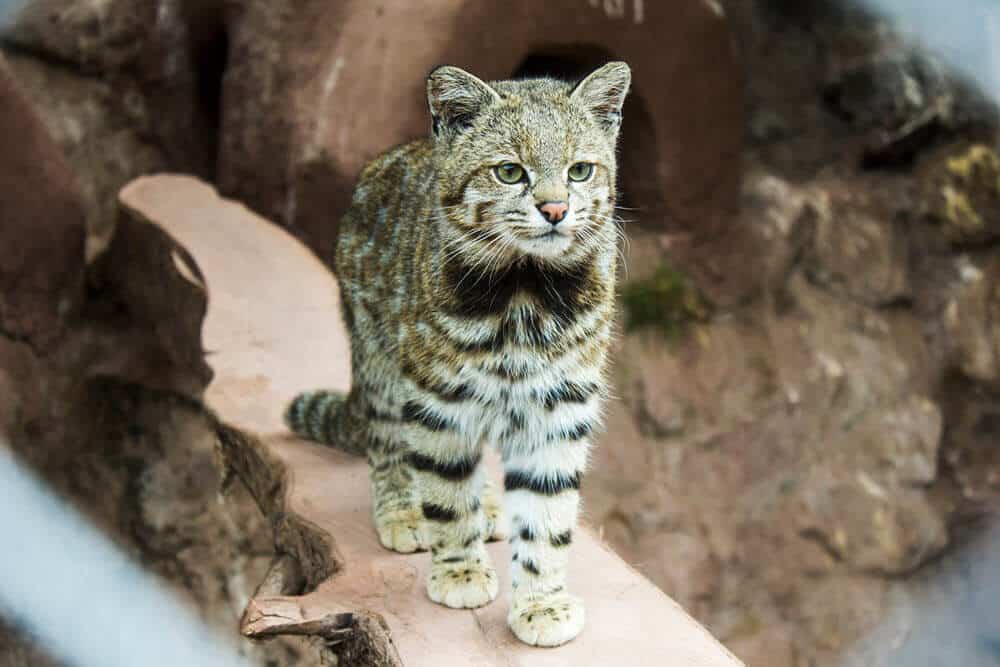
A small wild cat, it is found in the Andean mountains in Argentina, Chile, and Bolivia. It has greyish fur, rounded ears, and black nose and lips. Considered a sacred animal by indigenous people.
No subspecies.
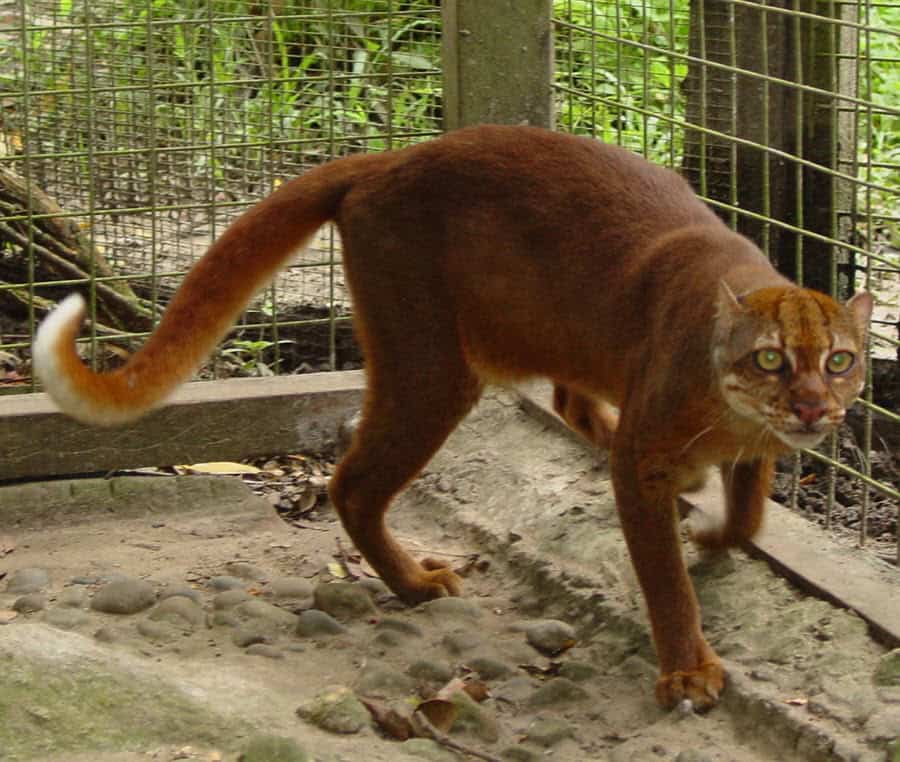
The Bay cat is native to the Island of Borneo. It is the size of a large domestic cat that lives in forested areas.
No subspecies.
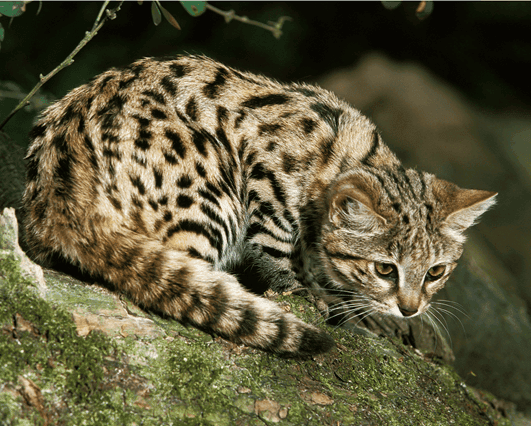
One of the smallest wild cats. Can be found in South Africa, Nambia and Botswana.
No subspecies.
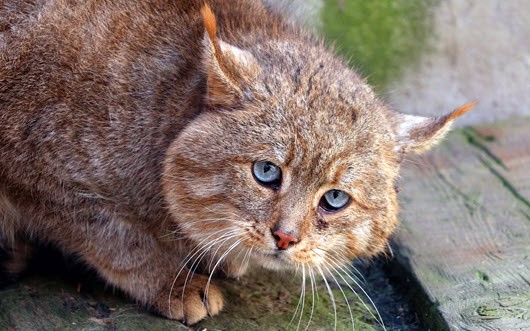
Chinese Mountain Cat
Felis bieti
Conservation Status: Vulnerable.
A small wild cat found in western China. Recognized as a species in 2017.
No subspecies.
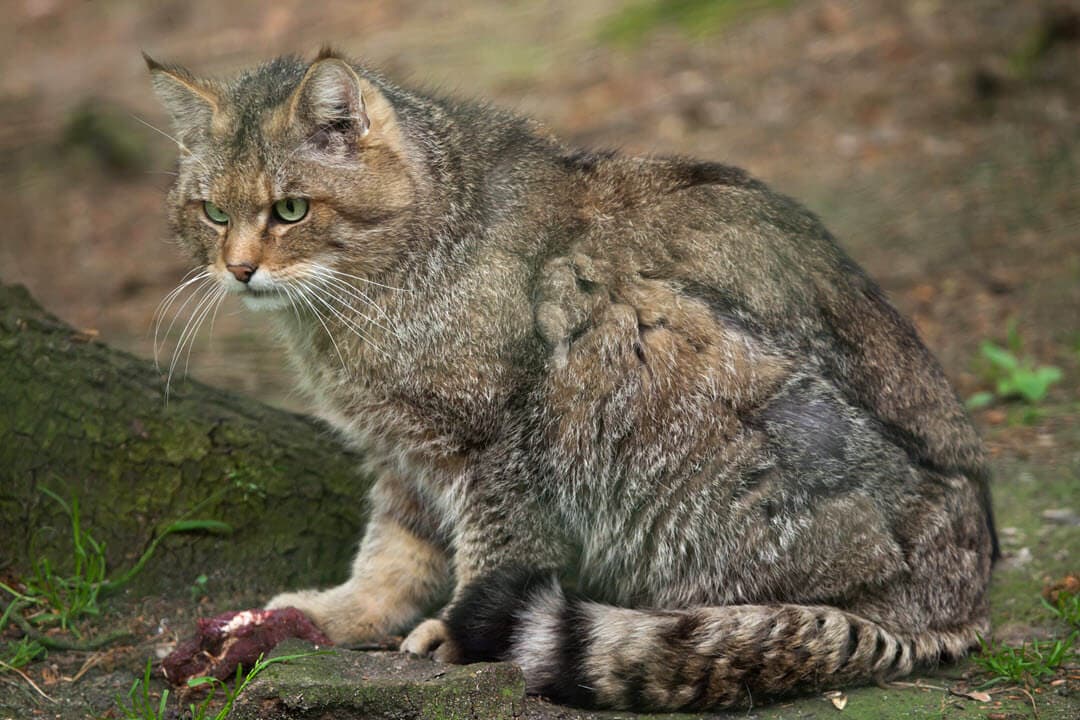
European Wildcat
Felis silvestris
Conservation Status: Least Concern.
A small wild cat native to Europe, Turkey, Scotland and the region between the Black Sea and Caspian Sea. Found mostly in forests.
European Wildcat Subspecies:
- Felis silvestris silvestris – (Europe, Sicily and Scotland)
- Felis silvestris caucasica (Turkey and the Caucasus)
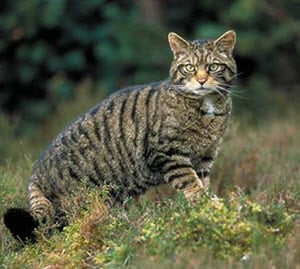
Scottish Wildcat
Felis silvestris silvestris
Conservation Status: Critically Endangered.
Scotland’s European wildcat population.
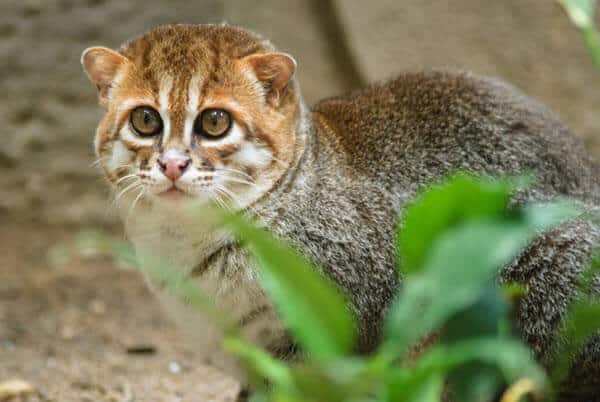
A small wild cat found in Thailand, Peninsular Malaysia, Sumatra and Borneo. Like the cheetah, their claws do not fully retract.
No subspecies.
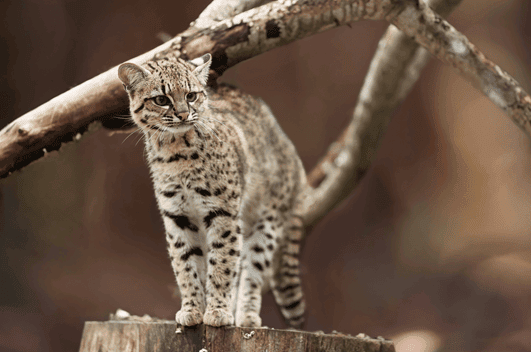
Geoffroy’s Cat
Leopardus geoffroyi
Conservation Status: Least Concern.
A small wild cat that inhabits southern and central South America. Primarily located in Paraguay, with some populations in Bolivia and Brazil.
No subspecies.
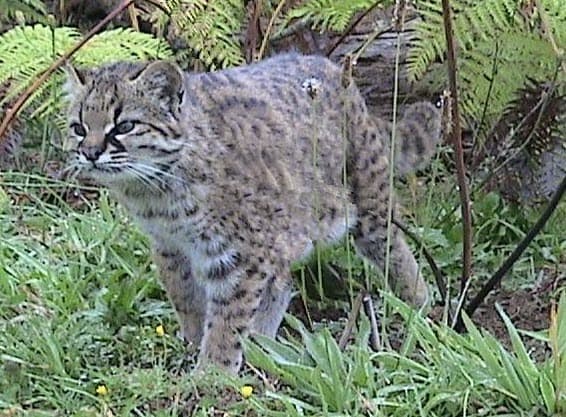
Kodkod | Guina
Leopardus guigna
Conservation Status: Vulnerable.
A small wild cat that inhabits Chile and Argentina. One of the smallest wild cats in the world.
Kodkod subspecies:
- Leopardus guigna guigna (Chile and Argentina)
- Leopardus guigna tigrillo (Chile)
Photo by Jim Sanderson, via Wikimedia Commons (CC BY-SA 3.0)
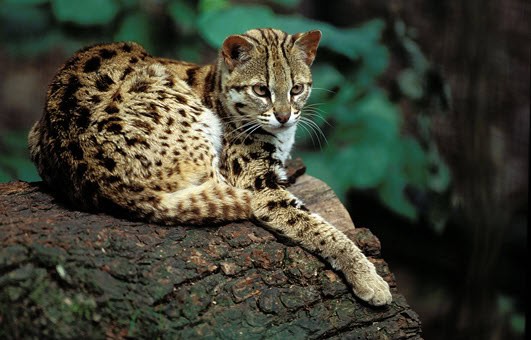
Leopard Cat – Mainland
Prionailurus bengalensis
Conservation Status: Least Concern.
A small wild cat with round ears found on mainland Asia, from Pakistan to Southeast Asia, China and the Russian Far East.
Leopard cat subspecies:
- Prionailurus bengalensis bangalensis
- Prionailurus bengalensis euptilura
- Prionailurus bengalensis iriomotensis
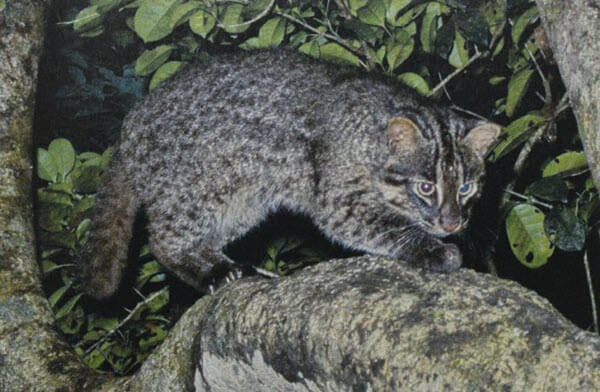
Iriomote Cat
Prionailurus bengalensis iriomotensis
Conservation Status: Critically Endangered.
A small wild cat and mainland leopard cat subspecies. Only found on the Japanese island of Iriomote.
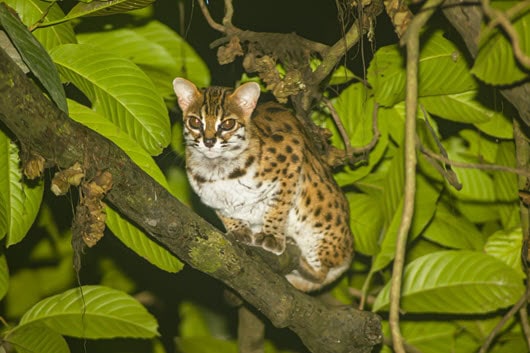
Sunda Leopard Cat
Prionailurus javanensis
Conservation Status: Least Concern.
A small wild cat with round ears found in Java, Bali, Borneo, Sumatra and the Philippines. Recognized as a distinct species in 2017.
Subspecies:
- Prionailurus javanensis javanensis
- Prionailurus javanensis Sumatranus
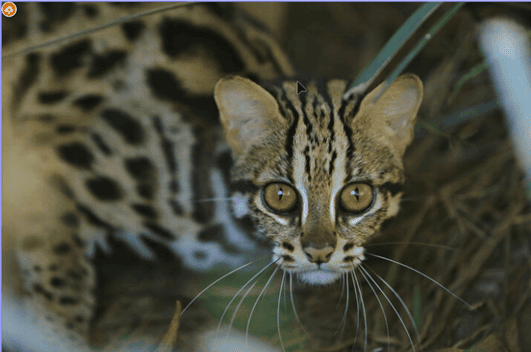
Marbled Cat
Pardofelis marmorata
Conservation Status: Vulnerable.
A small wild cat that inhabits the eastern Himalayas all the way to Southeast Asia. Similar in size to a domestic cat. Found mostly in forests.
Marbled cat subspecies:
- Pardofelis marmorata charltoni
- Pardofelis marmorata marmorata
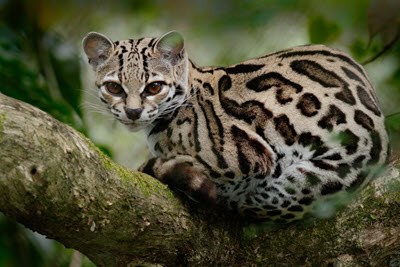
Margay
Leopardus wiedii
Conservation Status: Near Threatened.
A tree dwelling small to medium-sized wild cat that can be found in Central and South America. from Mexico to Argentina.
Margay subspecies:
- Leopardus wiedii wiedii
- Leopardus wiedii vigens
- Leopardus wiedii glauculus
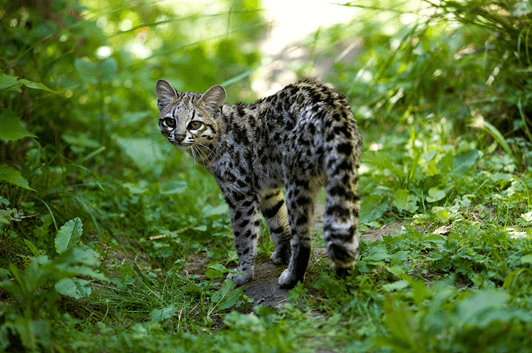
Oncilla – Northern Tiger Cat
Leopardus tigrinus
Conservation Status: Vulnerable.
A rare small wild cat found in various regions from Central America to Brazil. Similar in appearance to a margay and ocelot.
No subspecies.
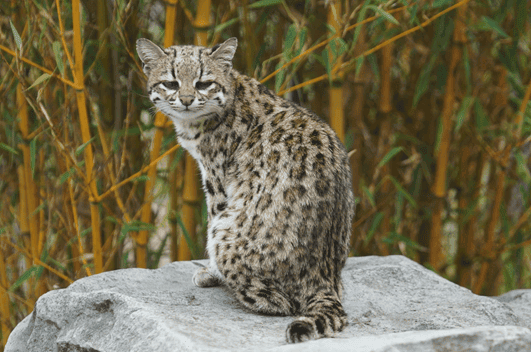
Oncilla – Southern Tiger Cat
Leopardus guttulus
Conservation Status: Vulnerable.
A small wild cat found in Brazil, Argentina and Paraguay. Generally darker in color than the oncilla northern tiger cat.
No subspecies.
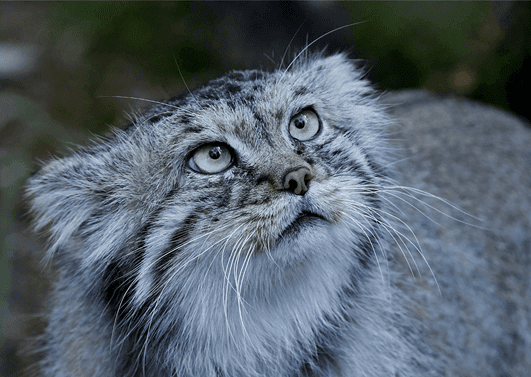
A small wild cat that can be found in Central Asia, as well as Siberia, Tibet and Iran.
Pallas’s cat subspecies:
- Otocolobus manul manul
- Otocolobus manul nigripectus
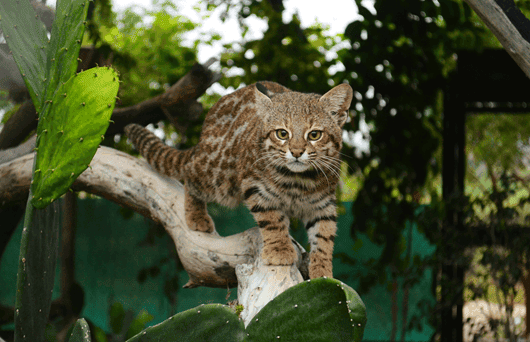
Pampas Cat
Leopardus colocola
Conservation Status: Near Threatened.
A small wild cat that inhabits South America. Can be found in the Andes mountains, swamps, grasslands and forests.
Recognized Pampas cat subspecies as of 2017:
- Leopardus colocola colocola
- Leopardus colocola pajeros
- Leopardus colocola braccatus
- Leopardus colocola garleppi
- Leopardus colocola budini
- Leopardus colocola munoai
- Leopardus colocola wolffsohni
Proposed subspecies as of 2022:
- Leopardus colocola colocola
- Leopardus colocola braccatus
- Leopardus colocola garleppi
- Leopardus colocola munoai (fasciatus)
- Leopardus colocola pajeros
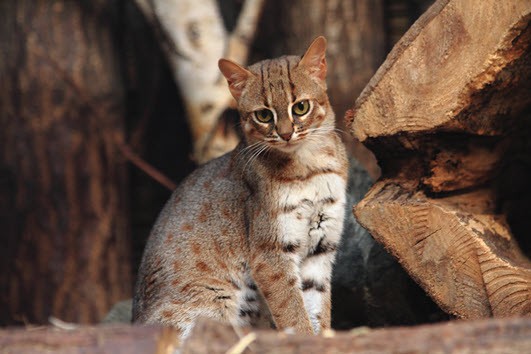
Rusty-spotted Cat
Prionailurus rubiginosus
Conservation Status: Vulnerable.
A small wild cat found in Sri Lanka, India and Nepal. Inhabits forests, grasslands and scrub lands.
No subspecies.
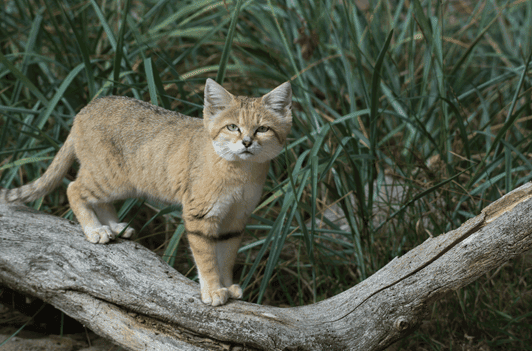
Sand Cat
Felis margarita
Conservation Status: Near Threatened.
A small wild cat found in northern Africa, the Middle East and Central Asia. including Arabia, the Sahara, Morocco, Egypt and Sudan.
Sand cat subspecies:
- Felis margarita margarita (Saharan sand cat)
- Felis margarita thinobia (Turkestan sand cat, Arabian sand cat and Pakistan sand cat)
Small wild cats may not be as well known as lions or tigers, but they make up the majority of the wild cat family and play an important role in ecosystems around the world. From dense forests to open deserts, these adaptable predators help control populations of smaller animals and maintain balance in their habitats. Understanding and protecting small wild cats is an important part of global wildlife conservation.
Annual Small Wild Cats Update (2026)
Small wild cat conservation in 2025 continued to highlight a major imbalance: while these species make up most of the world’s wild cats, many remain understudied and underprotected compared to larger, more visible species.
Flat-headed cat: ongoing risk from habitat loss
The flat-headed cat remains one of the most threatened small wild cats, largely due to wetland destruction and habitat degradation in Southeast Asia. Its specialized habitat requirements make it particularly vulnerable to environmental change.
https://www.iucnredlist.org/species/18149/50662615
Andean mountain cat: limited range and population data
The Andean mountain cat continues to face challenges due to its extremely limited range and low population density. Ongoing research is working to better understand its distribution and conservation needs across high-altitude regions of South America.
https://www.iucnredlist.org/species/5542/50651359
Leopard cat group: ongoing research and classification updates
Recent research continues to refine understanding of leopard cat populations across Asia, including distinctions between mainland and island groups. These updates help clarify conservation priorities and species boundaries.
https://www.nationalgeographic.com/animals/article/leopard-cat
Habitat loss: widespread impact on small species
Habitat loss and fragmentation remain the most widespread threats to small wild cats. Because many of these species depend on specific environments such as forests, wetlands, or grasslands, even small changes in land use can have significant impacts.
https://www.bbc.com/news/science-environment