Small wild cats are the smaller and medium-sized members of the cat family. While there is no exact cutoff, they are much smaller than the largest cats like lions and tigers—and that difference in size shapes how they live.
What are small wild cats?
Small wild cats includes both very small cats, about the size of a house cat, and medium-sized cats like lynx, caracals, and ocelots. Even though some of these cats are fairly large, they are still much smaller than the biggest predators in the cat family.
In scientific terms, most of these cats belong to the Felinae subfamily. This group includes a wide range of species with different sizes, habitats, and behaviors.
Most wild cats are small
When most people think of wild cats, it’s usually lions, tigers, or leopards. But most wild cat species are actually small or medium in size.
These cats live all over the world, including Africa, Asia, Europe, and the Americas. They are found in many different habitats, from deserts and forests to mountains and grasslands.
Have you ever tried to find a housecat that didn’t want to be found? Small wild cats are even more secretive. Because they are smaller and more elusive, many species are difficult to observe, and some are still not well understood.
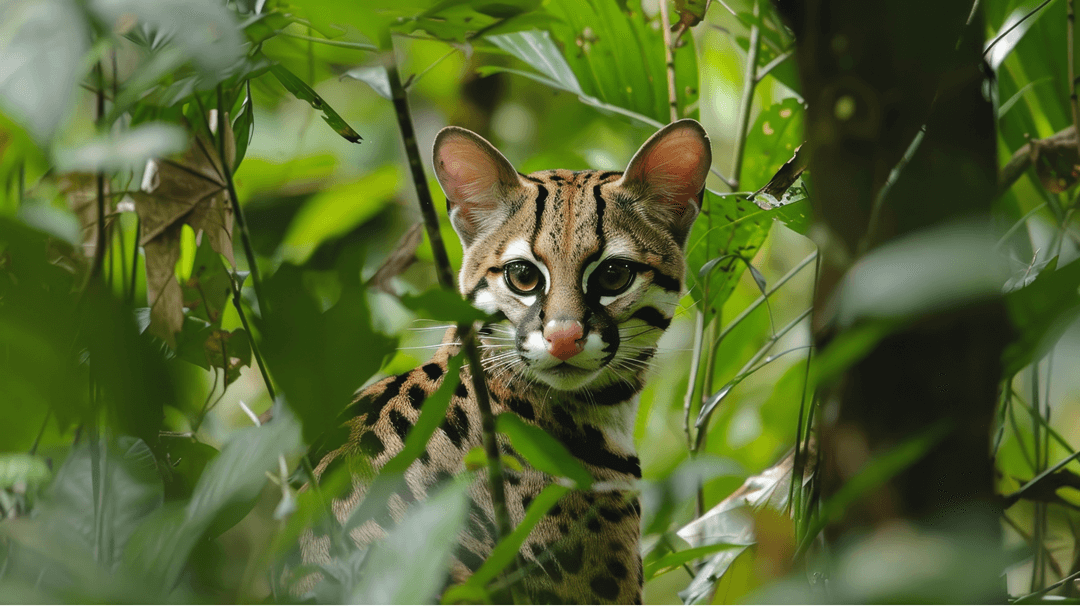
Size makes a difference
The biggest difference between small wild cats and big cats is size—and that difference shapes how they live, hunt, and survive.
Hunting and Prey
Small wild cats hunt much smaller animals than big cats. Their prey includes rodents, birds, reptiles, and rabbits. Because these animals are small, they provide less energy per kill.
As a result, many small wild cats must hunt often—sometimes making multiple kills in a single day. They rely on quick, repeated hunting to meet their energy needs.
Big cats, on the other hand, hunt large animals like deer, antelope, and buffalo. One successful hunt can provide enough food for several days.
Ecological Role
Because they hunt frequently and target fast-reproducing animals, small wild cats play an important role in controlling populations of small prey.
Rodents and similar animals reproduce quickly. Without predators, their populations can grow rapidly and disrupt ecosystems.
Small wild cats help keep these populations in balance through constant hunting. While big cats also affect prey populations, their impact is different. They hunt less often and target larger animals, so their influence is spread out over time.
Habitat Use
Smaller size also changes how these cats move through their environment.
Many small and medium-sized wild cats are highly agile and excellent climbers. They can move through dense vegetation, climb trees, and navigate tight spaces with ease.
Some species use trees regularly—for hunting, resting, or escaping danger. This kind of movement is not possible for the largest cats in the same way.
Their size allows them to use more of the environment, including areas that larger predators cannot easily access.
Adaptability and Range
Small wild cats are generally more adaptable than larger species.
Because they require less food and can hunt smaller prey, they can survive in a wider range of habitats. These include forests, deserts, grasslands, mountains, and even areas near human activity.
This adaptability helps explain why small and medium-sized wild cats are found across much of the world.
Conservation Differences
Size also plays a role in conservation.
Many big cats are vulnerable, endangered, or threatened. They require large territories, depend on large prey, and are more affected by habitat loss and human conflict.
Small and medium-sized wild cats face many of the same threats, including habitat loss, poaching, and prey depletion. However, some species—such as the bobcat—remain widespread and stable in parts of their range.
This does not mean they are not at risk. Many smaller species are still declining or poorly studied. But overall, their smaller size and adaptability can make them more resilient in changing environments.
Small vs medium wild cats
Small wild cats come in a wide range of sizes, from only a few pounds to much larger medium-sized hunters.
Small Cats
These cats are usually around the size of a domestic cat or smaller. Some weigh as little as 2 to 10 pounds.
Examples include:
- Rusty-spotted cat
- Black-footed cat
- Sand cat
These are among the smallest wild cats in the world.
Medium-Sized Cats
These cats are larger, often weighing between 15 and 70 pounds. They are stronger and can hunt bigger prey, but they are still smaller than the largest cats.
Examples include:
- Caracal
- Serval
- Ocelot
- Bobcat
- Eurasian lynx
Even though these cats are bigger, they are still grouped with small wild cats because they do not reach the size or role of the largest predators.
Scientific classification
All cats belong to the Felidae family. This family is divided into two main groups:
- Pantherinae (big cats)
- Felinae (small and medium cats)
Most small wild cats belong to the Felinae subfamily. This group includes a wide variety of species, from tiny desert cats to larger hunters like lynx and caracals.
Read more about small wild cat biological classification.
Evolution and lineages
Wild cats evolved from a common ancestor millions of years ago. Over time, they split into several different lineages.
In 2006, scientists grouped all cat species into eight major lineages based on DNA research. The big cats belong to the Panthera lineage, while most small and medium-sized cats belong to the other groups.
These lineages include:
- Bay Cat lineage
- Caracal lineage
- Ocelot lineage
- Lynx lineage
- Puma lineage
- Leopard Cat lineage
- Domestic Cat lineage
Each lineage includes species that share common traits and evolutionary history.
Location
Small and medium-sized wild cats are found across much of the world.
Europe
- European wildcat
- Eurasian lynx
- Iberian lynx
Africa
- African wildcat
- Black-footed cat
- Serval
- Caracal
Asia
- Pallas’s cat
- Fishing cat
- Jungle cat
- Leopard cat
- Rusty-spotted cat
North and South America
- Ocelot
- Margay
- Jaguarundi
- Bobcat
- Andean mountain cat
Middle East
- Sand cat
- Jungle cat
- Asiatic wildcat
These cats live in a wide range of habitats, including forests, deserts, mountains, and grasslands.
Small wild cat conservation concerns
Like big cats, small wild cats face many threats.
These include:
- habitat loss
- loss of prey
- poaching and illegal trade
- conflict with humans
Some species are especially at risk. For example:
- The flat-headed cat has a very small population
- The Bornean bay cat is rarely seen and poorly understood
- The Andean mountain cat is one of the rarest cats in the world
Protecting these species is important because they play a key role in keeping ecosystems balanced.
Learn more about wild cat conservation.
References and quotes
“There is still, however, a great diversity of opinions as to how the various cat species should be classified, and classification schemes change dramatically as new species are discovered, better morphological measurements are made, and more and more genes are sequenced and compared for phylogenetic relatedness.” – 2018 Eimeriidae in the Feliformia Famly Felidae | Duszynski, Seville, et al.
2017 A Revised Felid Taxonomy| Cat Specialist Group, CATNews