
Tigers are the largest living wild cats, with powerful bodies and unmistakable striped coats.
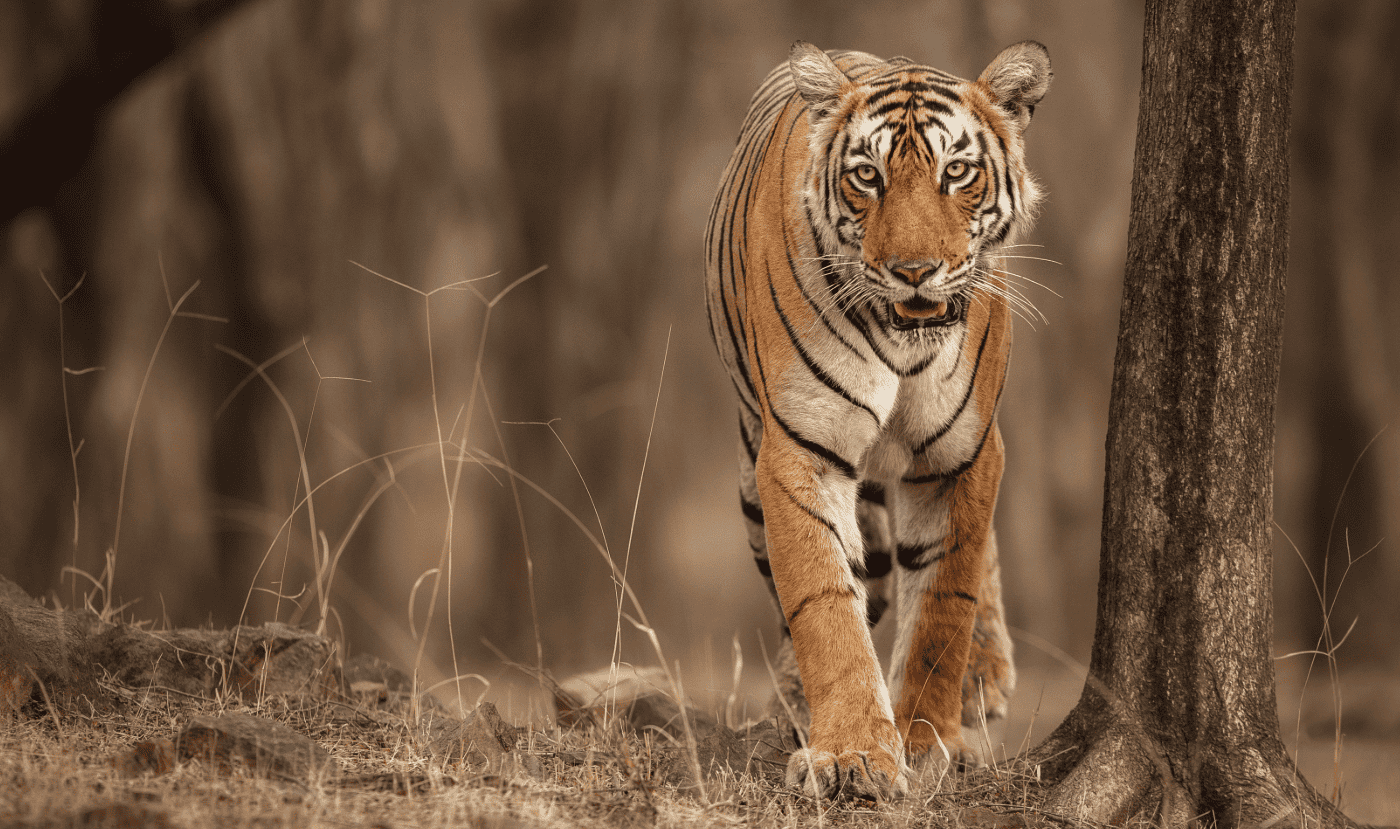
They live only in Asia, where different tiger populations survive in forests, grasslands, wetlands, mangroves, and cold northern landscapes.
Tigers usually live and hunt alone. Their strength, camouflage, excellent senses, and ability to swim make them highly adaptable predators.
What Is a Tiger?
The tiger is a large wild cat. Its scientific name is Panthera tigris. Tigers belong to the cat family, called Felidae, and the genus Panthera.
They are the largest living members of the cat family. Several different tiger populations live in different parts of Asia.
Tigers are carnivores, which means they eat other animals.
What Do Tigers Look Like?
Tigers have large, muscular bodies, powerful legs, broad paws, strong jaws, and long tails.
Most tigers have orange coats with dark brown or black stripes. Their undersides are usually white or cream.
Every tiger has its own stripe pattern. No two tigers have exactly the same arrangement of stripes. The stripes provide camouflage by breaking up the outline of the tiger’s body among grasses, trees, vegetation, light, and shadows.
Tigers from colder regions generally have thicker fur than those living in warmer climates.
What Is the History of Tigers?
Tigers have lived in Asia for a very long time. Over thousands of years, tiger populations became adapted to environments ranging from tropical forests to cold northern woodlands.
Tigers once occupied a much larger part of Asia than they do today. They disappeared from many regions as habitats were changed and tiger populations were hunted.
Scientists study fossils, DNA, historical records, camera traps, and living tigers to learn about their history and how different populations are related.
Where Do Tigers Live?
Wild tigers live only in Asia. They can survive in several different types of habitat, including tropical forests, temperate forests, grasslands, wetlands, mangrove forests, and cold northern forests.
Tigers need enough prey, water, cover, and space to survive. They are also strong swimmers and can cross rivers and other waterways.
Because individual tigers may use large areas, connected habitats are important for allowing them to travel and find mates.
Tiger Behavior
Tigers usually live alone. Adults have home ranges where they travel, hunt, rest, and communicate with other tigers.
They use scent marks, scratches, tracks, and sounds to communicate. Tigers can roar, growl, chuff, and make several other vocalizations.
They may be active during the day or night, although many hunt most often from evening through early morning.
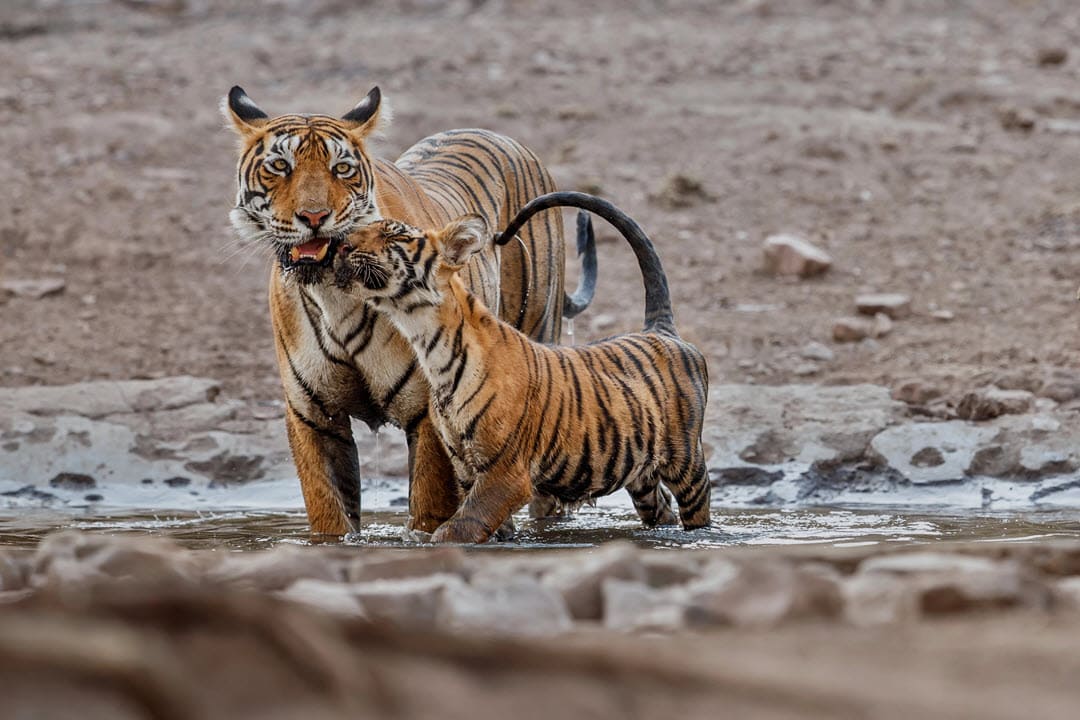
Tigers are excellent swimmers and may enter water to cool themselves, travel, or cross rivers.
What Do Tigers Eat?
Tigers hunt many kinds of animals. Important prey includes deer and wild pigs. Depending on where they live, tigers may also hunt wild cattle, antelopes, and other mammals.
Large prey can provide a tiger with food for several days.
How Do Tigers Hunt?
Tigers are ambush predators. They usually stalk prey quietly and try to get close before attacking. Their striped coats provide camouflage among vegetation and shadows.
When close enough, a tiger uses a sudden burst of speed to attack. Powerful legs and sharp claws help it catch the animal, while strong jaws and large canine teeth help it hold its prey.
Tigers usually hunt alone.
Reproduction and Life Cycle
Baby tigers are called cubs. A female tiger is pregnant for a little over three months. She usually gives birth to several cubs in a protected den.
Newborn cubs are tiny, and their eyes are closed when they are born. They depend completely on their mother for food, warmth, and protection.
As they grow, cubs begin exploring and playing. Later, they follow their mother and learn how to travel, approach prey, and hunt.
Young tigers eventually leave their mother and establish home ranges of their own.
Tiger Traits
- Tigers are the largest living wild cats. Adult males can become especially large.
- Every tiger has a unique stripe pattern. Scientists can use stripes to identify individual animals.
- Tigers are excellent swimmers. They can cross rivers and spend time in water.
- Their stripes provide camouflage. The markings help break up the outline of their bodies.
- Tigers usually live alone. Adults generally hunt and travel independently.
- Tigers can roar. They belong to the genus Panthera, which contains several of the roaring big cats.
Why Are Tigers Important?
Tigers are large predators and play an important role in their ecosystems. They hunt deer, wild pigs, and other animals and are part of the natural relationships between predators and prey.
Tigers need large areas with healthy wildlife populations. Protecting enough connected habitat for tigers can therefore help protect forests, grasslands, wetlands, and many other animals and plants.
Why Should Tigers Be Protected?
Tigers are Endangered, which means they face a very high risk of extinction in the wild. They have disappeared from much of their former range.
Habitat loss and fragmentation are major problems. Roads, farms, towns, and other development can divide wild landscapes.
Tigers can also lose the deer, wild pigs, and other prey they need for food. Illegal killing and wildlife trade remain serious threats.
Conflict can occur when tigers and people live close together, especially when tigers attack livestock.
Protecting tigers means protecting and reconnecting habitats, maintaining healthy wild prey populations, stopping illegal killing and wildlife trade, and finding ways for people and tigers to share landscapes safely.
Words to Know
Ambush Predator — an animal that hides or approaches quietly before making a sudden attack on prey
Camouflage — colors, patterns, or shapes that help an animal blend into its surroundings
Carnivore — an animal that eats other animals
Cub — a young tiger
Ecosystem — a community of living things and the environment around them
Endangered — facing a very high risk of extinction in the wild
Felidae — the scientific family that includes all cats
Habitat — the place where an animal lives and finds what it needs to survive
Home Range — the area where an animal normally lives and travels
Predator — an animal that hunts and eats other animals
Prey — an animal that is hunted and eaten by another animal