
Leopards are powerful, adaptable wild cats that can live in an amazing variety of habitats across Africa and Asia.
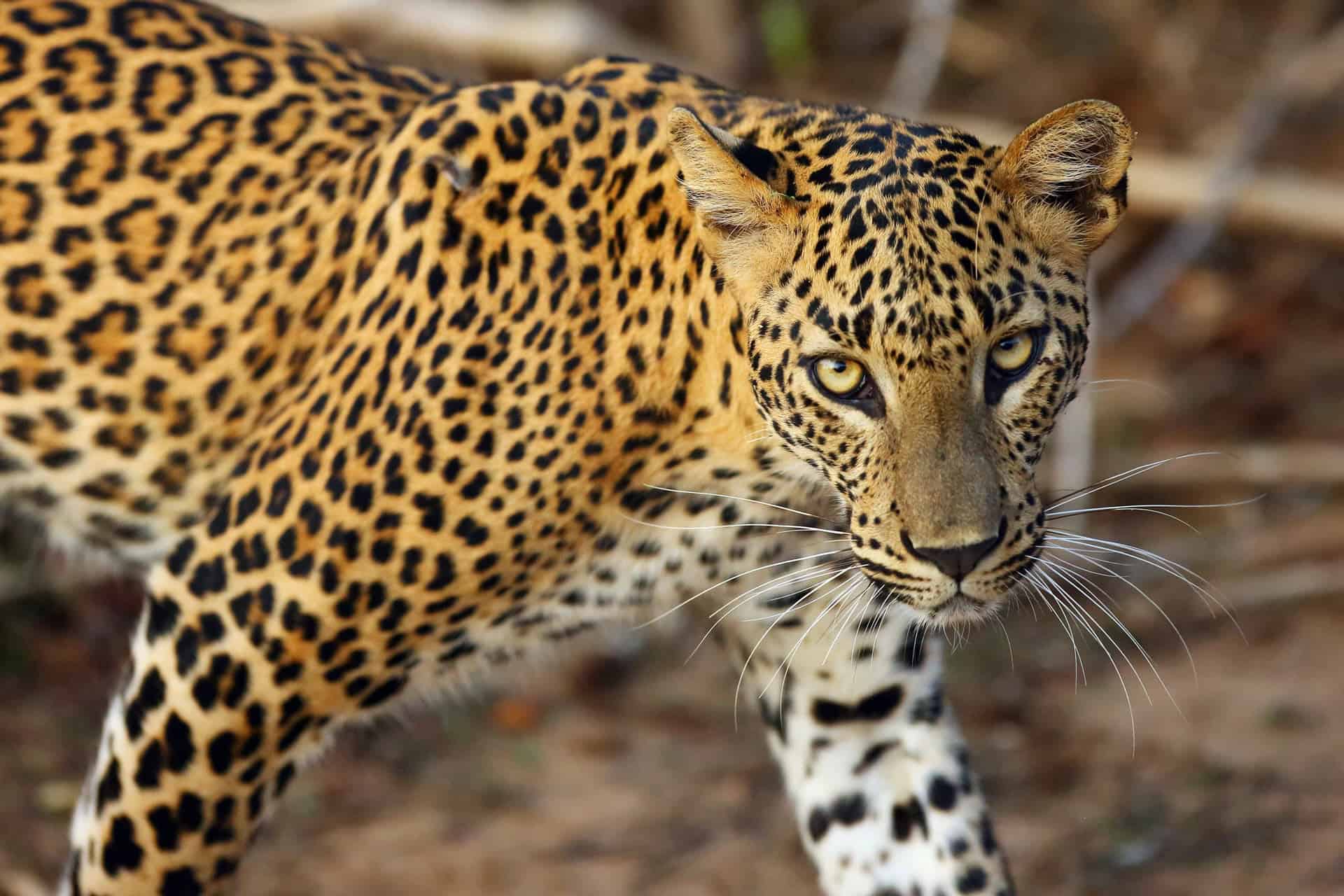
They are famous for their spotted coats, excellent climbing ability, and secretive behavior.
Leopards can survive in forests, grasslands, mountains, shrublands, and even some dry environments. Their ability to adapt has helped them live across a wider variety of habitats than many other big cats.
What Is a Leopard?
The leopard is a large wild cat. Its scientific name is Panthera pardus. Leopards belong to the cat family, called Felidae, and the genus Panthera.
They live in parts of Africa and Asia.
Leopards are carnivores, which means they eat other animals.
What Do Leopards Look Like?
Leopards have muscular bodies, relatively short legs, broad paws, strong jaws, and long tails.
Their coats are usually golden, yellowish, or tan and covered with dark markings called rosettes. Unlike jaguar rosettes, leopard rosettes usually do not contain dark spots in the center.
The markings provide excellent camouflage among vegetation, rocks, tree branches, and shadows.
Some leopards have melanism, a genetic trait that makes their coats appear almost black. These dark leopards are often called black panthers. They are still leopards, not a separate species.
What Is the History of Leopards?
Leopards have lived on Earth for millions of years. Fossils show that ancient leopards once occupied parts of Europe as well as Africa and Asia.
Over time, leopard populations became adapted to many different environments. Today, leopards remain widespread compared with several other big cats, but they have disappeared from many areas where they once lived.
Scientists use fossils, DNA, camera traps, tracks, and observations to study leopard history and populations.
Where Do Leopards Live?
Leopards live across parts of Africa and Asia. They can survive in tropical forests, dry forests, savannas, grasslands, shrublands, mountains, and some desert environments.
This wide variety of habitats shows how adaptable leopards can be.
Wherever they live, leopards need enough prey, hiding places, and safe areas where they can rest and raise cubs. Some populations live surprisingly close to towns, farms, or other places used by people.
Leopard Behavior
Leopards usually live alone. Adults have home ranges where they hunt, rest, and travel.
They communicate using scent marks, scratches, tracks, and sounds. Leopards can roar, growl, rasp, and make other vocalizations.
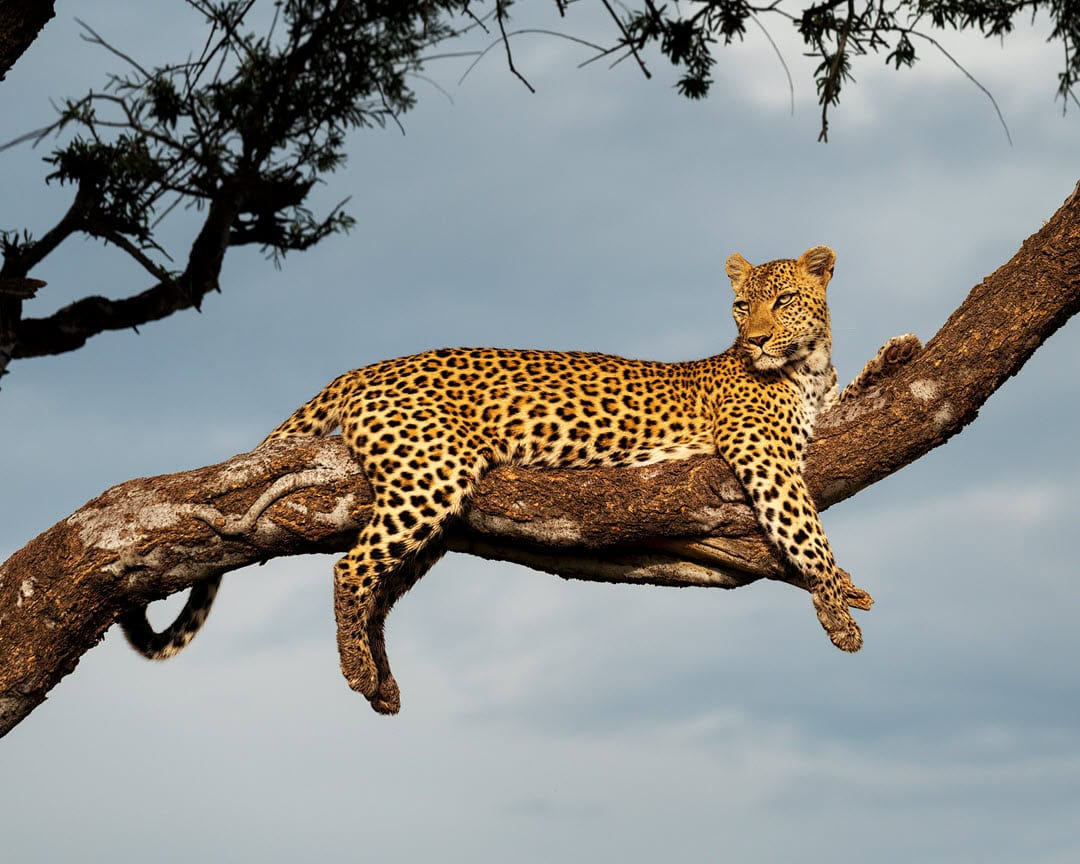
They are excellent climbers and can move confidently through trees. A leopard may carry prey into a tree, which can help protect its food from lions, hyenas, and other scavengers or predators.
What Do Leopards Eat?
Leopards have a very varied diet. They may hunt antelopes, deer, monkeys, wild pigs, rodents, birds, reptiles, and many other animals.
Their ability to eat many kinds of prey is one reason leopards can survive in such different environments.
How Do Leopards Hunt?
Leopards are ambush predators. They use camouflage and cover to approach prey quietly. When close enough, a leopard attacks with a sudden burst of speed.
Strong legs, sharp claws, and powerful jaws help it catch and hold prey. Leopards usually hunt alone.
After making a kill, a leopard may drag or carry the animal to a protected location and sometimes into a tree.
Reproduction and Life Cycle
Baby leopards are called cubs. A female leopard is pregnant for about three months. She gives birth in a protected den hidden among rocks, thick vegetation, caves, hollow trees, or other sheltered places.
Newborn cubs depend completely on their mother.
As they grow, they begin exploring and playing. Later, they follow their mother and learn how to hunt and survive.
Young leopards eventually become independent and establish home ranges of their own.
Leopard Traits
- Leopards are excellent climbers. Their strong bodies allow them to climb trees while carrying prey.
- Their coats have rosettes. These markings provide excellent camouflage.
- Leopards are highly adaptable. They can survive in many different habitats.
- Some leopards are black. Melanistic leopards are often called black panthers.
- They eat many different kinds of prey. Their flexible diet helps them survive in varied environments.
- Leopards can roar. They belong to the genus Panthera.
Why Leopards Are Important
Leopards are predators and play an important role in the ecosystems where they live. They hunt many kinds of animals and are part of natural food webs across Africa and Asia.
Because leopards live in so many different environments, protecting them can also help protect forests, grasslands, mountains, and other wildlife habitats.
Why Leopards Should Be Protected
Leopards are Vulnerable, which means they face a high risk of extinction in the wild. They have disappeared from many parts of their former range.
Habitat loss and fragmentation can reduce the places where leopards live and hunt. Declining wild prey can make it harder for them to find food.
Conflict occurs when leopards attack livestock or live close to human communities. Leopards are also illegally killed for their skins and other body parts.
Protecting leopards means protecting and reconnecting habitats, maintaining healthy prey populations, reducing conflict with people, and stopping illegal hunting and wildlife trade.
Words to Know
Ambush Predator — an animal that hides or approaches quietly before making a sudden attack on prey
Camouflage — colors, patterns, or shapes that help an animal blend into its surroundings
Carnivore — an animal that eats other animals
Cub — a young leopard
Ecosystem — a community of living things and the environment around them
Felidae — the scientific family that includes all cats
Habitat — the place where an animal lives and finds what it needs to survive
Home Range — the area where an animal normally lives and travels
Melanism — a genetic trait that causes unusually dark coloring
Predator — an animal that hunts and eats other animals
Prey — an animal that is hunted and eaten by another animal
Rosette — a dark, rose-shaped marking found on the coats of leopards and some other wild cats
Vulnerable — facing a high risk of extinction in the wild