
Jaguars are powerful spotted cats of the Americas and are especially well known for their strength and love of water.
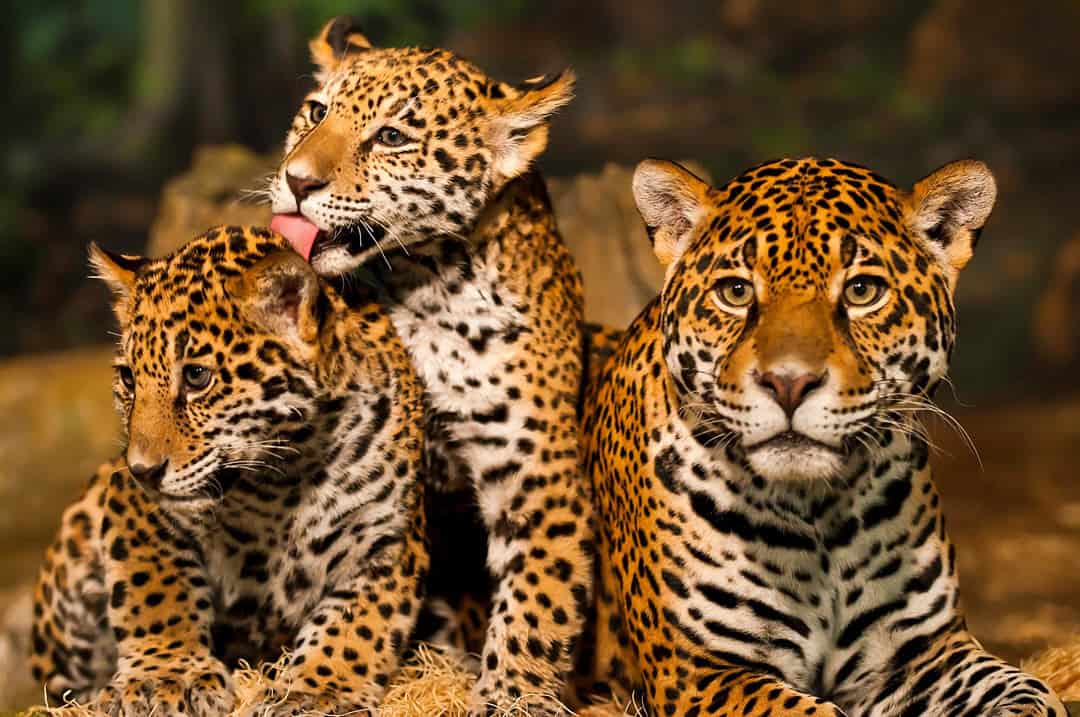
They live in forests, wetlands, grasslands, and other habitats from Mexico through parts of Central and South America.
Jaguars are excellent swimmers and powerful hunters. Their large heads, strong jaws, and muscular bodies allow them to capture many different kinds of prey.
What Is a Jaguar?
The jaguar is a large wild cat. Its scientific name is Panthera onca. Jaguars belong to the cat family, called Felidae, and the genus Panthera.
They are the largest wild cats in the Americas and the third-largest living wild cat after the tiger and lion.
Jaguars are carnivores, which means they eat other animals.
What Do Jaguars Look Like?
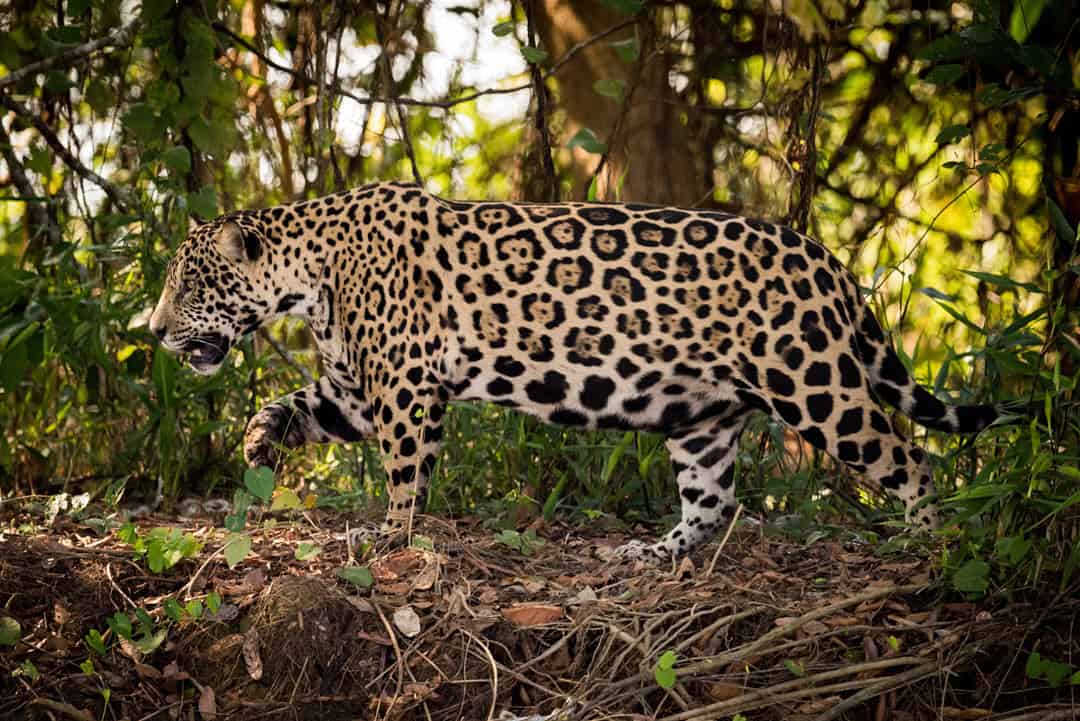
Jaguars have broad heads, powerful jaws, muscular bodies, strong legs, and relatively short, thick tails.
Their coats are usually golden yellow or tan and covered with dark markings called rosettes. Many jaguar rosettes contain one or more dark spots in the middle. This can help distinguish a jaguar’s markings from those of a leopard.
The markings provide camouflage among vegetation, shadows, and broken sunlight.
Some jaguars have a genetic trait called melanism that makes their coats appear almost black. These animals are often called black panthers. The rosette pattern can usually still be seen when light falls on the dark coat.
What Is the History of Jaguars?
Jaguars have lived in the Americas for thousands of years. They once had a much larger range that extended farther north and south than their main range does today.
Over time, jaguars disappeared from many areas as forests and other habitats were changed and the cats were hunted. Today, the largest populations are found in South America, particularly in the Amazon region.
Scientists study fossils, DNA, tracks, camera-trap photographs, and living jaguars to learn more about their history and populations.
Where Do Jaguars Live?
Jaguars live in the Americas. Their current range extends from Mexico through parts of Central America and into South America. The Amazon Basin contains the largest remaining area of jaguar habitat.
Jaguars can live in tropical forests, wetlands, grasslands, shrublands, and other environments. They are often associated with rivers, lakes, swamps, and other areas near water.
Jaguars are excellent swimmers and may cross rivers or hunt around wetlands.
Jaguar Behavior
Jaguars usually live alone. Adults have home ranges where they hunt, rest, travel, and communicate with other jaguars.
They mark their surroundings with scents, scratches, and other signs. Jaguars can roar and make several other sounds.
They are strong swimmers and are much more comfortable around water than many people expect a cat to be. Jaguars can also climb trees, although much of their hunting takes place on or near the ground.
What Do Jaguars Eat?
Jaguars eat many different animals. Their prey can include deer, peccaries, capybaras, armadillos, monkeys, reptiles, fish, and other animals.
They are powerful enough to tackle heavily protected prey such as turtles. What a jaguar eats depends on its habitat and the animals available there.
How Do Jaguars Hunt?
Jaguars are ambush predators. They use camouflage and cover to approach prey without being noticed. Once close, a jaguar can attack suddenly with tremendous strength.
Jaguars have exceptionally powerful jaws for their size. They can bite through tough hides and turtle shells. Jaguars may also kill some prey with a powerful bite to the skull.
They hunt on land and may also capture animals in or around water.
Reproduction and Life Cycle
Baby jaguars are called cubs. A female is pregnant for about three months. She usually gives birth to several cubs in a protected den.
Newborn cubs are small and helpless and depend completely on their mother.
As they grow, the cubs begin exploring and playing. Later, they accompany their mother and learn how to travel and hunt.
Young jaguars eventually leave their mother and establish home ranges of their own.
Jaguar Traits
- Jaguars are the largest wild cats in the Americas.
- They have extremely powerful jaws. Jaguars can bite through the hard shells of some turtles.
- They are excellent swimmers. Jaguars often live around rivers and wetlands.
- Their coats have rosettes. Jaguar rosettes often contain dark spots in the center.
- Some jaguars are black. Melanistic jaguars are often called black panthers.
- Jaguars can roar. They are members of the genus Panthera.
Why Jaguars Are Important
Jaguars are large predators and play an important role in ecosystems throughout the Americas. They hunt many different animals and are part of the natural relationships between predators and prey.
Because jaguars need large territories, protecting their habitat can also protect forests, wetlands, rivers, and many other species. Jaguars are especially important predators in the tropical forests of Central and South America.
Why Jaguars Should Be Protected
Jaguars are Near Threatened, which means they could become threatened with extinction in the future.
Habitat loss and fragmentation are major threats. Forests and other wild lands can be divided by roads, farms, ranches, towns, and other development.
Conflict also occurs when jaguars attack cattle or other livestock and are killed in response. Illegal hunting and the loss of wild prey create additional problems.
Protecting jaguars means protecting and reconnecting large areas of habitat, maintaining healthy prey populations, reducing illegal killing, and finding ways for people and jaguars to share landscapes safely.
Words to Know
Ambush Predator — an animal that hides or approaches quietly before making a sudden attack on prey
Camouflage — colors, patterns, or shapes that help an animal blend into its surroundings
Carnivore — an animal that eats other animals
Cub — a young jaguar
Ecosystem — a community of living things and the environment around them
Felidae — the scientific family that includes all cats
Habitat — the place where an animal lives and finds what it needs to survive
Home Range — the area where an animal normally lives and travels
Melanism — a genetic trait that causes an animal to have unusually dark coloring
Near Threatened — a conservation category meaning a species could become threatened with extinction in the future
Predator — an animal that hunts and eats other animals
Prey — an animal that is hunted and eaten by another animal
Rosette — a dark, rose-shaped marking found on the coats of jaguars, leopards, and some other wild cats