
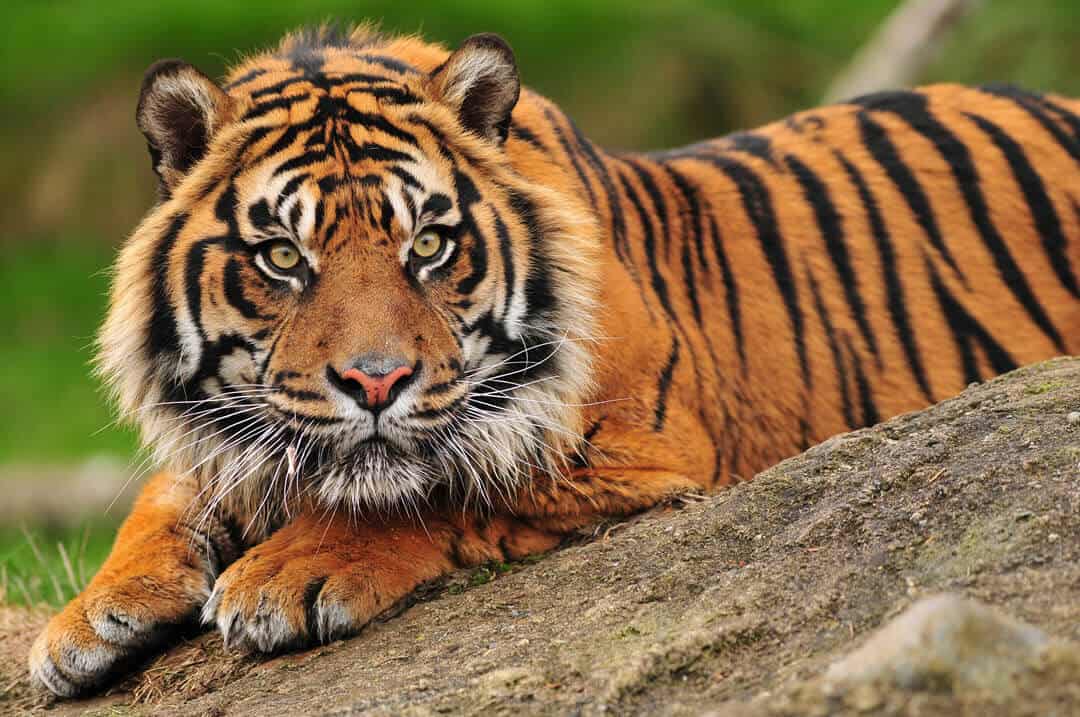
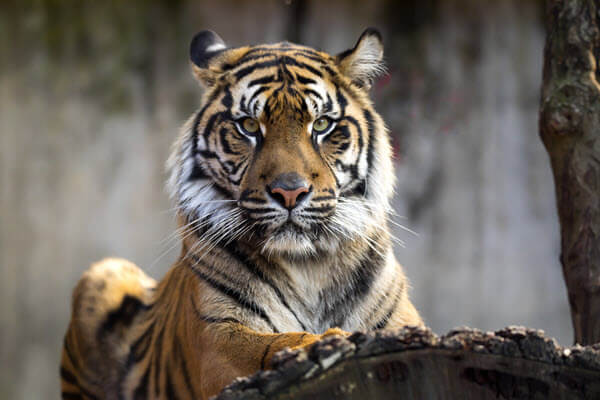
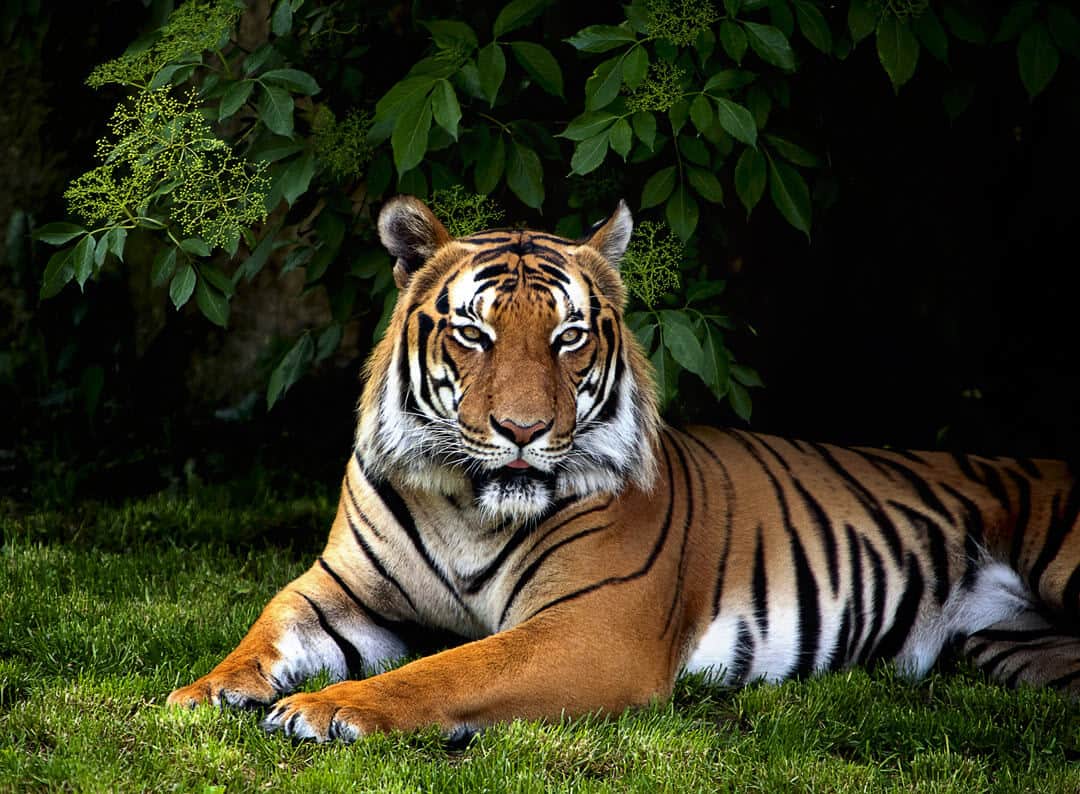
The Sumatran tiger is a subspecies of tiger found on the Indonesian island of Sumatra. It is one of the smallest tiger species, living primarily in rainforests.
Classification: Panthera tigris sondaica
(Note: tiger species taxonomy is currently under review by the IUCN SSC Cat Specialist Group.)
Conservation Status: Critically Endangered
Lineage: The Sumatran tiger is a member of the Panthera lineage, along with other tigers, the lion, jaguar, leopard, snow leopard and clouded leopard. This lineage has two genera: Panthera and Neofelis.
Population: The Sumatran tiger population is estimated at between 500 – 600 individuals.
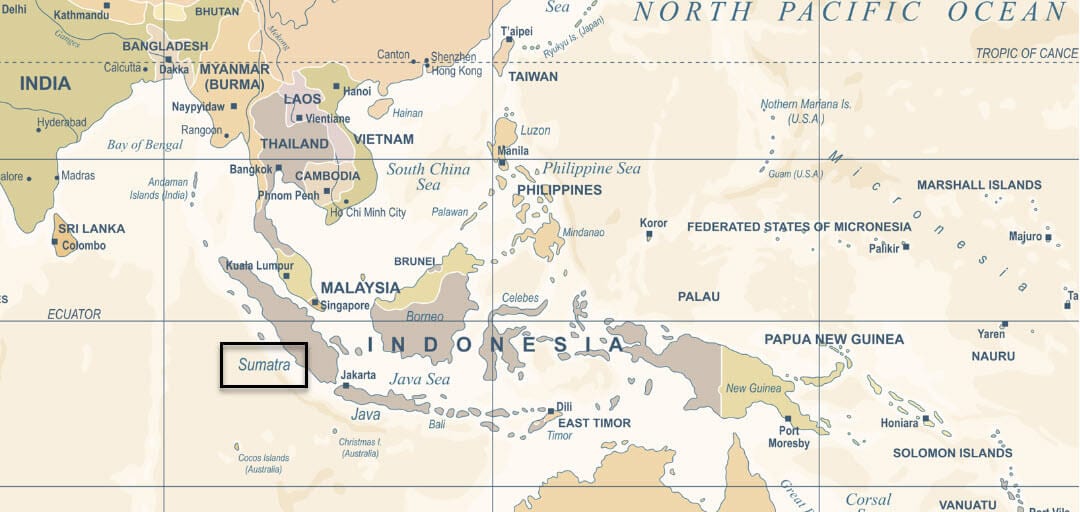
Image: Sumatra is an island in Indonesia.
Interesting Sumatran Tiger Facts
- The Sumatran tiger is a population of Panther tigris sondaice that in habits the island of Sumatra. It is the only island tiger population still in existence.
- It’s scientific name was first proposed in 1844.
- Each tiger has a different stripe pattern.
More about the Sumatran tiger
The Sumatran tiger is genetically different than tigers on the mainland.
Origin and History
It is believed that the Sumatran tiger was isolated from other tiger populations between 6,000 and 12,000 years ago, when sea levels increased.
Location and Habitat
Sumatran tigers are spread out across Sumatra. As of 2024, between 500 and 600 tigers were still in the wild. They are usually found in lowland, hilly forests and some mountain forests.
Sumatran parks where you can find the tiger:
- Barisan Selatan National Park
- Gunung Leuser National Park
- Kerinci Seblat National Park
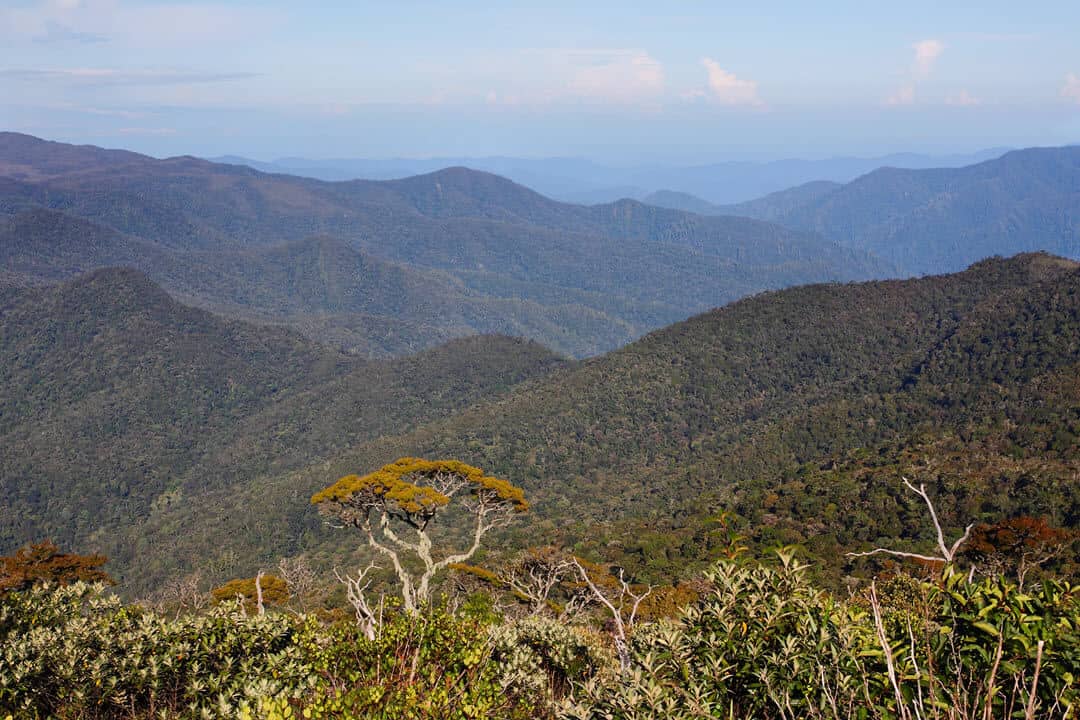
Image: Gunung Leuser National Park, Sumatra
Physical Characteristics
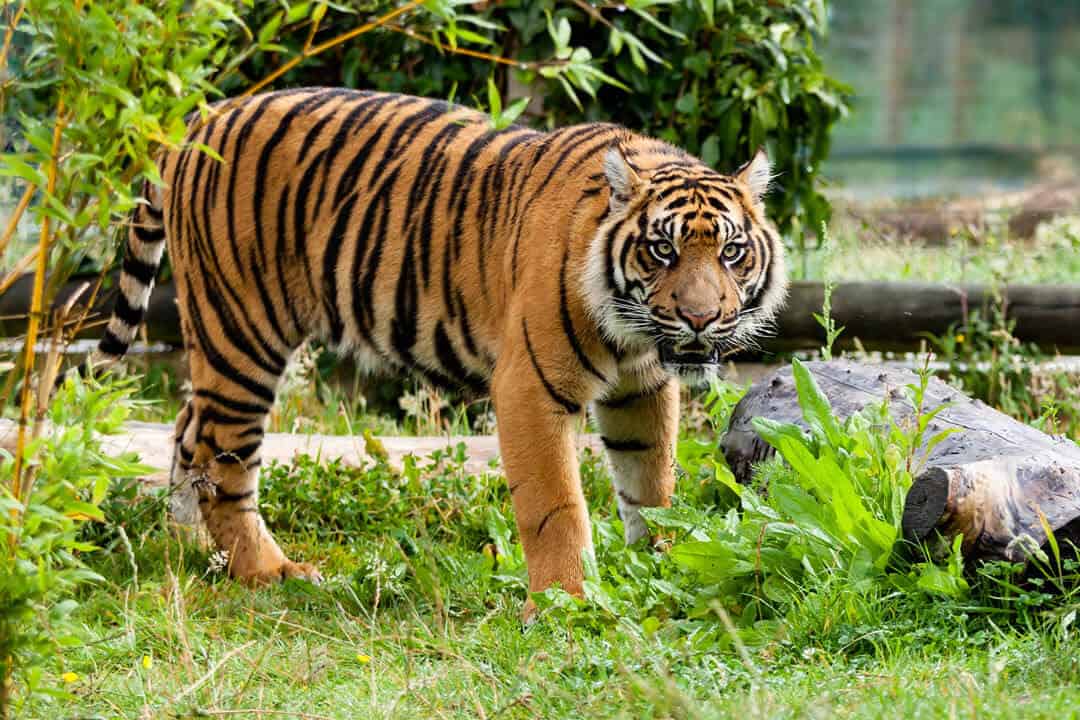
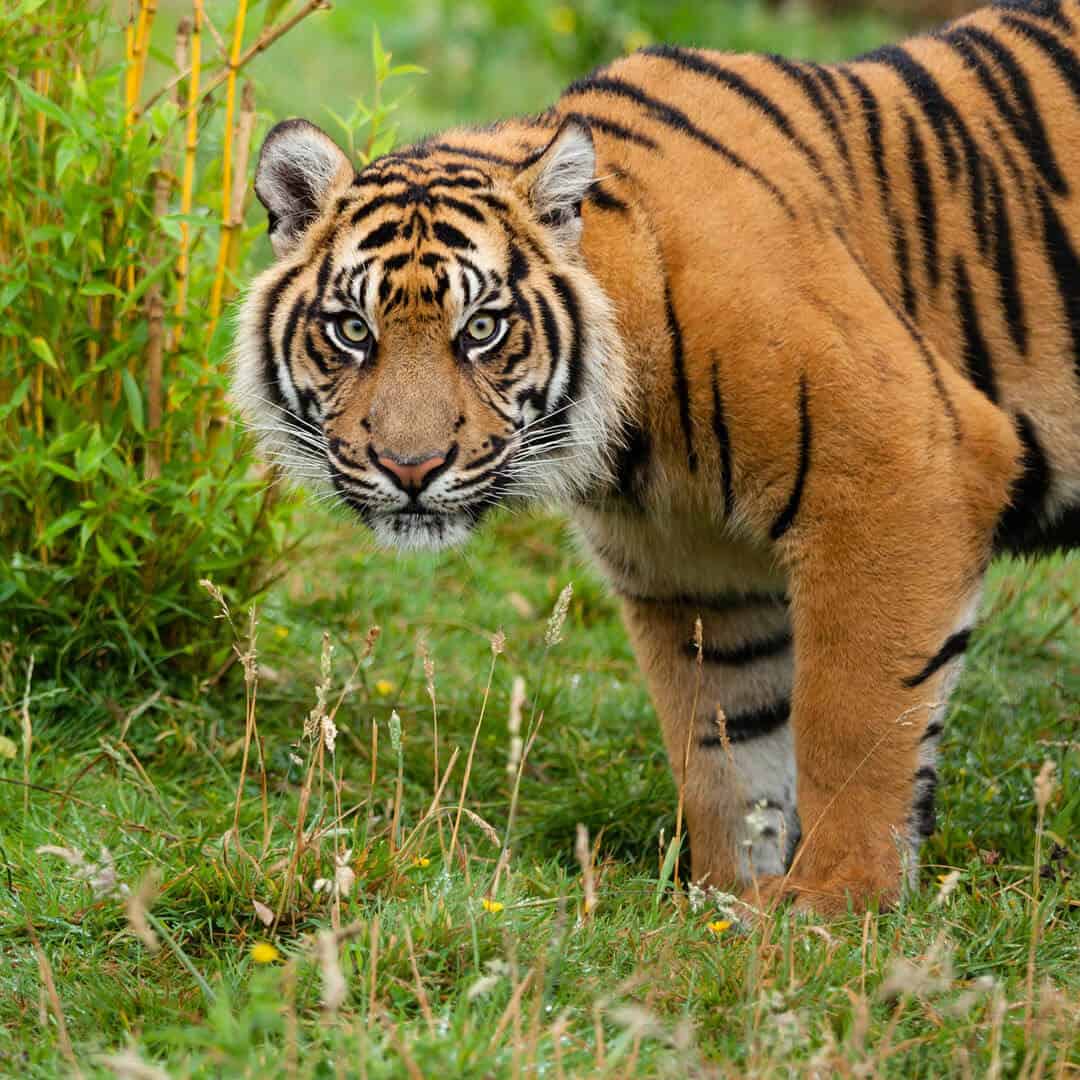
The Sumatran tiger has dark fur with broad stripes that turn into spots near the ends. Lines of small, dark spots are also between the regular stripes on its back, flanks, and hind legs.
It has more stripes than other tigers. Male Sumatran tigers have a noticeable ruff (the fur around a tiger’s face).
The Sumatran tiger is one of the smallest tigers. Males are 7.3 to 8.4 inches long and weigh 220 to 310 lbs. Females are around 7 to 7.7 inches long and weigh 165 to 243 lbs.
Sumatran Tiger Behavior
Sumatran tigers avoid plantations, preferring natural forested areas with slightly higher elevations and less rainfall. They also remain closer to the center of the forest.
Hunting and Prey
Sumatran tiger prey includes deer, pigs, birds (pheasant), porcupines, monkeys, tapir and fish.
Mating, Reproduction, and Lifespan
The tiger mates all year, but most cubs are born between November and April. Male and female tigers will mate up to 50 times a day for a couple of days to make sure the female becomes impregnated.
The gestation period is around 100 – 108 days. The average litter size is around 2 to 3 cubs. Cubs are raised by the female tiger on her own. Male Sumatran tigers reach maturity at around 4 to 5 years old. Females reach maturity at around 3 to 4 years old.
Cubs leave the den around 2 months old and become independent at around two years old.
The Sumatran tiger can live from 10 – 15 years in the wild and up to 20 years in captivity.
Sumatra Tiger Conservation
Threats to the survival of the Sumatran tiger include habitat loss, habitat fragmentation, prey depletion, illegal trafficking and human-wildlife conflict. There are various Indonesian laws protecting the tiger, that include steep fines and imprisonment for offenders.
The Indonesian Sumatran Tiger Conservation Stratigey was creaetd in 1994 based on the Indonesian Government’s Act No. 4/1982 on the Management of the Living Environment and Act No. 5/1990 on Conservation of Living Resources and their Ecosystems.
In 1995, the Sumatran Tiger Project was launched in and around Kambas National Park to study Sumatran tigers and find out the best way to protect them.
Wildlife Conservation International’s International Tiger Project includes activities such as providing low-cost tiger-proof enclosures to forest edge communities in North Sumatra and a tiger patrol team in West Sumatra. Hundreds of thousands of dollars has also been spent on tiger law enforcment activities.
Sumatran Tigers in Culture
Sumatran tigers hold a special place in the culture of Indonesia, particularly on the island of Sumatra where they are native.
Known as the smallest and darkest of all tiger subspecies, they are seen as symbols of strength, courage, and the wild spirit of the rainforest.
In local folklore, they are often portrayed as guardians of the forest, with stories passed down through generations highlighting their role as protectors of nature’s balance.
Communities living near tiger habitats sometimes believe they possess spiritual powers that connect the human world to the natural one.
Beyond folklore, Sumatran tigers have influenced art, dance, and traditions across the region.
In the village of Sekalak, a forested area in southern Sumatra, the legend of Puyang Baju Lantung, a man who became a tiger to protect his community, has been passed down for generations.
Research Quotes
- “The majority of wild Sumatran tigers are believed to live in 12 Tiger Conservation Landscapes covering approximately 88,000 km². However, the actual distribution of tigers across Sumatra has never been accurately mapped.” – Wibisono HT, et al. (2011). Population status of a cryptic top predator: an island-wide assessment of tigers in Sumatran rainforests. PLoS One.
- “We find that tiger density were 47% higher in primary versus degraded forests and, unexpectedly, increased 4.9% per yr from 1996 to 2014, likely indicating a recovery from earlier poaching. However, while tiger numbers may have temporarily risen, the total potential island-wide population declined by 16.6% from 2000 to 2012 due to forest loss and degradation and subpopulations are significantly more fragmented.” – Luskin et al. (2017). Sumatran tiger survival threatened by deforestation despite increasing densities in parks. Nature Communications.















0 Comments