
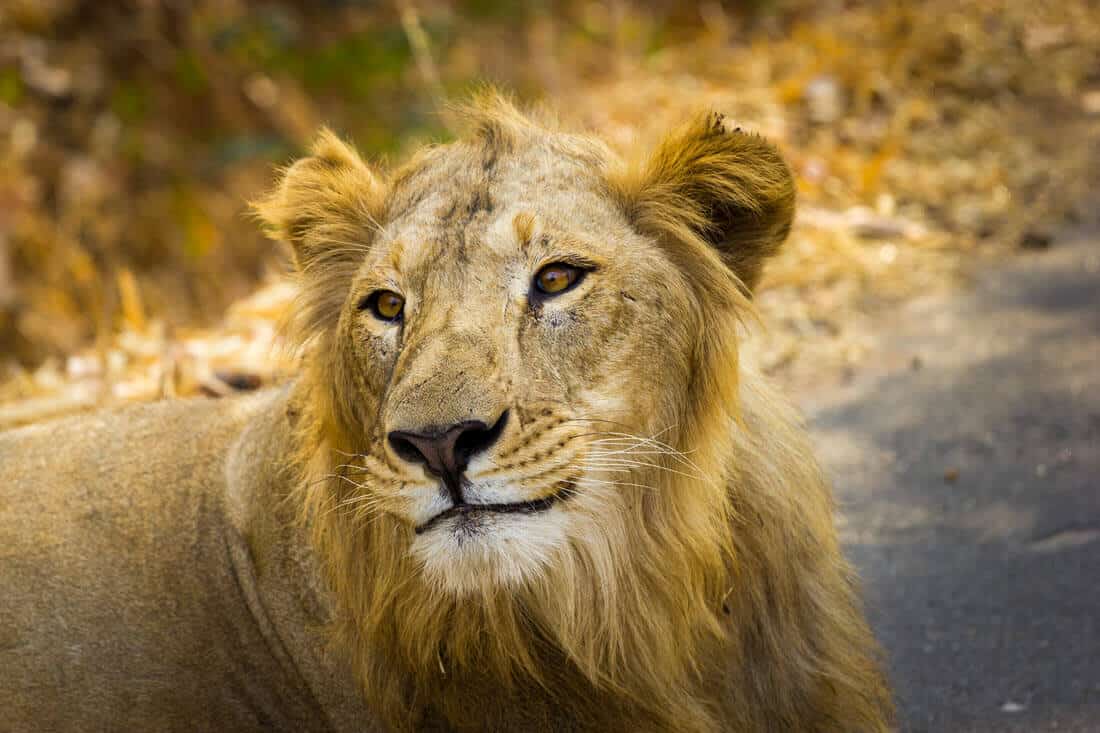
The Asiatic lion is a big cat and lion subspecies that can only be found in Gujarat, India.
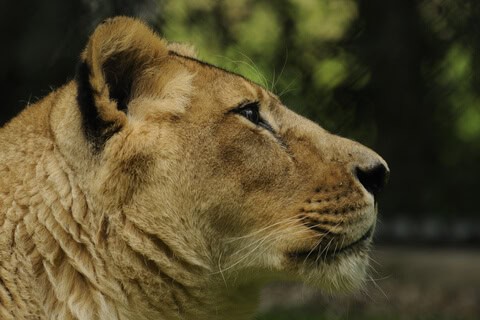
Scientific Name: Panthera leo leo
Conservation Status: Endangered
Population: As of 2025 Asiatic lion population is almost 900 lions.
Frequently Asked Questions
- What is the difference between Asiatic and African lions?
Asiatic lions are smaller, have shorter manes, and only live in India. African lions are larger and live across Sub-Saharan Africa. - Where can I see Asiatic lions in the wild?
The only wild Asiatic lions are in Gir National Park in Gujarat, India. - How many Asiatic lions are left in 2025?
About 891 lions remain in the wild today.
Interesting Asiatic Lion Facts
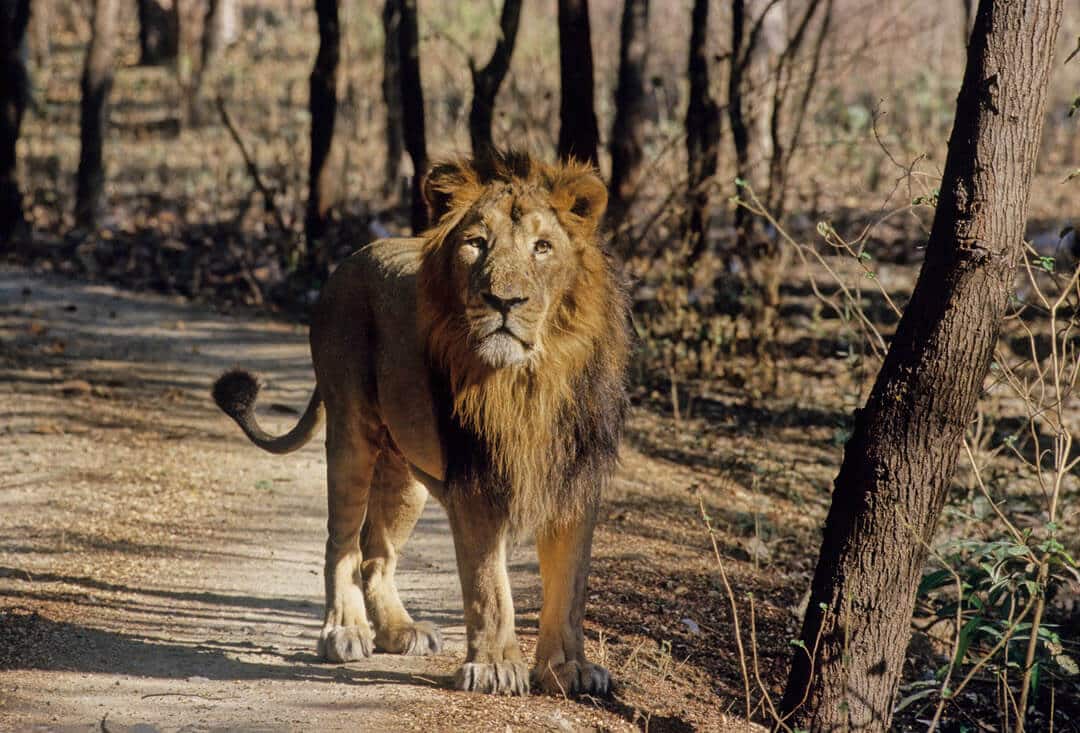
- The males usually have smaller manes than African lions but a larger tuft at the end of their tail.
- The lion was almost extinct, but its population has been recovering due to intense conservation efforts.
- It has a fold of skin along its underbelly.
- They have a tuft of hair at the end of their tails
- They have bunches of hair on their elbows
- Asiatic lions do not usually travel and hunt together.
- They have smaller prides compared to the African lion
- Male Asiatic lions sleep or rest many hours a day.
- Most of the hunting in an Asiatic lion pride is done by females.
- When an Asiatic lion walks, the heels of their feet don’t touch the ground.
Asiatic Lion Origins and History
The Asiatic Lion once roamed throughout Persia (Iran), Palestine (a region between Syria, Egypt, and Arabia), Mesopotamia (Iraq, Syria, and Turkey), Balochistan (southwestern Pakistan, southeastern Iran, and southwestern Afghanistan), and India. Today, the remaining lions live in a handful of protected areas in India’s Gir Forest.
Asiatic Lions in the Wild
Asiatic lions are the only wild lions found outside of Africa, surviving in a single population in and around Gir National Park in Gujarat, India (a protected region of dry deciduous forest and scrubland). These lions have adapted to life in dense, thorny habitats and are typically more solitary than their African relatives. Unlike African lions, which roam in large prides, wild Asiatic lions live in smaller groups and maintain overlapping territories. Their behavior, diet, and daily activity are shaped by the unique environment of western India.
Quick Comparison: Asiatic vs. African Lions
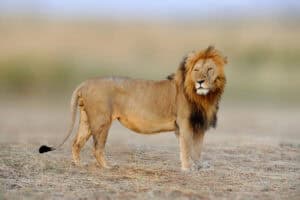
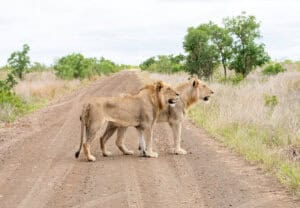
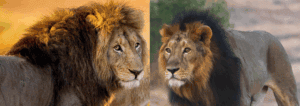
Asiatic lions are generally smaller than African lions, but are about the same size as the Central African lion. Their mane is also shorter, with less hair and darker.
Comparison Table – Asiatic Lion vs. African Lion
| Feature | Asiatic Lion | African Lion |
|---|---|---|
| Scientific Name | Panthera leo persica | Panthera leo leo (and other subspecies) |
| Geographic Range | Gir Forest, India | Sub-Saharan Africa |
| Size | Smaller: 2.3–2.8 m (head-body with tail) | Larger: 2.6–3.3 m (head-body with tail) |
| Weight | Male: 160–190 kg Female: 100–120 kg |
Male: 190–230 kg Female: 120–150 kg |
| Mane | Shorter, sparser mane; ears often visible | Fuller, darker mane covering head, neck, and chest |
| Skin Fold | Distinct longitudinal fold of skin along belly | No belly fold |
| Head Shape | Narrower skull and face | Broader skull and face |
| Social Structure | Smaller prides (2–5 females) | Larger prides (up to 15+ females) |
| Roar | Softer, less frequent | Louder and more resonant |
| Conservation Status | Endangered (only ~600 in the wild) | Vulnerable (but thousands across Africa) |
More About the Asiatic Lion
Physical Appearance
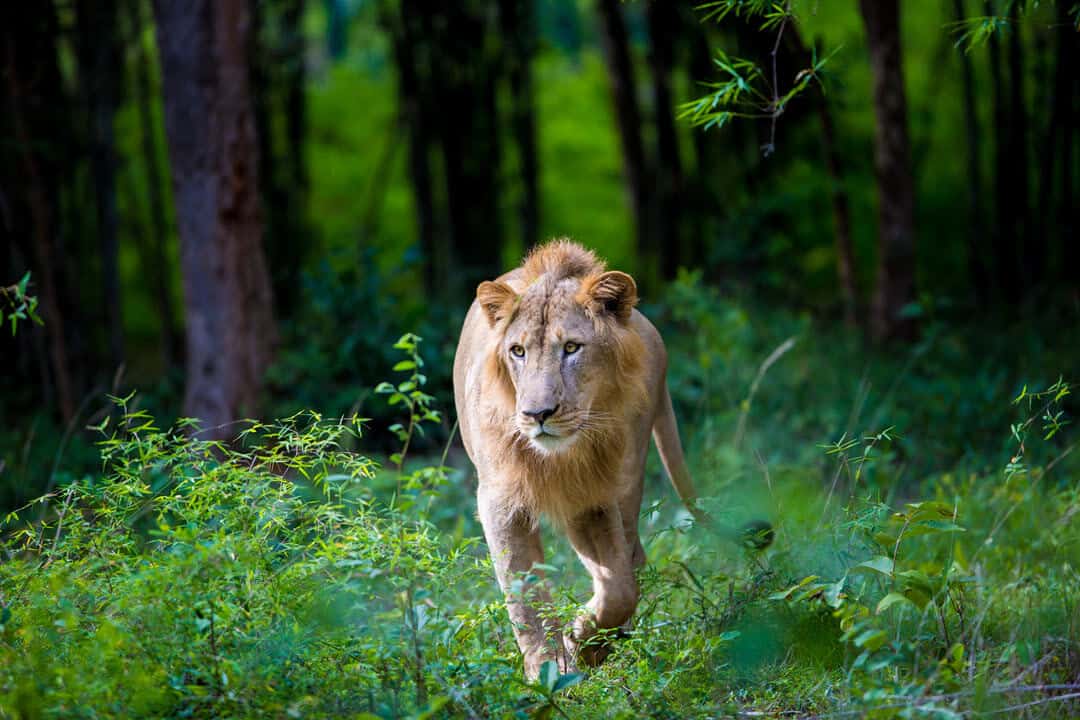
This big cat has a shaggier coat than the African lion, with a fold of skin along the belly and hair on the end of the tail and elbows. The lion’s fur can range from pale brown to sand or grey. Generally it blends with the warn, golden colors of the scrublands they inhabit.
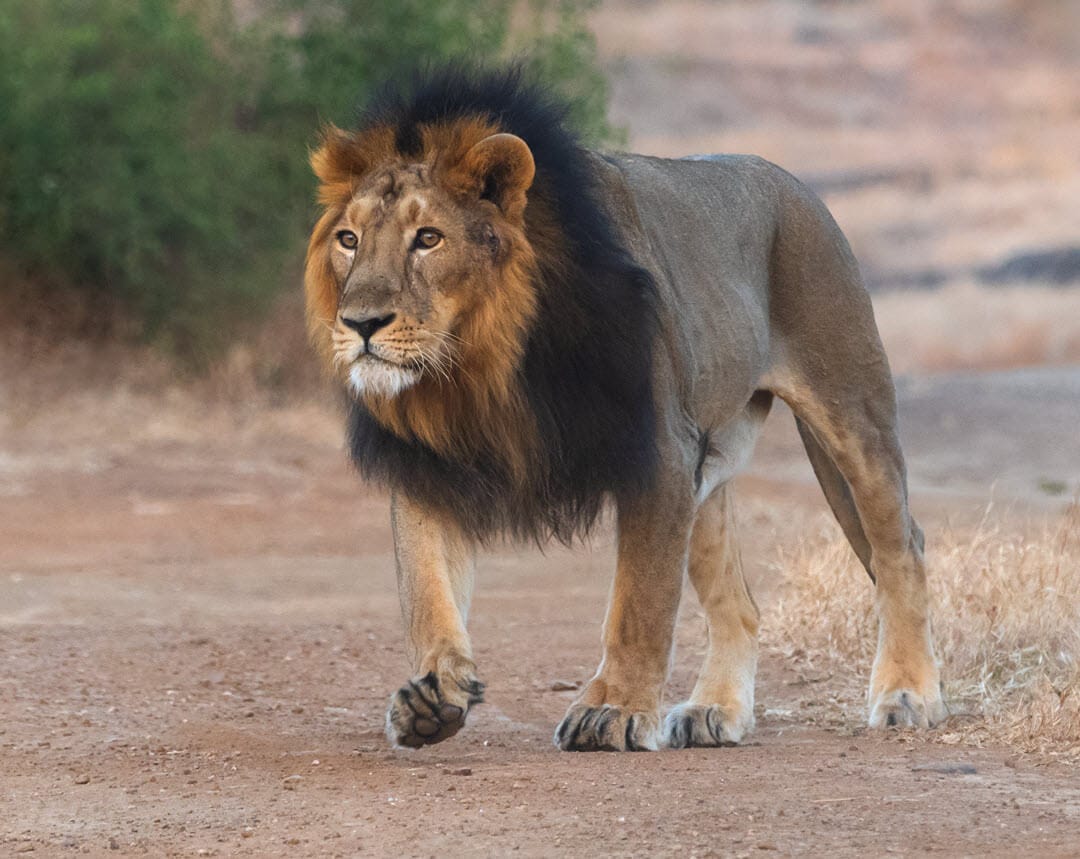
A unique characteristic of the lion is the fold of skin across its belly. Males have a medium-length mane, and their ears are visible.
Males are 5.5 ft to 8.2 ft. in length. Females are smaller – around 4.6 to 5.7 feet in length. A male lion weighs around 352 to 419 lbs, while a female weighs 243 to 265. They have sharp canine teeth and retractable claws.
Location and habitat
The remaining Asiatic lions can be found in Gir National Park and Wildlife Sanctuary. Established in 1965, the park is located in Gujarat, India, and is part of the Khathiar-Gir dry deciduous forest region. The forest stretches over 100,000 square miles across three Indian states: Gujarat, Rajasthan, and Madhya Pradesh. The trees in the forest are primarily teak, thorny trees, and scrub.
Gir is home to 38 species of mammals, 300 species of birds, 37 species of reptiles, and over 2,000 species of insects. Wild cats that inhabit the area include the Asiatic lion, Indian leopard, jungle cat, Asiatic wild cat, and rusty-spotted cat.
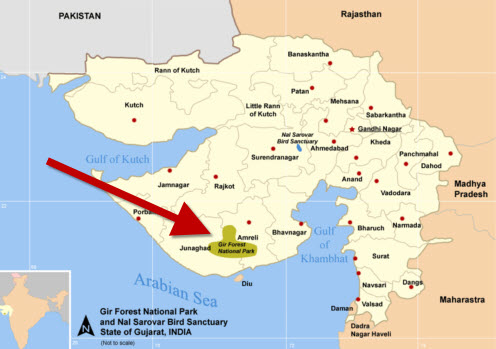
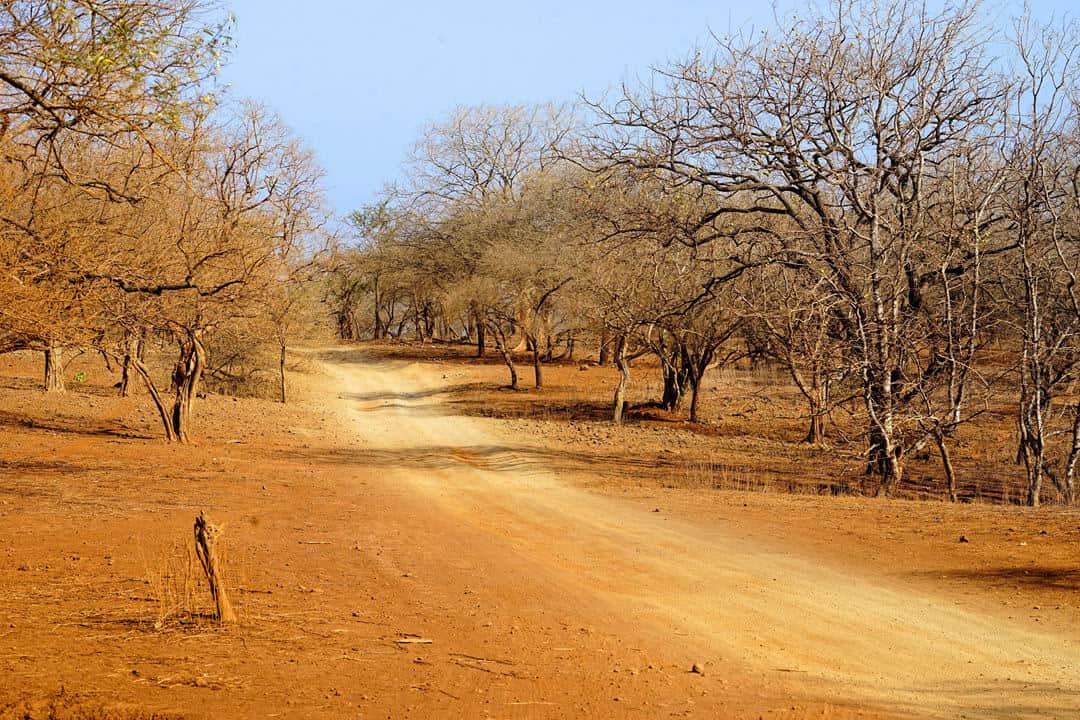
Image: Gir National Forest, India
Population Changes
In 1900, the number of wild Asiatic lions had dwindled to around 100 individuals due to hunting and habitat loss. Due to various conservation efforts, the population began increasing. By 1936, there were nearly 290 lions, although fluctuations continued in the decades that followed.
The population reached over 400 lions by 2010, and then 523 in 2015, and 674 in 2020. Now there are an estimated 891 lions — an almost ninefold increase since the early 1900s – a reflection of the ongoing Asiatic lion protection, habitat management, and conservation Activities.

Asiatic Lion Behavior
The home range of a male lion can be up to 90 square miles. Females have a smaller home range, usually around 30 square miles. Males spend up to 20 hours a day sleeping and resting. Their vocalizations include roaring, growling, snarling, meowing, purring, puffing, bleating, and humming.
Hunting & Prey (Diet)
The lion’s prey includes deer, cattle, antelope, and wild pigs. It prefers large prey—animals that weigh considerably more than the lion itself. When females hunt, they usually hunt in a group of several individuals or more. When males hunt, they hunt in smaller groups of two to three other ions. Females will share carcasses.
Reproduction and lifespan
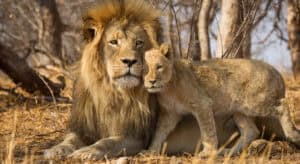
Just like African lions, Asiatic lions live together in social units called prides. Males will belong to a small group of other male lions, sometimes called coalitions, that protect the females in their area. Females will belong to a group of up to a dozen or so females. Males generally only associate with the females when mating or hunting large prey.
Asiatic lions mate with females all year long. At around 5 years of age, the males reach sexual maturity, while the females reach sexual maturity at 4 years of age. The gestation period for females is 100 – 119 days. Females can give birth to as many as six cubs, and they care for the cubs for several months.
Asiatic lion cubs begin eating meat at 3 months of age. However, they continue to suckle for approximately 6 months. During the first 9 months of their lives, they learn to hunt.
The lifespan of an Asiatic lion is from 16 to 18 years.
Asiatic Lion Conservation
Asiatic lions live in India’s protected Gir Forest, where they are vigorously monitored.
Inbreeding is a top conservation concern for lions due to the small size of their groups. Because their population descends from a small number of lions, genetic diversity is relatively low, which can lead to reproductive issues. To reduce the risk of having all lions in a single location, there have been discussions and plans to establish a second wild population in another region of India.
Diseases, forest fires, and poaching are also significant concerns.
Asiatic lions (about 20%) live outside the protected area. This can lead to an increase in human-wildlife conflict, especially when the lions prey on livestock.
Asiatic Lion in Culture
Asiatic lions have been culturally significant in Indian history, mythology, religion, and royal symbolism for thousands of years.
In Hinduism, a major Indian religion, lions are associated with divine power. The goddess Durga rides a lion into battle, symbolizing the triumph of good over evil. Vishnu, a Hindu god, took the form of Narsimha (part lion, part man) to defeat evil and protect his devotees. In Buddhism, the lion represents truth (the phrase “Lion’s Roar” is used to describe the Buddha’s voice and spiritual authority).
Ancient Indian empires like the Maurya Empire used the lion as a royal emblem. The “Lion Capital of Ashoka,” which features four Asiatic lions standing back-to-back, is now the national emblem of India. Indian rulers also used lions in court art, architecture and weapon design.
You can also find images of lions in stone carvings, temple statues and palace entrances across India.
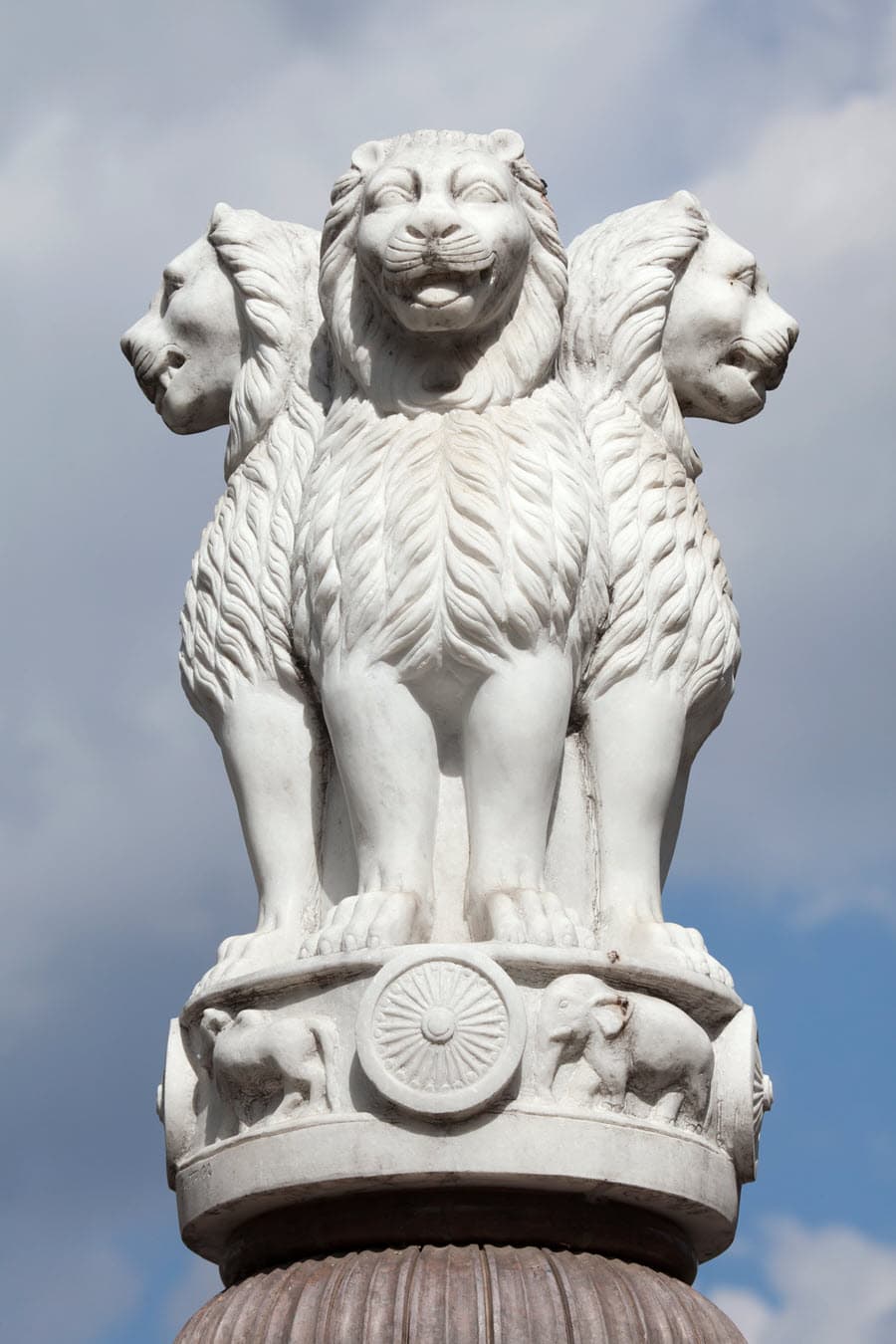
Image: National Emblem of India
Research quotes
“Asiatic lions typify most challenges faced by large carnivores: single population, historical bottlenecks, habitat loss, poaching, and conflict with humans…Lions within PA (Protected Areas) fed primarily on wild-prey, while scavenging and predation on livestock was the mainstay outside…Future of lions outside PA is uncertain as breeding refuges and their connecting corridors are vanishing rapidly.” – 2019 Asiatic Lion: Ecology, Economics, and Politics of Conservation | Jhala, BAnerjee et al.
“Historically, Asiatic lions (P. l. persica Meyer, 1826) ranged from North Africa, Eastern Europe, the Middle East, Northern Greece, Turkey, Iran, and Iraq to southwest Asia…Prey abundance, prey distribution, water availability, and factors like sex, age, pride size, and social status influence how much space a lion needs to roam…multiple male home ranges can overlap these female territories, leading to females’ multi-male mating strategy unique to Asiatic Lions.” – 2024 Regional Sustainability through Dispersal and Corridor Use of Asiatic Lion Panthera leo persica in the Eastern Greater Gir Landscape | Mehta, Rakholia et al.











thanks for information