

Image above: Left – African Lion, Right – Asiatic Lion
Lions are among the most iconic big cats on the planet, but not all lions are the same. The Asiatic lion (Panthera leo persica) and the African lion (Panthera leo leo) share a common ancestry, but have different physical characteristics and behavior, and live different places.
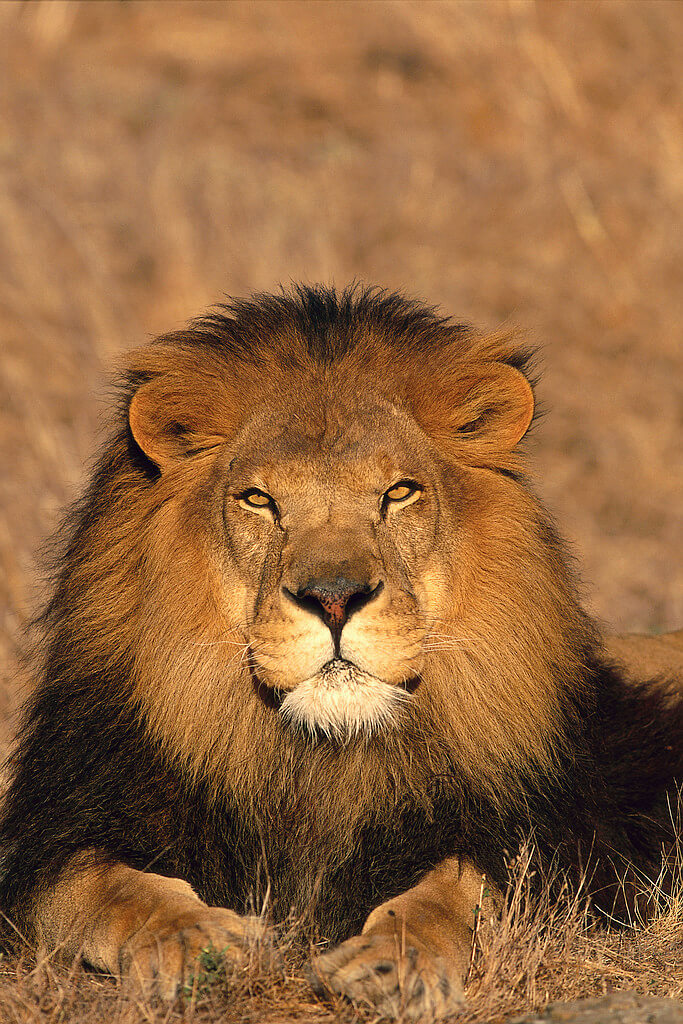
Image: African lion
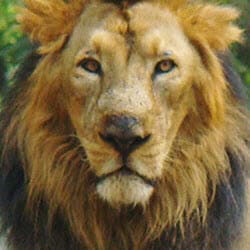
Image: Asiatic lion
Asiatic vs. African Lion Evolution
Asiatic and African lions belong to the same species (Panthera leo). They descended from a common lion population that once ranged across parts of Africa, the Middle East, and Asia.
Between 100,000 and 200,000 years ago, as populations migrated and became isolated by deserts and climate shifts, they evolved into distinct subspecies.
The DNA evidence (genetic information passed down from parents to offspring, forming a lineage) suggests that the Asiatic lion’s evolutionary history goes back further in time compared to that of African lions. This means their ancestral line branched off earlier than the African lion. Genetically, Asiatic lions are closer to North and West African lions, compared to East and Southern African lions.
Asiatic Lion Evolution
Asiatic lions adapted to the dry deciduous forests (trees or shrubs that shed their leaves each year) and scrublands (small to medium-sized woody plants) of India and the Middle East.
They developed:
- Smaller body size for maneuverability in dense vegetation
- Reduced manes, likely due to hotter, less open habitats
African Lion Evolution
African lions remained spread across more diverse terrains, from savannas (a grassy plain with only a few trees) to deserts. Their physical characteristics included:
- Larger body size for hunting large prey in open landscapes
- Thicker, fuller manes, which may play a role in social dominance and sexual selection
Asiatic vs. African Lion Location
- Asiatic Lions can only be found in the Gir Forest of Gujarat, India. Their range once spanned the Middle East and parts of Asia, but today their population is limited to this one region.
- African Lions are found across Sub-Saharan Africa, from savannas and grasslands to semi-desert regions in countries like Kenya, Tanzania, South Africa, and Botswana.
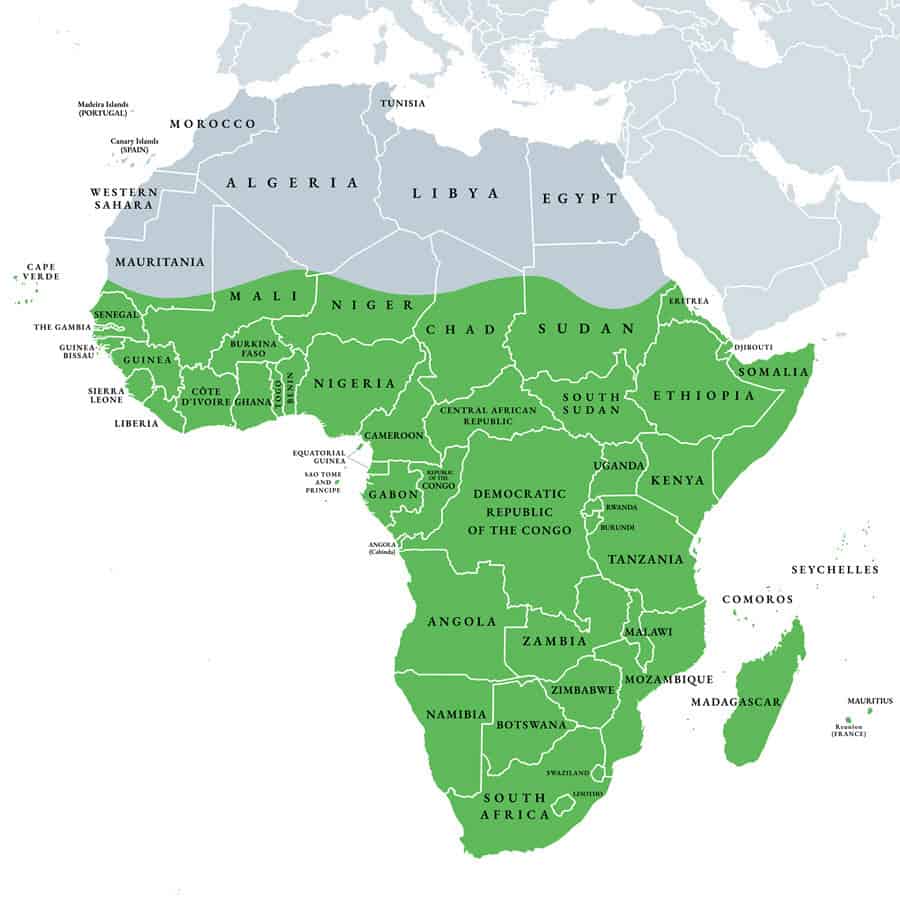
Image: Sub-Saharan Africa Map
Here are the top 5 parks and reserves in Africa where you can find African lions in the wild:
- Kruger National Park (South Africa)
- Serengeti National Park (Tanzania)
- Maasai Mara National Reserve (Kenya)
- Hwange National Park (Zimbabwe)
- Queen Elizabeth National Park (Uganda)
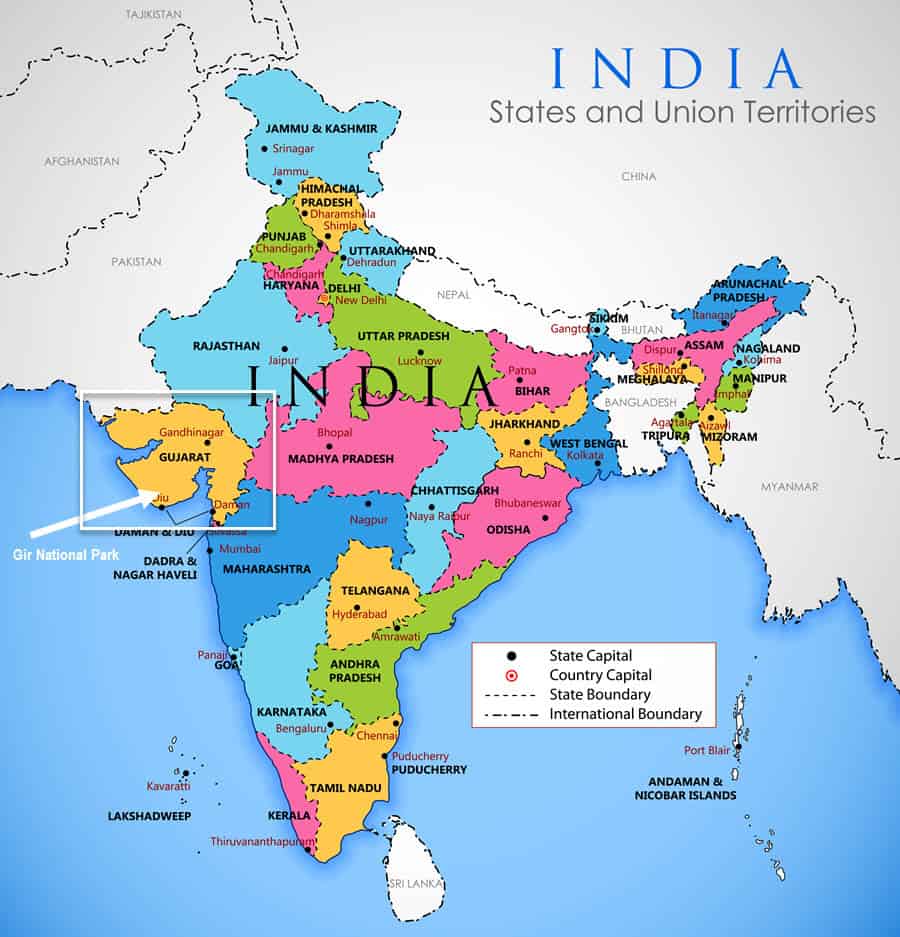
Image: Gir Forst, Gujarat, India Map
Here are the top 5 parks and reserves where you can find Asiatic lions in the wild:
- Gir National Park
- Devalia Safari Park (Gir Interpretation Zone)
- Girnar Wildlife Sanctuary
- Mitiyala Wildlife Sanctuary
- Barda Widl
Asiatic vs. African Lion Physical Differences
African lions are larger than Asiatic lions. They also have a bigger mane. Here is a list of their more noticeable physical differences.
| Feature | Asiatic Lion | African Lion |
|---|---|---|
| Size | Slightly smaller | Larger and more robust |
| Weight (Male) | 160–190 kg (352–419 lbs) | 190–230 kg (420–507 lbs) |
| Mane | Shorter, sparser; ears often visible | Fuller mane covering head and neck |
| Belly Fold | Present (distinct skin fold) | Absent |
| Head Shape | Narrower skull and face | Broader skull and facial structure |
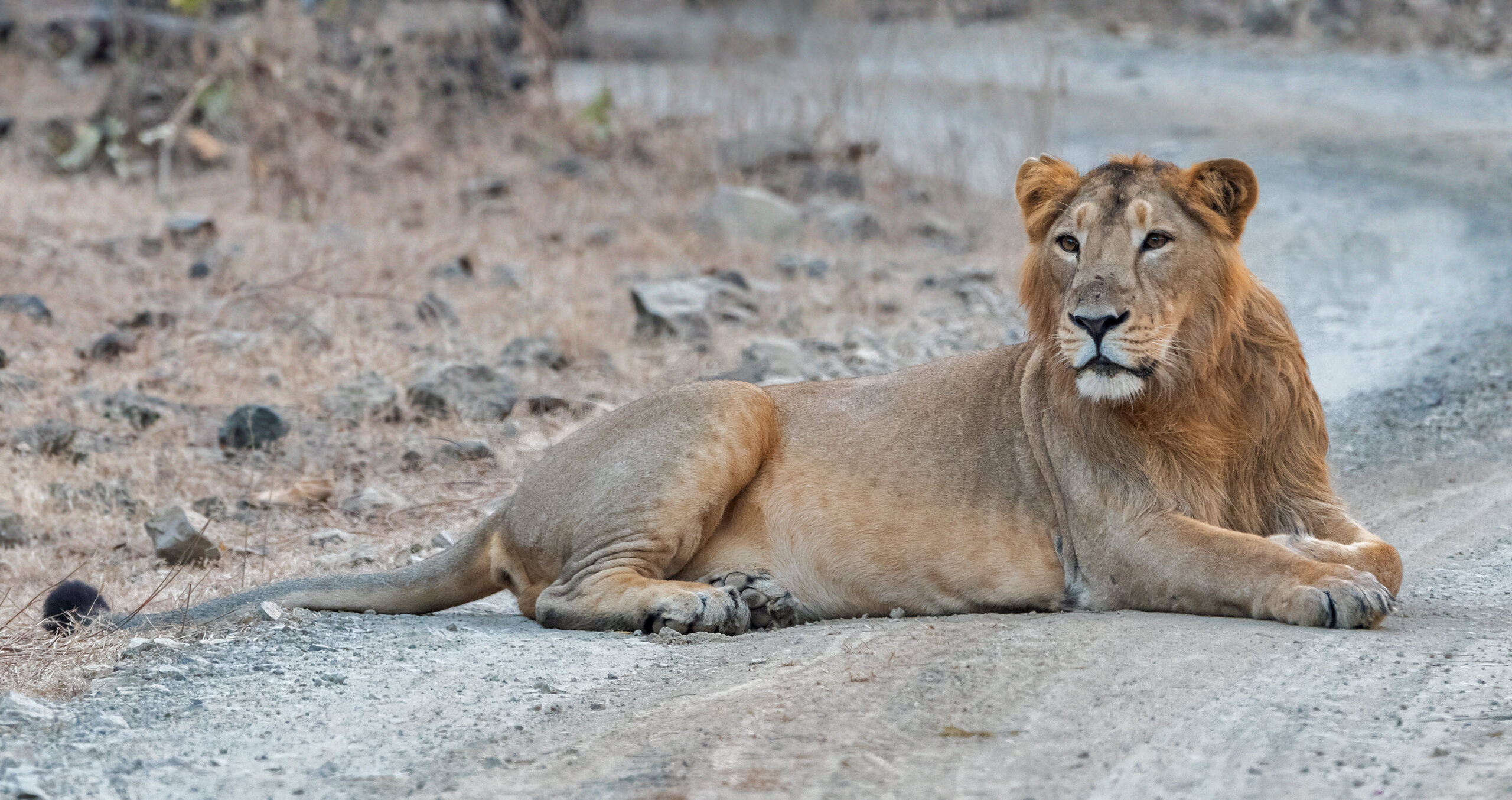
Image: An Asiatic lion resting.
Asiatic vs. African Lion Social Behavior
- Asiatic males are less social, typically associating with the pride only for mating or feeding. Asiatic Lions also live in smaller prides, often just 2–5 females with 1–2 males.
- African Lions form larger prides with up to 15 or more females, often led by coalitions of males. A “coalition” refers to a group of two or more male lions, usually brothers or related males, who band together to increase their chances of survival, defend their territory, and find mates.
Communication
Lions are on of four big cats that roar.
- Asiatic lions have a softer, less frequent roar.
- African lions have a louder and more resonant roar, which can be heard up to 5 miles away.
Field Recording - An African Lion Roaring

Hunting and Prey
Asiatic and African lions have different hunting strategies and prey preferences based on their location, pride structure, and prey availability.
Asiatic Lions – Hunting and Prey
Asiatic lions hunt in the dry forests and scrublands of Gujarat, India, where visibility is low and large prey is more dispersed.
- Because they have smaller prides (often just 2–3 females) there is less coordinated group hunting.
- Primary prey includes:
- Chital (spotted deer)
- Sambar deer
- Wild boar
- Nilgai (Indian antelope)
- Occasionally livestock, especially near village borders
- Males may scavenge more frequently or hunt alone or in pairs.
- Ambush tactics are common due to the dense vegetation.
- Compared to African lions, Asiatic lions have a slightly lower hunting success rate, partially due to smaller group size and more elusive prey.
African Lions – Hunting and Prey
In the open savannas of Africa, lions have evolved to hunt in larger groups, using stealth and group coordination to bring down much bigger prey.
- Typical prey includes:
- Zebra
- Wildebeest
- Buffalo
- Antelope species
- Occasionally giraffes or young elephants (with large prides)
- Larger prides allow strategic flanking and ambush from multiple directions.
- Females do most of the hunting, while males often claim the kill or guard it from scavengers like hyenas.
- African lions are estimated to have a success rate of ~25–30% in hunts.
Mating and Reproduction
While Asiatic and African lions share similar biological traits in terms of reproduction, they exhibit differences in their social dynamics and pride structures, including mating behaviors, cub rearing, and territory maintenance.
And yes, they can interbreed (in captivity), but conservationists discourage this practice to preserve the genetic integrity of each subspecies.
General Mating Behavior
Asiatic Lions:
- Males usually form small coalitions of 2–3 individuals and control a territory with a few related females.
- They tend to spend less time with the pride, mainly associating during mating or large kills.
- Mating can occur year-round, but peaks may align with seasonal prey availability.
African Lions:
- Males often control larger prides with multiple females, especially in prey-rich areas.
- They’re more visibly dominant in pride life and spend more time with the group.
Mating is also year-round, but competition between males is fiercer due to larger pride sizes
Pregnancy (Gestation) and Cubs
| Trait | Asiatic Lion | African Lion |
|---|---|---|
| Gestation period | 100–119 days | 100–119 days |
| Average litter | 2–4 cubs | 2–4 cubs |
| Caring behavior | Female-only caregiving; cubs hidden in dense forest | Female-only caregiving; cubs hidden in tall grass |
| Suckling period | Up to 6 months | Up to 6 months |
| Meat eating | Starts at ~3 months | Starts at ~3 months |
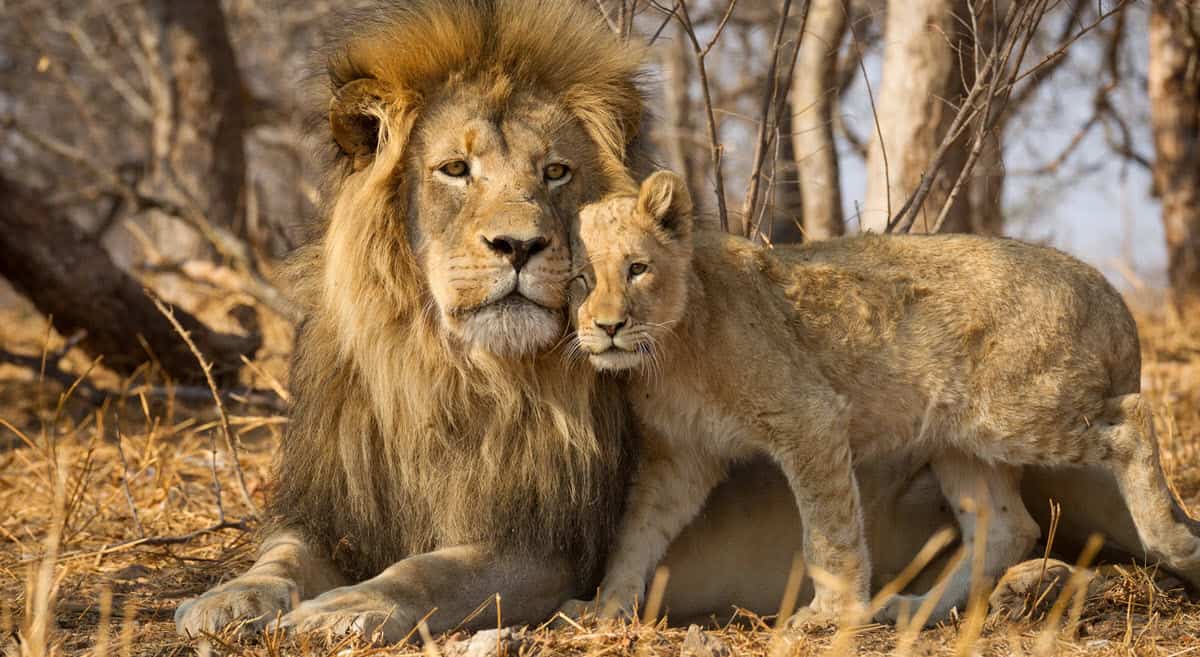
Image: Older African lion and younger African lion.
Cub Survival
- Asiatic cubs are often at greater risk due to:
- Smaller pride protection
- Lower genetic diversity (higher risk of birth defects)
- Occasional human-wildlife conflict outside protected zones
- African cubs face threats from:
- Predators like hyenas and leopards
- Infanticide when a new male takes over a pride (common in both subspecies, but more documented in Africa due to larger pride turnover)
Sexual Maturity and Lifespan
- Males reach maturity at 4–5 years, females around 3–4 years.
- In the wild, both Asiatic and African lions live 12–16 years, though Asiatic lions may have slightly shorter lifespans in areas with high human conflict.
Asiatic vs. African Lions in Culture
- In India, the Asiatic lion is a national symbol, appearing in the Lion Capital of Ashoka — a renowned sandstone carving and the country’s official emblem. Asiatic lions are associated with sovereignty, resilience in the face of adversity (adaptability and endurance).
- African lions are prominent in folklore and national symbols across multiple African nations and are a central figure in wildlife tourism. African lions are often regarded as symbols of leadership and protection. They are also recognized for their hunting prowess.
Differences in Conservation
There are several differences between Asiatic lion and African lion conservation based on their location, population status, threats and the conservation organizations involved in their preservation.
Location and population: Asiatic lions live in Gir Forest, Gujarat, India, in a single, isolated population. African lions can be found in several countries in sub-Saharan Africa. A tiny population of lions is vulnerable to local threats like disease outbreaks, fires, drought, and human encroachment.
Because African lions can be found in multiple countries, if one population declines, another may survive. It will also be easier to maintain genetic diversity in a more broadly distributed population than a smaller one.
Threats: Here are the main Asiatic vs. African lion threats to their survival.
| Main Threat | Asiatic Lion | African Lion |
|---|---|---|
| Habitat Limitation | Confined to one forest (Gir); no alternative wild populations | Widespread habitat loss due to agriculture, development, and fragmentation |
| Human Conflict | Retaliation for livestock attacks; accidents like falls into wells | Frequent conflict with pastoralists; retaliatory killings and poisonings |
| Disease Risk | High risk — a single outbreak could threaten the entire population | Moderate risk — dispersed populations reduce likelihood of catastrophic loss |
| Poaching | Low — strong protection in India; occasional illegal trade attempts | High in some regions — for traditional medicine, rituals, or bushmeat |
Conservation Solutions
Location, population size and threats result in different approaches to conservation. Here is a comparison of types of conservation for the Asiatic lion and African lion.
| Conservation Aspect | Asiatic Lion | African Lion |
|---|---|---|
| Protection Measures | Strictly protected within Gir National Park and surrounding buffer zones | Varies by country — some have strong park systems, others weak enforcement |
| Translocation | Proposed to other Indian reserves (e.g., Kuno), but stalled by state politics | Used more frequently for repopulation and genetic diversity in reserves |
| Breeding Programs | Captive populations exist in Indian zoos; no wild reintroduction yet | Captive breeding and rewilding programs active, especially in Southern Africa |
| Community Involvement | Maldhari communities live within buffer zones; some coexistence strategies in place | Community conservancies widely used; key to reducing conflict and protecting habitat |
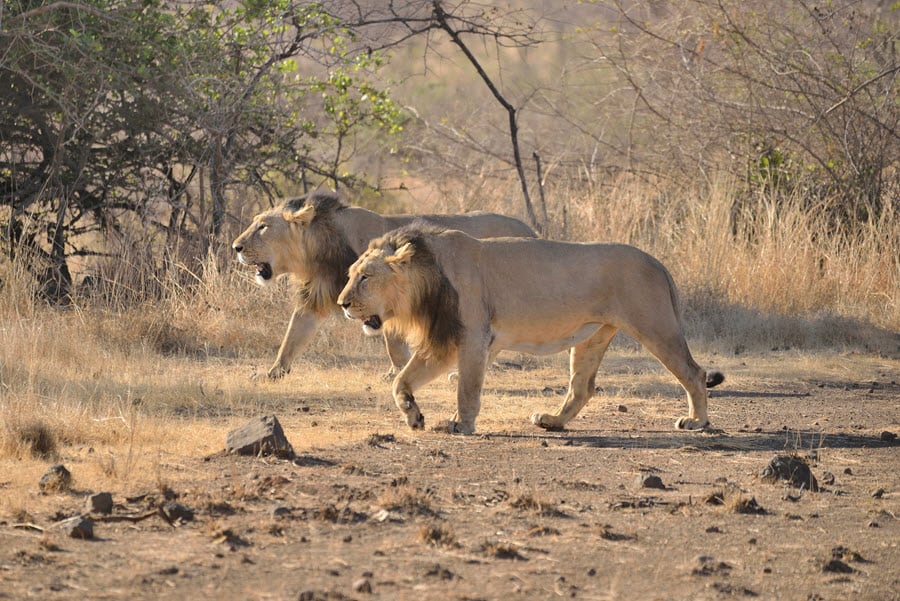
Image: Two male Asiatic lions in Gir Forest
SUMMARY
While they may look similar at a glance, Asiatic and African lions are distinct in many ways — from their size and social behavior to the regions they call home. Understanding these differences is key to appreciating their unique roles in the wild and supporting conservation efforts that protect each population.
Table: Asiatic vs. African Lion – Top 10 Differences
| Feature | Asiatic Lion | African Lion |
|---|---|---|
| Geographic Range | Gir Forest, Gujarat, India | Sub-Saharan Africa |
| Size | Smaller: 160–190 kg (males) | Larger: 190–230 kg (males) |
| Mane | Shorter, thinner mane; ears visible | Full, thick mane; ears usually hidden |
| Belly Fold | Distinct fold of skin along the belly | No belly fold present |
| Pride Size | Small prides (2–5 females) | Larger prides (up to 15+ females) |
| Hunting Behavior | More solitary or small-group hunting | Highly coordinated group hunting |
| Roar | Softer, less frequent | Louder, more resonant |
| Genetic Diversity | Low; descended from a small population | Higher, but declining in some areas |
| Conservation Status | Endangered (~891 in the wild) | Vulnerable (~20,000–25,000 in the wild) |
| National Symbol | Yes – Emblem of India | Varies by country; symbol of African wildlife |
Learn More:
- Read more about lions
- Get more information on African lions.
- Learn more about Asiatic lions.
0 Comments