This list of big cats includes wild cat species from around the world, including Asia, Africa, the Middle East, North America, South America, and Central America. It ranks big cats primarily by overall size and weight, with some variation depending on region and subspecies.
What Defines a Big Cat
The term “big cat” most commonly refers to the large cats of the Panthera genus (tiger, lion, jaguar, and leopard), which can roar. However, in broader usage, the term is often extended to include other large wild cats such as the snow leopard, cheetah, cougar, and lynx.
Snow leopards are also members of the Panthera genus, but unlike the other four species, they cannot roar.
Some big cat lists even include clouded leopards and Sunda clouded leopards. The clouded leopard and Sunda clouded leopard are both members of the subfamily Pantherinae but belong to a different genus: Neofelis.
You will even find cheetahs and cougars on big cat lists because of their size.
Cheetahs and cougars are members of the subfamily Felinae. Cheetahs belong to the genus Acinonyx, and cougars belong to the genus Puma.
The Big Cats List
Big cats are some of the most powerful and recognizable predators on Earth. From the forests of Asia to the savannas of Africa and the mountains of the Americas, these animals play a critical role in maintaining balanced ecosystems.
The list below includes some of the most well-known big cats, ranked primarily by overall size and weight. While size can vary by region and subspecies, this order reflects general averages across each species.
#1 Tiger
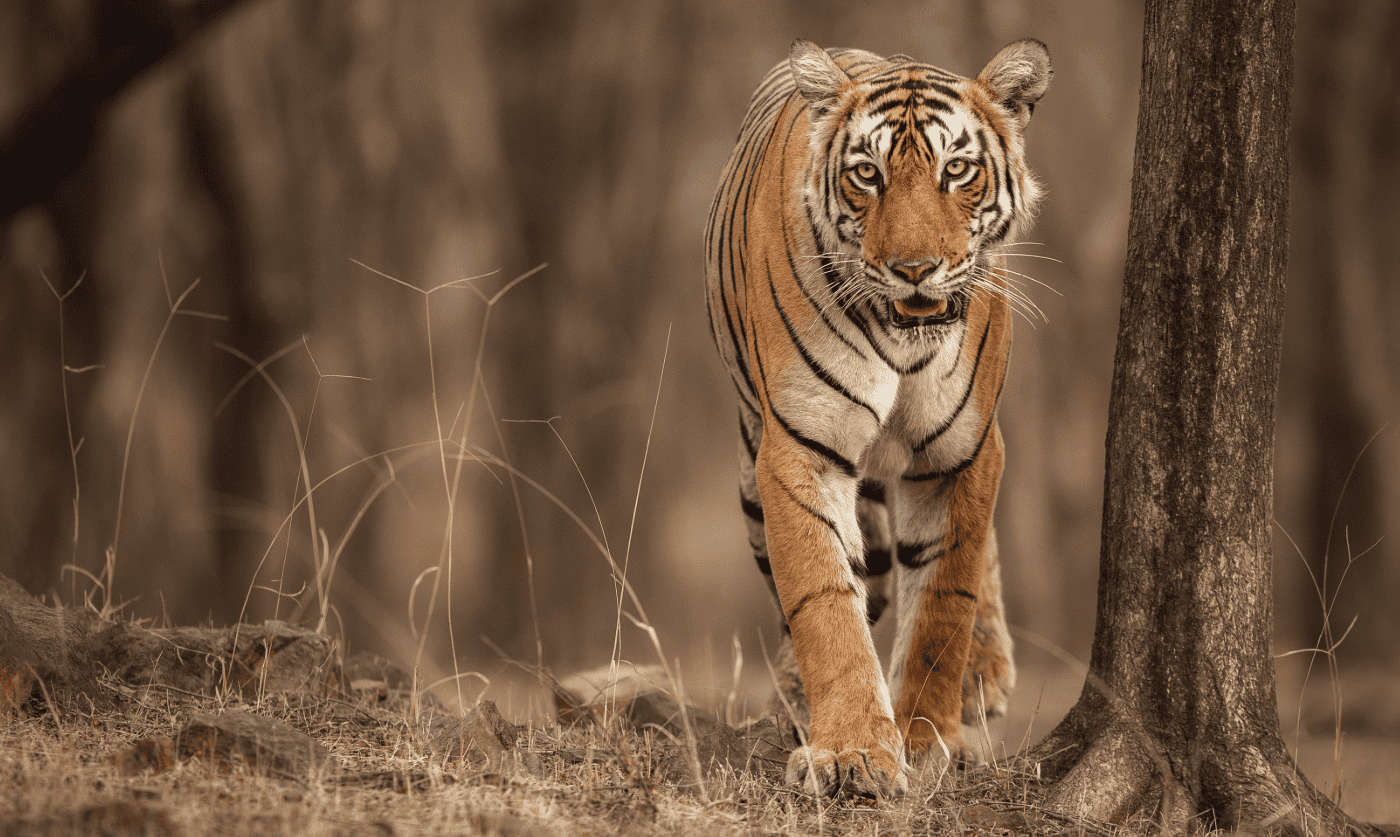
- They live in a variety of habitats, including tropical forests, mangrove swamps, grasslands, and even snowy regions like Siberia, making them one of the most adaptable big cats.
- Tigers are carnivores and primarily hunt deer, wild boar, buffalo, and smaller mammals, using their powerful bodies to ambush prey.
- The largest species, the Siberian tiger, can grow up to 12 feet (3.7 meters) long and weigh up to 660 pounds (300 kg), while the Sumatran tiger is the smallest.
- Tigers usually live 10 to 15 years in the wild, but in captivity, they can reach 20 to 25 years with proper care.
- Unlike lions, tigers are solitary hunters, meaning they live and hunt alone, except during mating season or when a mother is raising cubs.
- Tigers are excellent swimmers and can cross rivers up to 18 miles (29 km) wide, a skill that helps them hunt and travel in their habitats.
- Each tiger has a unique stripe pattern, similar to a human fingerprint, making it possible to identify individuals based on their markings.
Subspecies: Bengal tiger, Siberian tiger, Indochinese tiger, South China tiger, Malayan tiger and Sumatran tiger.
The two largest tigers are the Bengal tiger and the Siberian tiger.
The Indochinese tiger is smaller than an African lion.
The South China tiger, Malayan tiger, and Sumatran tiger are all smaller than the Asiatic lion (see Comparison Table below).
#2 African Lion
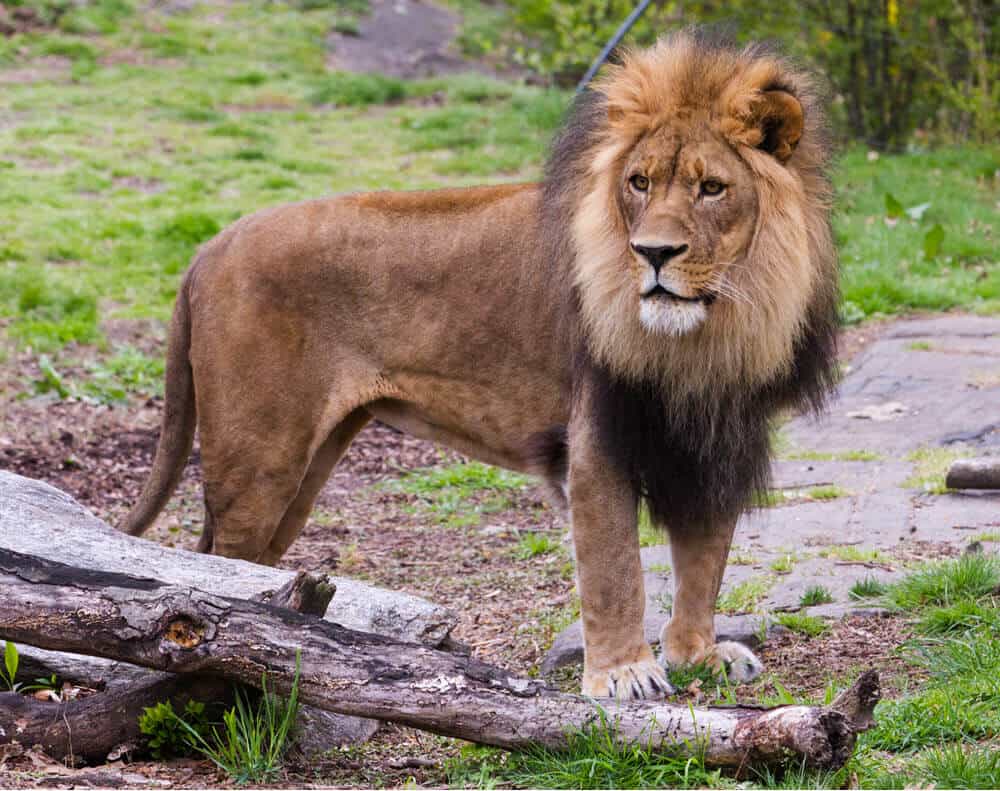
Panthera leo
Number 2 on our list of big cats is the lion. This iconic species once roamed throughout southeastern Europe, the Middle East, and parts of India. While a small population still remains in India, the species mostly inhabits various parts of Africa.
Here are some lion facts:
- Lions live in Africa, in countries like Kenya, Tanzania, South Africa, Botswana, and Namibia, with a small population of Asiatic lions in India’s Gir Forest.
- They inhabit grasslands, savannas, and open woodlands, avoiding dense forests and deserts where hunting is more difficult.
- Lions are carnivores and primarily hunt zebras, wildebeests, buffalo, and antelopes, often working together in prides to catch large prey.
- A male lion can grow up to 10 feet (3 meters) long, including its tail, and weigh 330 to 550 pounds (150 to 250 kg), while females are slightly smaller.
- Lions live about 10 to 14 years in the wild, but they can survive over 20 years in captivity due to better care and food availability.
- A lion’s roar can be heard up to 5 miles (8 km) away, helping them communicate and warn rivals of their presence.
Subspecies: Asiatic Lion (Panthera leo persica)
The Asiatic lion is a subspecies of the lion that inhabits Gujarat, India. Asiatic lions are smaller than African lions, but taller, longer and heavier than jaguars on average.
Comparing Tigers, Lions and the Jaguar
The Bengal and Siberian tigers are bigger than African lions. But the Asiatic lion is smaller than the Bengal tiger, Siberian tiger, Indochinese tiger and African lion. Here is a breakout of Asiatic lion vs. African lion, tigers and the jaguar.
| Rank | Species / Subspecies | Scientific Name | Weight (kg) | Length (m) |
|---|---|---|---|---|
| 1 | Bengal Tiger | Panthera tigris tigris | 180–260 | 2.7–3.1 |
| 2 | Siberian Tiger | Panthera tigris altaica | 180–250 | 2.6–3.3 |
| 3 | African Lion | Panthera leo leo | 180–230 | 2.6–3.3 |
| 4 | Indochinese Tiger | Panthera tigris corbetti | 150–195 | 2.5–2.8 |
| 5 | Asiatic Lion | Panthera leo persica | 160–190 | 2.3–2.8 |
| 6 | South China Tiger | Panthera tigris amoyensis | 110–150 | 2.3–2.6 |
| 7 | Malayan Tiger | Panthera tigris jacksoni | 100–140 | 2.3–2.5 |
| 8 | Sumatran Tiger | Panthera tigris sumatrae | 90–120 | 2.2–2.4 |
| 9 | Jaguar | Panthera onca | 90–120 | 1.7–2.4 |
#3 Jaguar
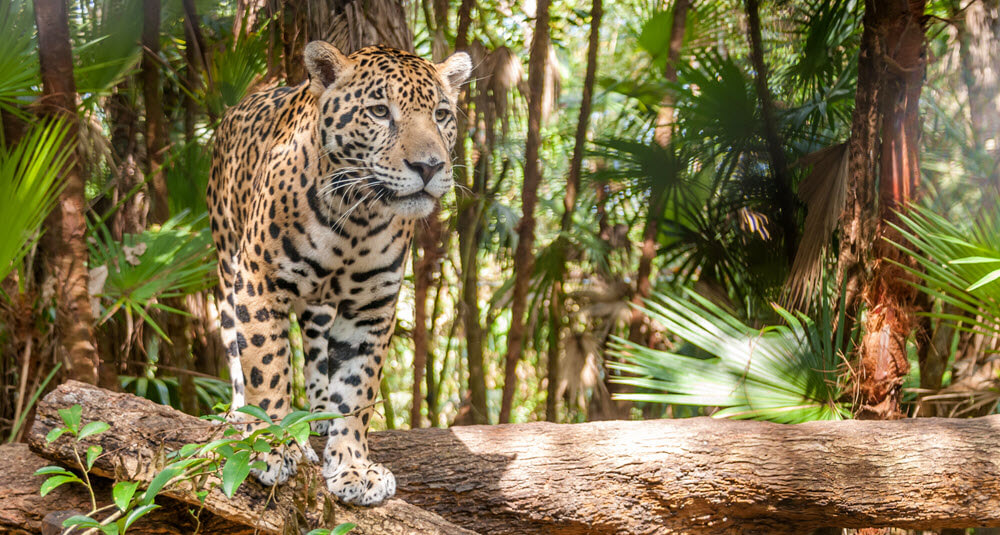
Jaguars are the third largest feline on our list of big cats. They roam throughout Central and South America in forests located near rivers and lakes. Sometimes they are seen in the Southwestern United States. They are very similar in appearance to leopards, but generally larger.
Here are some facts about jaguars:
- Jaguars are found in South and Central America, with the largest populations in Brazil, Venezuela, Colombia, Peru, Bolivia, and Mexico. The Amazon Rainforest is their main stronghold.
- They live in rainforests, wetlands, grasslands, and scrublands, but they are most commonly found in dense tropical forests near rivers and lakes.
- Jaguars are carnivores and eat a variety of prey, including capybaras, deer, monkeys, fish, turtles, and even caimans, using their powerful jaws to crush bones and shells.
- They are the largest cats in the Americas and the third-largest big cat in the world, after tigers and lions, weighing between 100 to 250 pounds (45 to 113 kg) and growing up to 6 feet (1.8 meters) long, not including the tail.
- Jaguars typically live 12 to 15 years in the wild and can reach 20 years in captivity when protected from threats like poaching and habitat loss.
- Unlike most big cats, jaguars love water and are excellent swimmers, often hunting in rivers and lakes.
- Their bite is the strongest of all big cats, capable of piercing turtle shells and crushing bones with ease.
- Jaguars have a unique spotted coat, which helps them blend into their forest environment, and some are black (melanistic), often called black panthers.
#4 Cougar
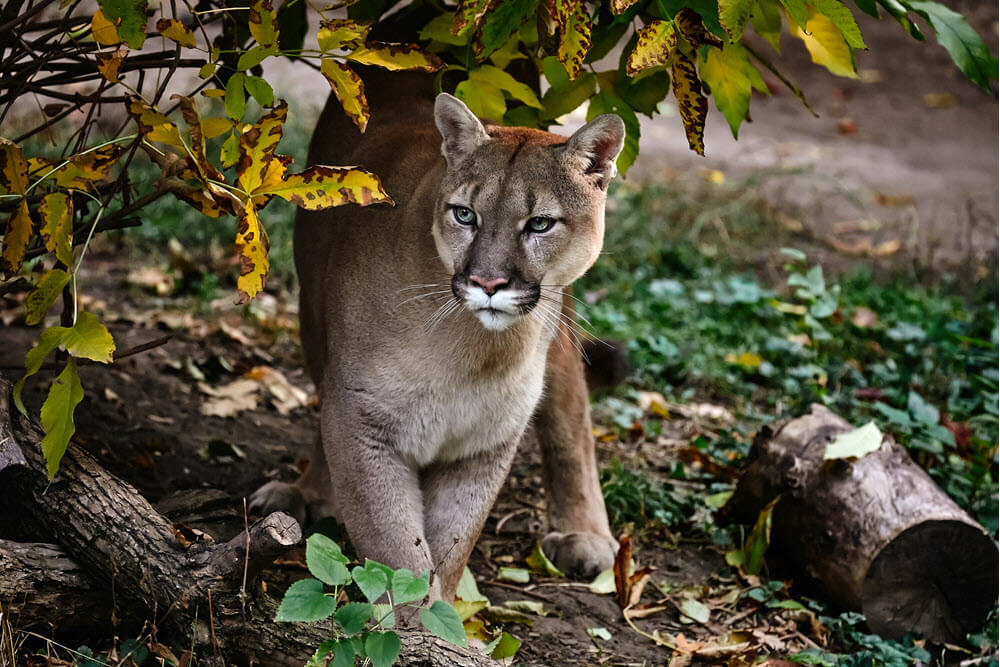
Puma concolor
Cougars are also known as the puma, mountain lion, Florida panther, red tiger, and catamount. They live in North and South America, including the United States, Canada, Mexico, Argentina, and Brazil.
Here are some things you might not know about the cougar:
- Cougars live in many different habitats, including forests, mountains, grasslands, and deserts.
- They are carnivores and eat deer, elk, rabbits, birds, and even livestock if they get the chance.
- Male cougars are around 7 feet long and vary in weight from around 120 to over 200 lbs. depending on their location.
- They have a sleek, muscular body with a long tail and short fur that is usually tan, but can range from grayish to reddish-brown.
- Cougars are excellent hunters that use stealth and powerful back legs to leap onto their prey.
- Unlike some big cats, cougars cannot roar, but they can growl, hiss, and even scream, which is why they are sometimes called “the screaming cat.”
- They are solitary animals, meaning they prefer to live alone, except when mothers raise cubs.
- Cougars are among the fastest land animals in the Americas, and they can run up to 50 mph (80 km/h) for short distances.
- Their long, powerful tails help them balance when running and jumping across rocky terrain.
#5 Leopard
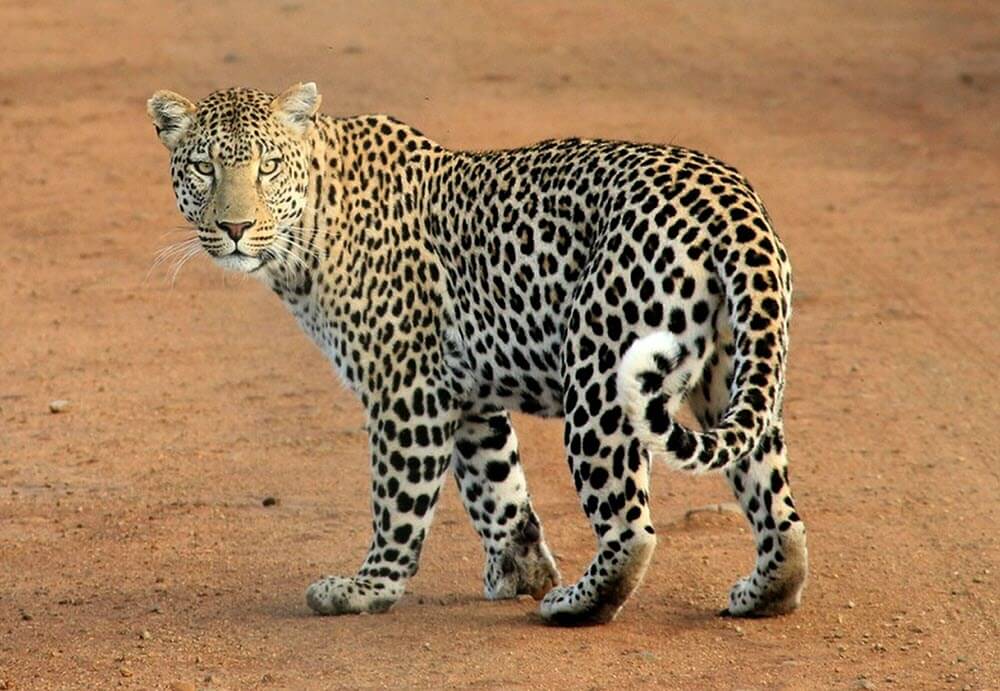
Panthera pardus
Leopards are the fifth big cat on the list. They inhabit Africa, India, Asia, the Middle East, and the Malay Peninsula.
Some facts about the leopard:
- Leopards are found in countries like India, China, Sri Lanka, Indonesia, and Russia.
- They can live in many environments, including forests, mountains, grasslands, and even deserts.
- Leopards are carnivores, meaning they eat meat. They hunt deer, antelope, monkeys, birds, and even small farm animals.
- They are strong and stealthy hunters that stalk their prey before attacking with a powerful leap.
- Unlike many big cats, leopards are excellent climbers and often drag their prey into trees to keep it safe from other predators.
- Their fur has dark rosette-shaped spots, which help them blend into their surroundings and stay hidden from enemies and prey.
- Some leopards are born with black fur instead of the usual spotted coat—these are called black panthers, but they are still leopards!
- Leopards are mostly solitary animals, meaning they prefer to live and hunt alone.
- They are very adaptable and can survive in places with very little water by getting moisture from the animals they eat.
Subspecies: African leopard, Indian leopard, Persian leopard, Sri Lankan leopard, Indochinese leopard, Amur leopard, Arabian leopard and Javan leopard.
Leopard Size Comparison Table
Not all leopards are the same size. Some subspecies, like the Arabian and Amur leopards, are similar in size or sometimes smaller than snow leopards. And some large African or Indian male leopards can be larger than a cougar. Here is a comparison of the different sizes of leopards.
| Subspecies | Scientific Name | Average Weight (kg) | Relative Size |
|---|---|---|---|
| African Leopard | Panthera pardus pardus | 60–90 | Largest |
| Indian Leopard | Panthera pardus fusca | 60–77 | Large |
| Persian Leopard | Panthera pardus saxicolor | 60–75 | Large |
| Sri Lankan Leopard | Panthera pardus kotiya | 56–77 | Medium |
| Indochinese Leopard | Panthera pardus delacouri | 50–70 | Medium |
| Javan Leopard | Panthera pardus melas | 40–60 | Small–Medium |
| Amur Leopard | Panthera pardus orientalis | 32–48 | Small |
| Arabian Leopard | Panthera pardus nimr | 30–40 | Smallest |
#6 Snow Leopard
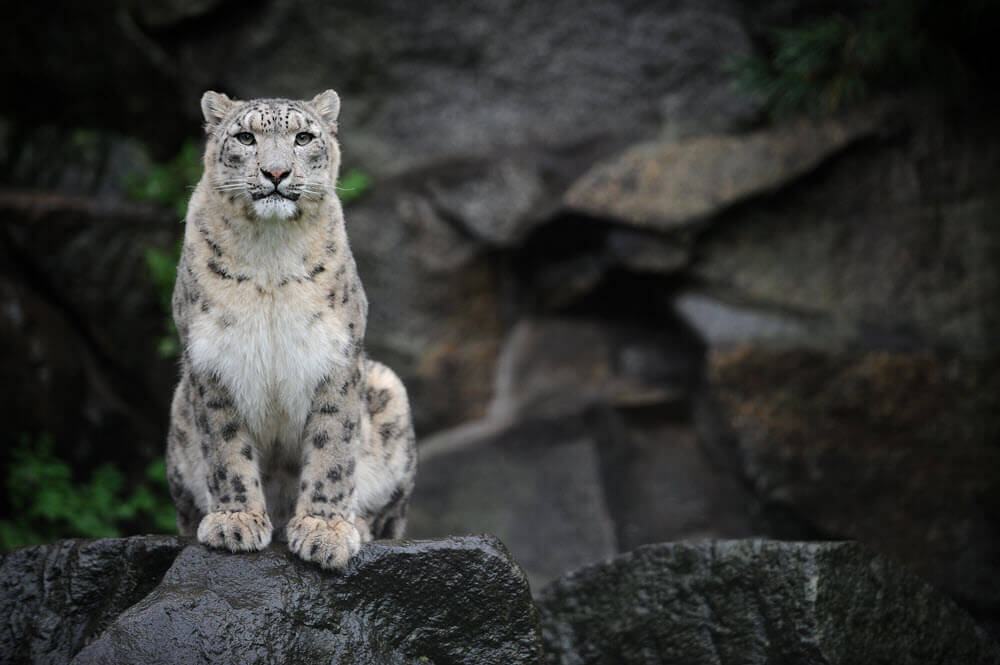
Panthera uncia
Snow leopards live in the mountains of South and Central Asia, where they have adapted to living in extremely cold climates.
Here are some snow leopard facts:
- Snow leopards live in countries like China, India, Nepal, Mongolia, Pakistan, and Russia.
- They are medium-sized big cats, weighing between 60-120 pounds (27-55 kg) and growing up to 4 feet (1.2 meters) long, not including their tail.
- Their thick fur is usually grayish-white with dark gray or black rosettes and spots, helping them blend into their snowy, rocky environment.
- Snow leopards live in high-altitude habitats, often between 9,800 and 17,000 feet (3,000-5,200 meters) above sea level.
- They are carnivores that hunt wild sheep, ibex, marmots, hares, and sometimes livestock when wild prey is scarce.
- Snow leopards are known for their powerful legs, which allow them to leap up to 50 feet (15 meters) in a single jump.
- Unlike other big cats, snow leopards cannot roar; instead, they communicate with growls, yowls, and a unique chuffing sound.
- Their long, thick tails, which can be as long as their body, help them balance while climbing steep, rocky terrain.
- Snow leopards have large, fur-covered paws that act like natural snowshoes, helping them walk on deep snow without sinking.
- Snow leopards are most active at dawn and dusk, making them crepuscular hunters that rely on stealth and surprise to catch their prey.
- They have an incredible sense of hearing and sharp eyesight, allowing them to detect prey from long distances in their harsh mountain environment.
#7 Cheetah
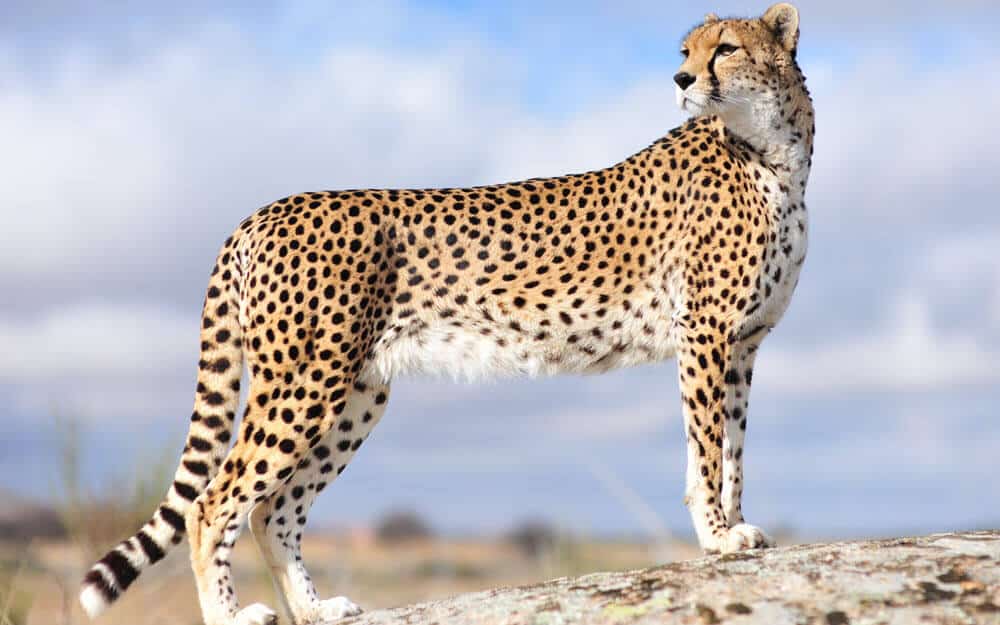
Acinonyx jubatus
Cheetahs once ranged throughout India, Pakistan, Russia, Iran and the Middle East, but due to diminishing populations, most cheetahs can only be found in the eastern and southern parts of Africa, and Iran.
Things to know about cheetahs:
- Cheetahs are mainly found in Africa, especially in countries like Kenya, Tanzania, South Africa, and Namibia, but a small population also lives in Iran.
- They have a slim, lightweight body built for speed, with long legs and a deep chest.
- Cheetahs usually weigh between 75-140 pounds (34-64 kg) and can grow up to 4 feet (1.2 meters) long, not including their tail.
- Their fur is golden-yellow with small black spots, which helps them blend into dry grasslands and avoid predators.
- Cheetahs live in open savannas, grasslands, and dry forests where they can use their speed to chase prey.
- They are carnivores and mainly hunt small to medium-sized animals like gazelles, impalas, and hares.
- Unlike most big cats, cheetahs cannot roar, but they make chirping, purring, and growling sounds to communicate.
- Cheetahs rely on their speed rather than strength, reaching up to 70 mph (113 km/h) in short bursts when chasing prey.
- Unlike leopards and lions, cheetahs do not have retractable claws, which helps them grip the ground while running.
#8 Eurasian Lynx
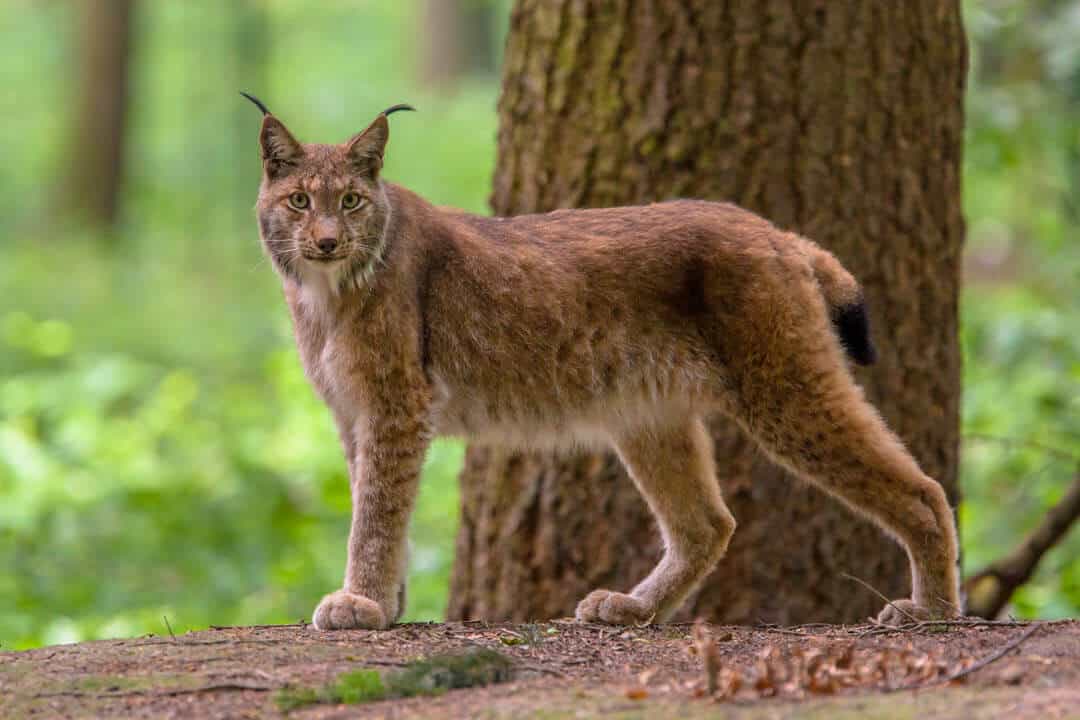
Lynx lynx
The Eurasian lynx is one of four lynx wild cat species (and the largest) found in various parts of Europe, Central Asia, Siberia, the Himalayas, and the Tibetan Plateau.
More facts about the Eurasian lynx:
- It is found in Europe and Asia, living in countries like Russia, China, Germany, Finland, Sweden, and Mongolia.
- Eurasian lynxes are medium-sized wild cats, weighing between 40-80 pounds (18-36 kg) and growing up to 4 feet (1.2 meters) long.
- They have thick fur that changes color with the seasons—reddish-brown in summer and grayish in winter—to help them blend into their surroundings.
- Their fur is covered in dark spots, and they have long black tufts on their ears, which help them detect sounds.
- Eurasian lynxes live in dense forests, mountains, and cold, snowy regions, where they are well-adapted to survive harsh winters.
- They are carnivores that hunt deer, rabbits, hares, birds, and other small mammals.
- Unlike some wild cats, Eurasian lynxes are excellent climbers and swimmers, helping them hunt in a variety of environments.
- They are solitary animals, meaning they prefer to live and hunt alone, except during the mating season or when a mother is raising her kittens.
- Eurasian lynxes have large, fur-covered paws that work like snowshoes, helping them walk on deep snow without sinking.
#9 Clouded Leopard
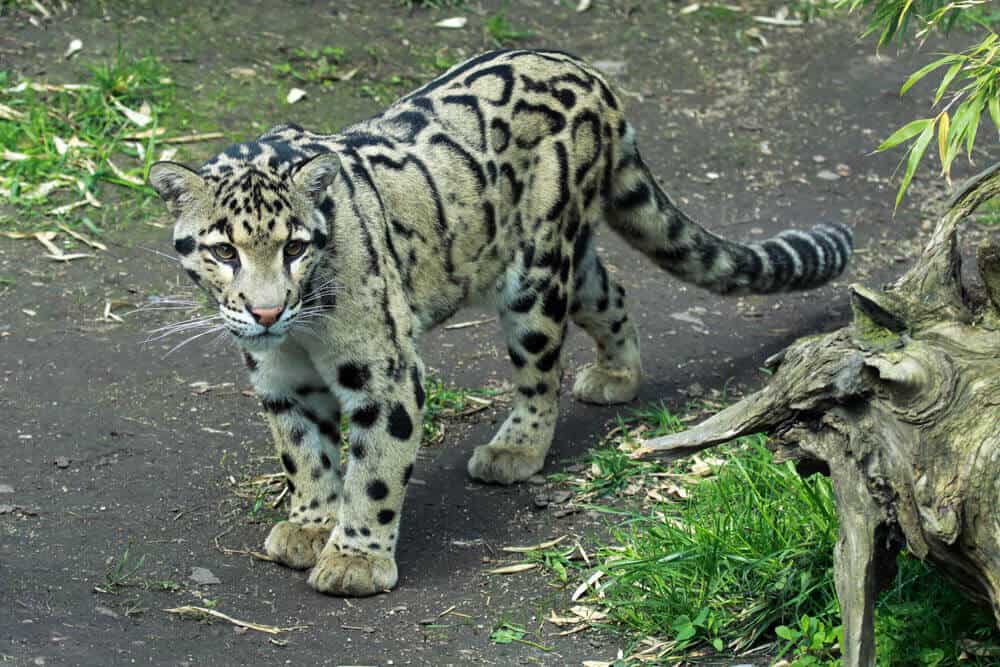
Neofelis nebulosa
The clouded leopard is found in Asia, from the Himalayas (Nepal and India) to China, usually in dense forests. Physical characteristics include a dark grey fur with black spots, blotches, and mottled stripes. It is estimated that there are less than 10,000 clouded leopards in the wild.
More facts about the clouded leopard:
- Clouded leopards are found in countries like India, Nepal, Thailand, Malaysia, Indonesia, and China.
- They are smaller than other big cats, weighing between 25-50 pounds (11-23 kg) and growing up to 3.5 feet (1.1 meters) long, not including their tail.
- Their fur is yellowish or grayish with large, cloud-shaped black markings, which help them blend into the dense forest.
- Clouded leopards live in tropical rainforests, mangrove swamps, and mountainous forests, where they are well-hidden among the trees.
- They are carnivores that hunt monkeys, deer, birds, rodents, and other small animals.
- Clouded leopards are amazing climbers, using their large paws and long tails to balance as they leap between trees.
- They have the longest canine teeth of any wild cat relative to their skull size, giving them a powerful bite.
- Unlike most big cats, clouded leopards can climb down trees headfirst by rotating their ankles, a rare ability among felines.
- They are secretive and mostly nocturnal, meaning they are active at night and very difficult to spot in the wild.
#10 Sunda Clouded Leopard
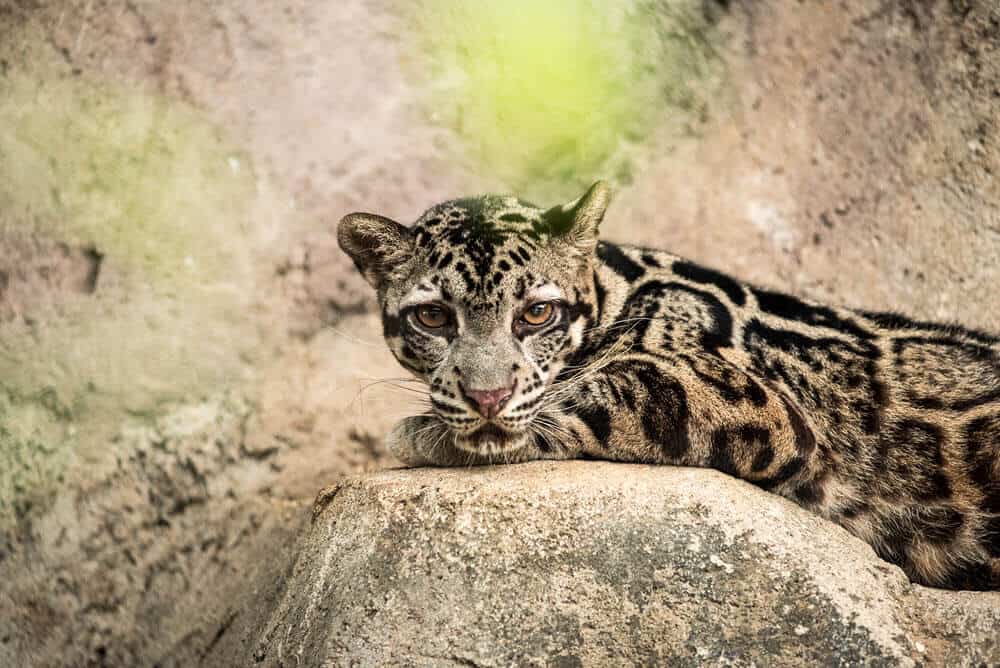
Neofelis diardi
The Sunda clouded leopard (Neofelis diardi), also called the Sundaland clouded leopard, is found in Sumatra and Borneo. The leopard’s local name means “tree branch tiger.”
- It lives in Indonesia, specifically on the islands of Borneo and Sumatra.
- Sunda clouded leopards are slightly smaller than their mainland relatives, weighing between 22-50 pounds (10-23 kg) and growing up to 3.5 feet (1.1 meters) long, not including their tail.
- Their fur is grayish or yellowish-brown with large, cloud-like black markings that help them blend into their rainforest habitat.
- They live in dense tropical rainforests and mangrove swamps, where they are well-hidden among the trees.
- Sunda clouded leopards are carnivores, hunting monkeys, birds, deer, small mammals, and even porcupines.
- They are expert climbers, using their strong legs and long tails to balance while moving through trees.
- Like the mainland clouded leopard, they have long canine teeth, giving them a powerful bite for their size.
- Unlike most cats, they can climb down trees headfirst by rotating their ankles, making them one of the most agile tree-dwelling predators.
- Sunda clouded leopards are rare and elusive, mostly active at night, and difficult for researchers to study in the wild.
Comparison of Big Cats
| Ranking | Wild Cat | Average Length (ft) | Average Weight (lbs) | Subfamily | Genus |
|---|---|---|---|---|---|
| 1 | Tiger | 7.9 – 10.8 | 308.6 – 674.6 | Pantherinae | Panthera |
| 2 | African Lion | 8.2 – 10.8 | 330.7 – 496.0 | Pantherinae | Panthera |
| 3 | Jaguar | 5.2 – 6.1 | 123.5 – 348.3 | Pantherinae | Panthera |
| 4 | Cougar | 4.9 – 9.0 | 116.8 – 220.5 | Felinae | Puma |
| 5 | Leopard | 4.6 – 6.6 | 66.1 – 198.4 | Pantherinae | Panthera |
| 6 | Snow Leopard | 3.3 – 4.9 | 48.5 – 121.3 | Pantherinae | Panthera |
| 7 | Cheetah | 3.6 – 4.9 | 46.3 – 158.7 | Felinae | Acinonyx |
| 8 | Eurasian Lynx | 2.6 – 4.3 | 39.7 – 79.4 | Felinae | Lynx |
| 9 | Clouded Leopard | 2.5 – 3.5 | 24.3 – 50.7 | Pantherinae | Neofelis |
| 10 | Sunda Clouded Leopard | 2.1 – 3.1 | 22.0 – 57.3 | Pantherinae | Neofelis |
Frequently Asked Big Cat Questions
What are the biggest cats that roar?
There are only four cats that roar, and all of them are big cats: the tiger, lion, jaguar, and leopard. These four belong to the genus Panthera and have a unique set of bones, cartilage, and ligaments in their throats that allow them to produce deep, resonant roars.
What are the fastest big cats?
Of the 10 biggest cats, the fastest are the cheetah, cougar, jaguar, lion and leopard.
- Cheetah – 75 mph (120 km/h) – The cheetah is the fastest land animal, capable of reaching this speed in short bursts over distances up to 1,500 feet (460 meters). It can accelerate from 0 to 60 mph in just a few seconds.
- Cougar – 50 mph (80 km/h) – Cougars are powerful sprinters and can reach high speeds for short bursts, typically while ambushing prey.
- Jaguar – 50 mph (80 km/h) – Jaguars are strong and agile but rely more on stealth and ambush rather than long chases.
- Lion – 50 mph (80 km/h) – Lions are fast sprinters but can only maintain their top speed for short distances due to their muscular build
- Leopard – 36 mph (58 km/h) – Leopards are agile and fast runners, but their hunting strategy relies more on ambush than prolonged chases.
The other big cats—tiger, snow leopard, Eurasian lynx, clouded leopard, and Sunda clouded leopard—are generally slower, ranging from 30-40 mph (48-64 km/h).
Which of these big cats has the longest tail?
The big cats with the longest tail relative to their body size are the:
- Snow leopard
- Clouded leopard
- Sunda clouded leopard
- Leopard
- Jaguar
Tigers and lions have long tails but not relative to their body size.
Where do the biggest cats live?
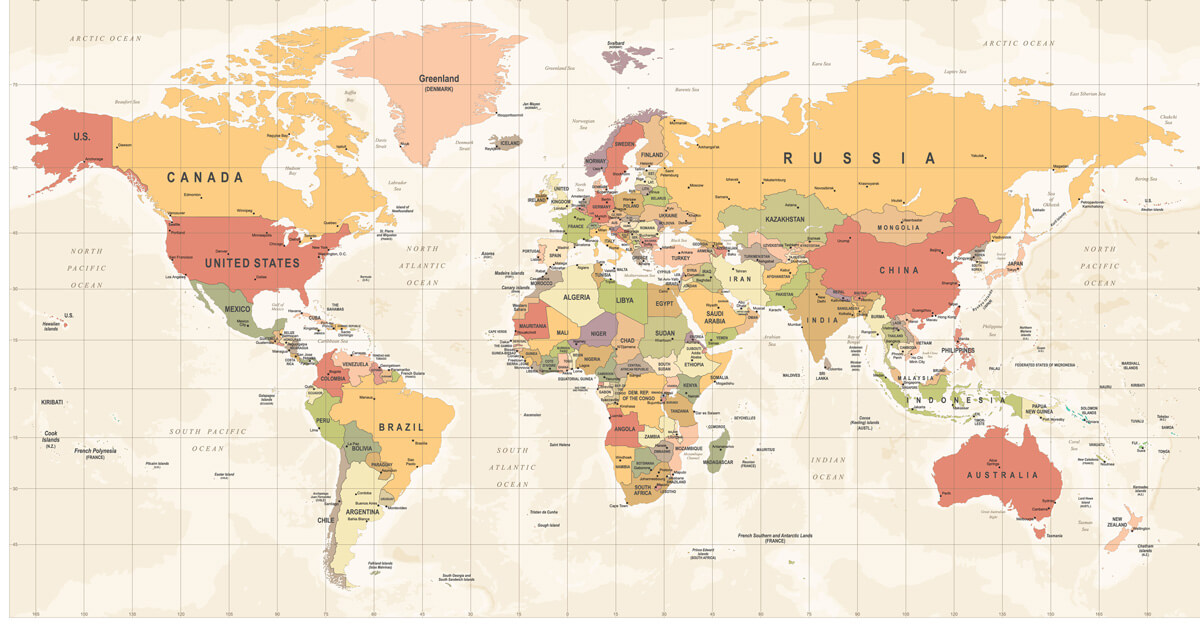
The biggest cats live in Africa, Asia, Central America, Middle East, North America and South America.
Lions, leopards, and cheetahs live in different habitats across Africa, each suited to their way of hunting and surviving.
Big cats in Asia include Asiatic cheetahs, Amur leopards (a nearly extinct leopard subspecies), Sunda clouded leopards, clouded leopards, Asiatic lions, snow leopards and tigers.
Jaguars and cougars (pumas) roam throughout Central America. The Jaguar is the largest of all the big cats in the Americas. Although a few live in the US, they typically range from Mexico to Central and South America. Cougars can be found in both the Eastern and Western half of the region.
In South America, you will find Jaguars and cougars (pumas) in many different regions.
Big cats in the Middle East include the Persian leopard, Asiatic cheetah and Arabian leopard.
Which of the biggest cats are the most endangered?
Big cat populations are declining worldwide due to illegal wildlife trade, hunting, poaching, habitat loss, prey depletion, and human conflict. Many big cats are listed on the Red List of Threatened Species. When a species is endangered, it is at risk of extinction (disappearing forever).
Among the 10 largest big cats, the most endangered species based on their conservation status are:
- Sunda Clouded Leopard– Status: Vulnerable (Population Declining)
The Sunda clouded leopard is found only on the islands of Borneo and Sumatra. Deforestation, habitat fragmentation, and poaching have severely impacted its population.
- Snow Leopard– Status: Vulnerable (Population Declining)
Snow leopards are threatened by habitat loss, poaching for their fur and bones, and conflict with livestock farmers.
- Clouded Leopard– Status: Vulnerable (Population Declining)
The clouded leopard is threatened by deforestation and illegal wildlife trade. As forests are cleared for agriculture and palm oil plantations, their habitat continues to shrink.
- Tiger– Status: Endangered (Population Increasing but still at risk)
Tigers are one of the most endangered big cats, with fewer than 5,000 individuals in the wild. Habitat destruction, poaching, and human-wildlife conflict remain major threats, although conservation efforts have helped stabilize some populations.
- Lion– Status: Vulnerable (Population Declining)
Lions face habitat loss, conflicts with humans, and a decline in prey species. Their populations have dropped significantly outside of protected areas, especially in West and Central Africa.
Other species and their conservation status:
Jaguar – Near Threatened (Stable in some regions but declining in others due to deforestation and poaching).
Leopard – Vulnerable (Highly adaptable, but some subspecies are critically endangered).
Cheetah – Vulnerable (Declining due to habitat fragmentation and human-wildlife conflict).
Cougar – Least Concern (Some populations are declining, but overall species is stable).
Eurasian Lynx – Least Concern (Some regional populations face habitat loss, but overall species is stable).
Big cats are among the most recognizable animals in the world, but each species has its own story—its own habitat, behavior, and challenges. From the dense forests of Asia to the open plains of Africa and the mountains of the Americas, these cats have adapted in remarkable ways. Understanding where they live and how they survive is an important step in protecting them.
Annual Big Cats Update (2026)
Big cat conservation continued to show mixed results in 2025, with some populations stabilizing while others remain under pressure. These trends reflect differences in habitat protection, human impact, and long-term conservation efforts across regions.
Tigers: signs of recovery in protected landscapes
In parts of Asia, tiger populations have shown encouraging stability or localized recovery where long-term habitat protection and anti-poaching efforts are in place. Monitoring tools such as camera traps continue to improve population tracking and conservation planning.
https://www.nationalgeographic.com/animals/mammals/facts/tiger
Lions: continued pressure outside protected areas
Lion populations remain vulnerable across much of their range, particularly outside protected areas. Human-wildlife conflict, prey loss, and expanding human settlement continue to affect population stability, even where conservation efforts are active.
https://www.iucnredlist.org/species/15951/214862019
Jaguars: habitat connectivity remains a priority
In Central and South America, conservation efforts continue to focus on maintaining connected forest landscapes. Wildlife corridors are increasingly recognized as essential for allowing jaguars to move between habitats and maintain healthy populations over time.
https://www.smithsonianmag.com/science-nature/
Snow leopards: increasing environmental and development pressures
Snow leopard conservation is closely tied to changes across mountain ecosystems. Infrastructure development and climate-related shifts are affecting habitat stability, making landscape-level conservation planning more important.
https://www.bbc.com/